
The Silence I Inherited
How Alcoholism and Emotional Abuse Shaped My Worldview

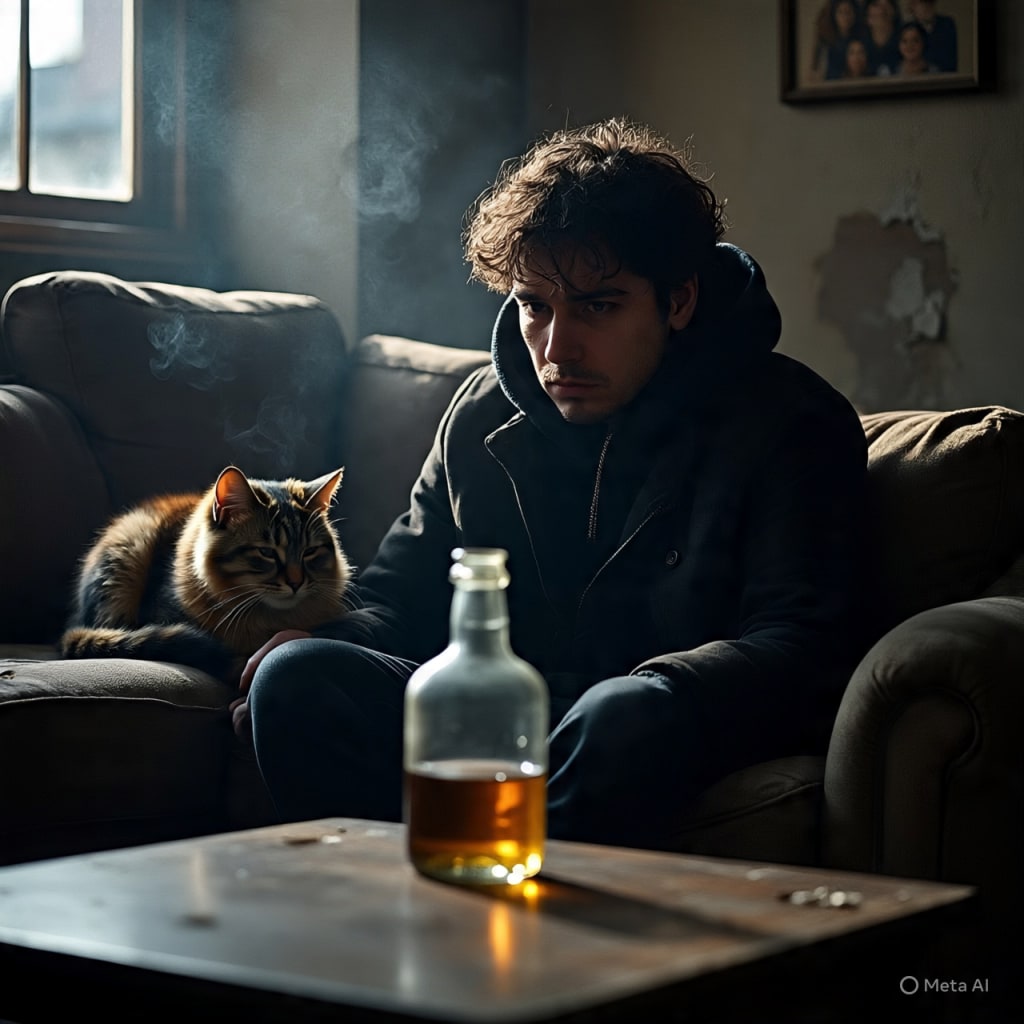
In the country where I currently live, the world often feels upside down. Every day brings a fresh dose of absurdity. People drive recklessly, drunk and unaware of consequences. Laws seem like mere suggestions, and the streets are filled with chaos. I don’t engage with much of it—I stay away. I have learned to withdraw, to protect my peace by limiting my contact with others.
Most of the time, I remain in my home, venturing out only when absolutely necessary, or when someone I genuinely care for is waiting. This quiet way of living began after years of mental and emotional exhaustion, especially during the times I found myself surrounded by people who didn’t understand—or care to understand—the pain I carried inside.
I grew up with an alcoholic father. The trauma he inflicted began when I was just seven years old. His slurred voice, unpredictable rage, and broken promises became the background noise of my childhood. Those memories never left me. Even now, at the age of thirty, they haunt my decisions and relationships. I know, deep in my heart, that if I ever become a parent, I don’t want my children to ever meet my father—or perhaps even most of my family. Alcoholism broke something sacred in our home, and its echo still lingers in our lives.
My mother knows of his addiction, but she refuses to leave. She hides behind a mask of strength, but I see the fear. She loves control. She clings to power. In many ways, she reminds me of the narcissists I read about in psychology books—charming to outsiders, but emotionally draining to those closest.
Two years ago, after a devastating earthquake in my family's city, I moved closer to them. I thought maybe it was time to reconnect, to offer support. But the result was far from healing. My mental health declined. I spiraled. The emotional burden became unbearable. My relatives started distancing themselves. They feared me, or maybe they feared the truths I spoke. I didn’t even attend my nephew’s birthday last week. Not because I didn’t care—but because I couldn’t pretend anymore.
Despite all this, my mother clings to the hope that we’ll reconcile. She reaches out, but I respond less and less. There’s no emotional connection left to hold on to. Her concern now seems more about control than care.
In the middle of this emotional storm, something changed. I found myself walking into a church one day—not out of curiosity, but out of desperation. I needed something to believe in again. They handed me two books. As I read one, I realized how much misinformation I’d absorbed growing up—especially as a Turk. It became clear that what I thought I knew about Christianity was skewed. For the first time, I began to understand the peace that faith could offer.
In those moments, while still battling alcoholism, I saw a clearer version of myself. I imagined having three daughters. I imagined being someone they could look up to. Someone strong, honest, healed. I realized that if I wanted to help children in future projects—especially those without stable homes—I had to first become the person I never had growing up.
But healing isn’t linear.
There were months when half my income—nearly $1,000—was spent just on alcohol and tobacco. Not out of pleasure, but as an escape. As a means to numb the unresolved pain. I am a trained engineer. I even started my own business. But trauma doesn’t care about degrees or titles. It sneaks into every meeting, every plan, every opportunity. It becomes a silent weight on your shoulders.
I learned a painful truth: if you continue to expose yourself to those who have hurt you, they will continue to hurt you. It’s not personal. It’s habitual. That’s why I changed my surname—not for show, but as a declaration. A break from a legacy I no longer wished to carry.
Even when I was at my lowest, my family wasn’t there. But they remained interested in my life—for the money I might make. Holidays, photos, empty messages. None of it meant anything. They didn’t want me. They wanted what I could provide.
Now, their messages go unanswered. There’s only silence. I no longer feel obligated to respond. That connection has dissolved into something cold and distant.
Sometimes, when you grow up in an emotionally cruel environment, it shapes you in dangerous ways. Psychologists talk about the "dark triad"—narcissism, Machiavellianism, and psychopathy. I understand now how people end up there. But I chose another path. I pulled away. I embraced solitude. I found peace in silence.
And cats. I love cats.
They don’t pretend. They don’t demand. They simply exist—with grace and mystery. Their company is quiet and healing.
One last thing: social media. It’s a place I once believed in. I spent 12 years observing, creating, analyzing. I even conducted a four-month experiment on its effects—especially the manipulation of algorithms and how they impact real jobs. The results were disappointing. Social media had become a circus. Empty trends, false smiles, meaningless content.
I deleted everything.
In that silence, I found clarity. I stopped chasing digital approval. I stopped scrolling. What I learned?
I really dislike most people.
But I deeply love animals.
And I value privacy more than anything.
I don’t know what the future holds. But I know this: I will never go back. My healing journey isn’t over, but at least it’s begun.
About the Creator
Saeed Ullah
the store
Keep reading
More stories from Saeed Ullah and writers in Confessions and other communities.
I was in a Toxic Relationship, with my Workplace
“You got that?” My ex yelled. His hands were balled into fists at his side. At six foot three, he towered over me. A normal person would have been afraid, but I looked up a video of George Lopez repeatedly saying, “I got this,” and showed it to him. I had grown used to this treatment, so much so that I didn’t blink when he ripped the phone from my hand and threw it across the room.
By Jade M.3 days ago in Confessions


Comments
There are no comments for this story
Be the first to respond and start the conversation.