
The Power of Voice in the Digital Age
How Vocal Content Is Transforming Communication, Marketing, and Storytelling
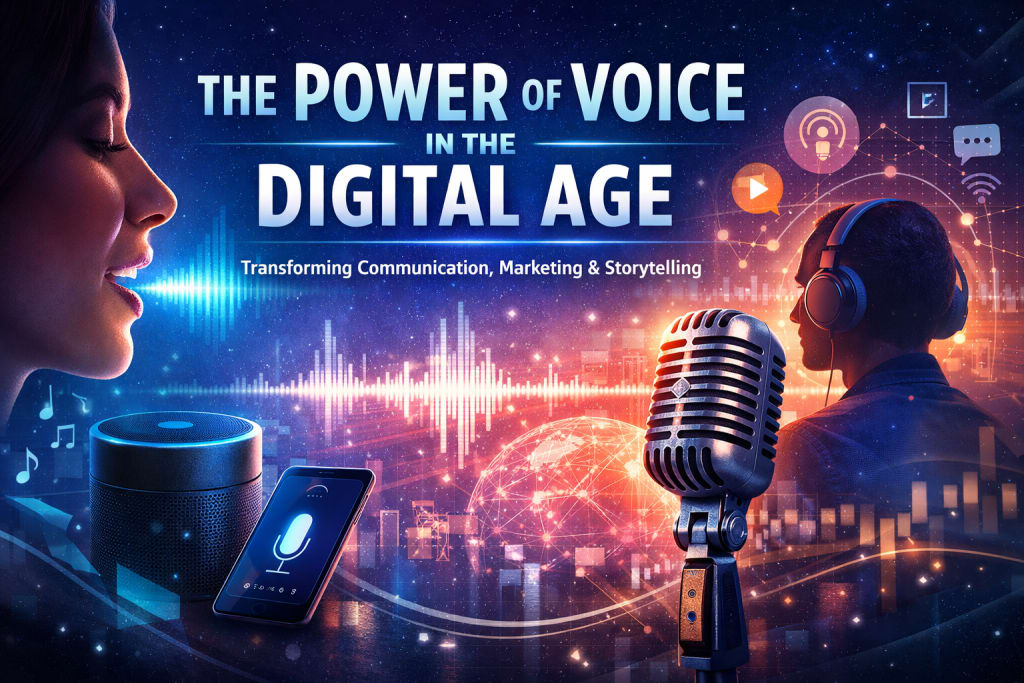
In the rapidly evolving digital landscape, content formats continue to change as technology adapts to human behavior. While text and visuals have dominated the internet for decades, voice has emerged as one of the most powerful tools of modern communication. From podcasts and audiobooks to AI-powered voice assistants and voice search, vocal content is reshaping how people consume information, connect emotionally, and make decisions.
The power of voice lies not only in its convenience but also in its deeply human nature. In the digital age, where screens overwhelm users and attention spans shrink, voice offers a more natural, intimate, and accessible way to communicate.
The Evolution of Voice in Digital Communication
Voice has always been central to human interaction. Long before written language, people relied on spoken words to share knowledge, tell stories, and build communities. However, with the rise of the internet, text-based communication became dominant due to technical limitations and convenience.
Today, advancements in technology have brought voice back to the forefront. High-speed internet, smartphones, smart speakers, and artificial intelligence have made audio content easier to create, distribute, and consume. Platforms like podcasts, voice-based social apps, and AI narration tools have proven that voice is no longer secondary—it is essential.
Why Voice Feels More Personal Than Text
One of the biggest advantages of vocal content is its emotional depth. Unlike text, voice conveys tone, emotion, pace, and personality. A simple sentence can sound friendly, authoritative, comforting, or persuasive depending on how it is spoken.
Voice creates a sense of human presence, even in digital environments. Hearing someone speak builds trust faster than reading words on a screen. This is why podcasts often feel like personal conversations and why brands using voice marketing can form stronger emotional connections with their audiences.
In an age where digital interactions can feel cold and impersonal, voice adds warmth and authenticity.
The Rise of Podcasts and Audio Platforms
Podcasts are one of the most influential examples of voice power in the digital age. Millions of people worldwide listen to podcasts daily while commuting, exercising, or relaxing. This hands-free convenience allows users to consume content without staring at screens.
For creators and brands, podcasts provide an opportunity to:
Share in-depth knowledge
Build loyal communities
Establish authority in a niche
Monetize through sponsorships and subscriptions
Unlike short-form content, audio encourages longer engagement. Listeners often stay connected for 20, 40, or even 60 minutes, which is rare with written content.
Voice and Accessibility in the Digital World
Voice technology has significantly improved accessibility. For individuals with visual impairments, learning disabilities, or reading difficulties, audio content opens doors to information that text alone cannot.
Features like text-to-speech, voice commands, and audio summaries ensure that digital content is inclusive. Educational platforms, news websites, and content creators increasingly use voice narration to reach wider audiences.
Accessibility is no longer optional—it is a responsibility. Voice helps bridge the digital divide.
AI Voices and the Future of Vocal Content
Artificial intelligence has revolutionized how vocal content is created. AI-generated voices can now sound natural, expressive, and human-like. These technologies allow creators to convert written content into audio instantly, saving time and resources.
AI voices are widely used in:
Audiobooks
E-learning platforms
YouTube narration
Customer service chatbots
Voice assistants
While human voices remain irreplaceable for emotional storytelling, AI voices offer scalability and efficiency. Together, they are shaping the future of digital communication.
Voice Search and Changing User Behavior
Voice search has transformed how people interact with the internet. Instead of typing keywords, users now ask full questions using natural language. Smart assistants like Alexa, Siri, and Google Assistant have made voice search a daily habit.
This shift has changed content strategy:
Content must sound natural and conversational
Answers should be clear and concise
Long-tail keywords matter more than ever
Websites optimized for voice search gain a competitive advantage. As voice-enabled devices continue to grow, voice-first content will become essential for visibility and reach.
Voice in Marketing and Branding
Brands are increasingly using voice to create distinct identities. From branded podcasts to voice ads and audio logos, sound has become a powerful branding tool.
Voice marketing works because:
It feels personal and engaging
It builds emotional trust
It reduces screen fatigue
It reaches users during daily activities
A consistent vocal tone helps brands sound recognizable and relatable. Whether it’s a calm, professional voice or a friendly, energetic one, voice personality matters.
Storytelling Through Voice
Storytelling is where voice truly shines. Audiobooks, narrated stories, and spoken-word content bring narratives to life in ways text cannot. Voice allows storytellers to use pauses, emphasis, and emotion to captivate listeners.
In digital storytelling, voice:
Enhances emotional connection
Improves memory retention
Creates immersive experiences
This is why audio storytelling is widely used in education, entertainment, and brand messaging.
Voice and the Attention Economy
In today’s fast-paced digital world, attention is the most valuable currency. Voice content fits perfectly into modern lifestyles because it allows multitasking. Users can listen while driving, cooking, or working.
Unlike videos or text, voice does not demand full visual attention. This makes it one of the most efficient content formats for busy audiences.
As screen fatigue increases, voice offers a refreshing alternative.
Challenges of Vocal Content
Despite its power, vocal content comes with challenges:
Discoverability can be harder than text
Quality audio production requires skill
Monetization models are still evolving
Overuse of AI voices may reduce authenticity
However, as technology improves and platforms mature, these challenges are gradually being addressed.
The Future of Voice in the Digital Age
The future of voice is promising. With advancements in AI, natural language processing, and immersive audio experiences, voice will continue to dominate digital interaction.
We can expect:
More personalized voice assistants
Voice-driven websites and apps
Greater integration of voice in education and healthcare
Stronger emotional connections between brands and users
Voice is not replacing text or visuals—it is complementing them and creating richer digital experiences.
Conclusion
The power of voice in the digital age lies in its ability to connect, engage, and humanize technology. As the internet becomes more crowded and visual overload increases, voice stands out as a natural, accessible, and emotionally rich medium.
From podcasts and AI narration to voice search and digital storytelling, vocal content is transforming how we communicate and consume information. For creators, brands, and platforms, embracing voice is no longer optional—it is essential for staying relevant in a voice-first future.
The digital age is no longer silent. It speaks—and people are listening.
About the Creator
Keep reading
More stories from Aiman Shahid and writers in Confessions and other communities.
Side Hustles You Can Start With Zero Investment
The idea that you need money to make money is one of the biggest myths holding people back from building additional income streams. In today’s digital world, your skills, time, and internet connection can be far more valuable than startup capital. Side hustles no longer require office space, inventory, or expensive tools. Many of the most successful online earners started with nothing more than a laptop and determination.
By Aiman Shahid3 months ago in Confessions
My Last Story on Vocal Media
A new article came out about new changes coming to vocal. A lot of them were great rules and warranted rules. AI is taking over the art world and we need to get back to the simplicity of writing for ourselves again. Paying those who earn it is a must and a priority. However, I will not be able to pay the way to earn. I am a free user and will not be continuing on this site if I won't be getting paid because I can't pay. I wasn't just here for the payout, but man was it nice. I liked seeing that I was getting paid for my writing. Like I was actually an author. Big LOL on my part. I just can't afford to pay, so out the door I go.
By Rich Burton4 days ago in Confessions




Comments
There are no comments for this story
Be the first to respond and start the conversation.