
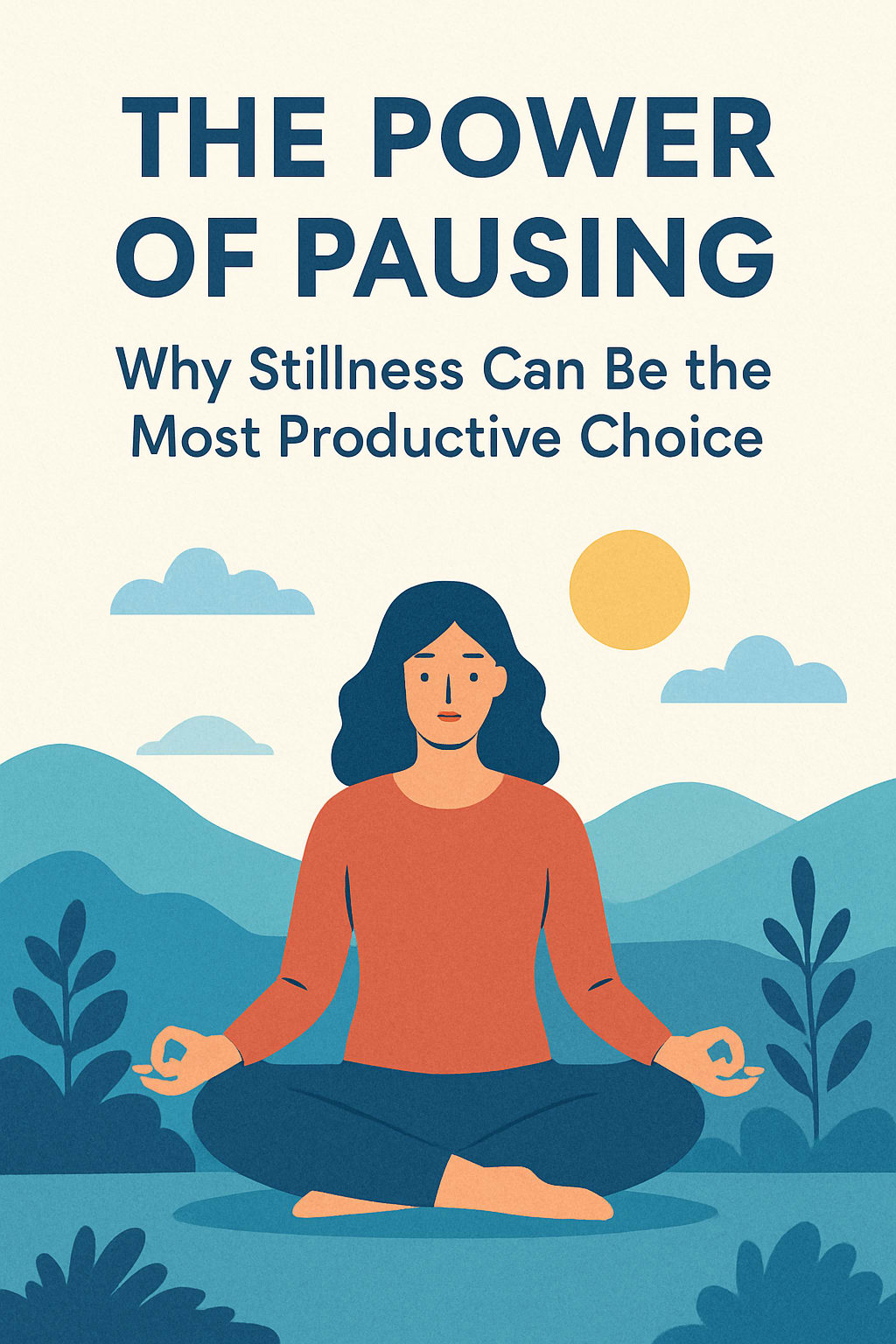
The Power of Pausing: Why Stillness Can Be the Most Productive Choice
How slowing down helps us regain clarity, energy, and purpose in a fast-moving world
Introduction
In a world where productivity is often measured by speed, output, and constant motion, pausing may seem like the opposite of success. We live in a culture that glorifies hustle, celebrates multitasking, and idolizes busyness as a badge of honor. Yet, this obsession with constant activity often leads to burnout, stress, and a loss of clarity. What if true productivity isn’t about always moving, but about knowing when to stop?
Stillness, far from being a waste of time, can be the most productive choice we make. A pause creates space for reflection, renewal, and deeper focus. It allows us to step back from the noise, recalibrate our energy, and realign with what truly matters. Pausing isn’t laziness—it’s strategy. It is the invisible engine behind meaningful action.
This article explores why pausing matters, how stillness improves productivity, and how to incorporate intentional pauses into daily life without feeling guilty.
The Illusion of Constant Productivity
Our modern world has created an illusion: that the more we do, the more successful we become. Workplaces encourage back-to-back meetings. Phones bombard us with endless notifications. Social media rewards constant posting, while side hustles pressure us to always monetize our free time.
But constant productivity is a myth. Studies show that after a certain number of hours, the quality of work declines significantly. Exhaustion sets in, creativity diminishes, and mistakes multiply. In fact, working nonstop often leads to doing less, not more.
The truth is, our brains are not designed for endless action. They thrive on cycles of focus and rest, tension and release. Like muscles, our minds need recovery time to grow stronger. By pausing, we avoid diminishing returns and ensure that our work remains intentional, effective, and sustainable.
Why Pausing Works
1. Clarity Through Reflection
When we are constantly moving, we lose perspective. Pausing gives us the chance to reflect on whether our actions align with our goals. It’s easy to get caught up in tasks that feel urgent but aren’t important. A short pause helps us step back and ask: Is this the best use of my time?
2. Restoration of Energy
Just as athletes take breaks to recover, our minds and bodies need downtime. Pausing lowers stress, reduces decision fatigue, and replenishes mental energy. Even short moments of stillness—deep breathing, closing your eyes, or taking a walk—can reset the nervous system.
3. Creativity and Problem-Solving
Many breakthroughs happen during pauses, not while grinding away. Think about the classic “shower thoughts” phenomenon. When the brain is relaxed and not hyper-focused, it connects ideas in new ways. Pausing creates space for innovation.
4. Emotional Regulation
Stillness gives us the ability to respond rather than react. Instead of being swept up in stress or anger, a pause lets us process emotions calmly. This improves relationships, leadership skills, and decision-making.
5. Deepened Presence
Pausing grounds us in the present moment. It interrupts autopilot living and helps us truly notice life—the taste of a meal, the warmth of sunlight, the sound of a friend’s laughter. These pauses deepen our experience of living, reminding us that productivity is not just about output but also about fulfillment.
The Guilt of Stillness
Many people struggle with the idea of pausing because it feels like slacking. Guilt creeps in: Shouldn’t I be doing something useful? This guilt stems from cultural conditioning that equates worth with busyness.
But stillness is not the enemy of productivity—it’s the foundation of it. Think of musicians: silence between notes is what makes the music beautiful. Without pauses, there is only noise. Similarly, without rest, our lives become chaotic and unbalanced.
Reframing pauses as a deliberate strategy helps remove guilt. Instead of asking, “Am I wasting time?” we can ask, “What is this pause making possible?”
Practical Ways to Pause
Pausing doesn’t have to mean taking a week off or meditating for hours. It can be small, intentional breaks woven into the rhythm of everyday life. Here are practical strategies:
1. Micro-Pauses
Take 30–60 seconds to stop, breathe, and reset. Close your eyes, inhale deeply, or simply sit in silence. Micro-pauses throughout the day prevent stress from building up.
2. Digital Breaks
Step away from screens for a few minutes every hour. Go outside, stretch, or look at something natural instead of pixels. These pauses protect your focus and reduce digital fatigue.
3. The Power of No
Sometimes the most productive pause is saying “no” to tasks that don’t matter. Declining unnecessary meetings, emails, or commitments creates breathing room for what’s truly important.
4. Nature Pauses
Spending even 10 minutes outdoors lowers stress and boosts creativity. A walk in the park or sitting near a tree can refresh your mind more than scrolling social media ever could.
5. Intentional Stillness Practices
Meditation, journaling, or deep breathing exercises are structured ways to pause. These practices cultivate awareness and calm, training the brain to embrace stillness instead of resisting it.
6. Scheduled Downtime
Plan pauses just as you schedule meetings. Block time on your calendar for rest, reflection, or simply doing nothing. Protect these moments as seriously as work commitments.
Pausing in Work and Leadership
Leaders who know how to pause often make better decisions. Instead of rushing into choices, they reflect, consider different perspectives, and act with intention. Pausing also improves communication—listening fully before responding creates stronger relationships.
Workplaces benefit from embedding pauses in their culture. Breaks during long meetings, flexible schedules, and encouraging employees to disconnect after hours all contribute to higher morale and productivity. Companies that prioritize stillness often see lower burnout and higher creativity among teams.
The Science of Pausing
Research supports the power of pausing. Neuroscientists have found that the brain’s “default mode network” activates during rest, allowing for memory consolidation, problem-solving, and creative insight. Psychologists note that short breaks improve concentration, while mindfulness practices reduce stress hormones and increase emotional resilience.
Even elite performers—from athletes to musicians—rely on pauses. They understand that recovery is not optional but essential. Without it, performance suffers. The same principle applies to everyday life: the pause fuels the performance.
Overcoming Resistance
Despite the benefits, many people resist pausing because it feels uncomfortable. Silence can be intimidating. Stillness can bring up emotions we’ve been avoiding. The urge to fill every moment with activity is strong.
The key is to start small. Embrace micro-pauses and expand gradually. Learn to sit with stillness, even if it feels awkward at first. With practice, pausing becomes natural, even enjoyable. Over time, it transforms from a foreign concept into a trusted tool.
Conclusion: Choosing the Power of the Pause
In a culture that equates busyness with success, choosing stillness can feel radical. Yet, it is in the pause that we rediscover clarity, creativity, and balance. Stillness is not the opposite of productivity—it is its greatest ally.
By learning to pause, we reclaim control of our time, energy, and attention. We stop reacting blindly and start responding wisely. We avoid burnout and instead create space for inspiration. Most importantly, we reconnect with the present moment, where life is actually lived.
The power of pausing lies in its simplicity. It doesn’t demand resources, technology, or complex strategies. It simply requires the courage to stop, breathe, and be. And in doing so, we find that stillness isn’t wasted time—it’s the fertile ground where our best ideas, actions, and selves are born.
About the Creator
Keep reading
More stories from Aiman Shahid and writers in Confessions and other communities.
The Beauty of Letting Go: Why Release is the First Step to Freedom
Life has a way of weighing us down. We carry burdens—old regrets, broken relationships, missed opportunities, unfulfilled expectations—like stones in a backpack. With each year, the load grows heavier, leaving us exhausted and wondering why true peace feels so distant. Yet, what if the secret to freedom is not found in doing more or striving harder, but in releasing the very things we cling to so tightly?
By Aiman Shahid4 months ago in Confessions



Comments
There are no comments for this story
Be the first to respond and start the conversation.