
The Net and the Crown
The Price of Greed, the Strength of the Sea
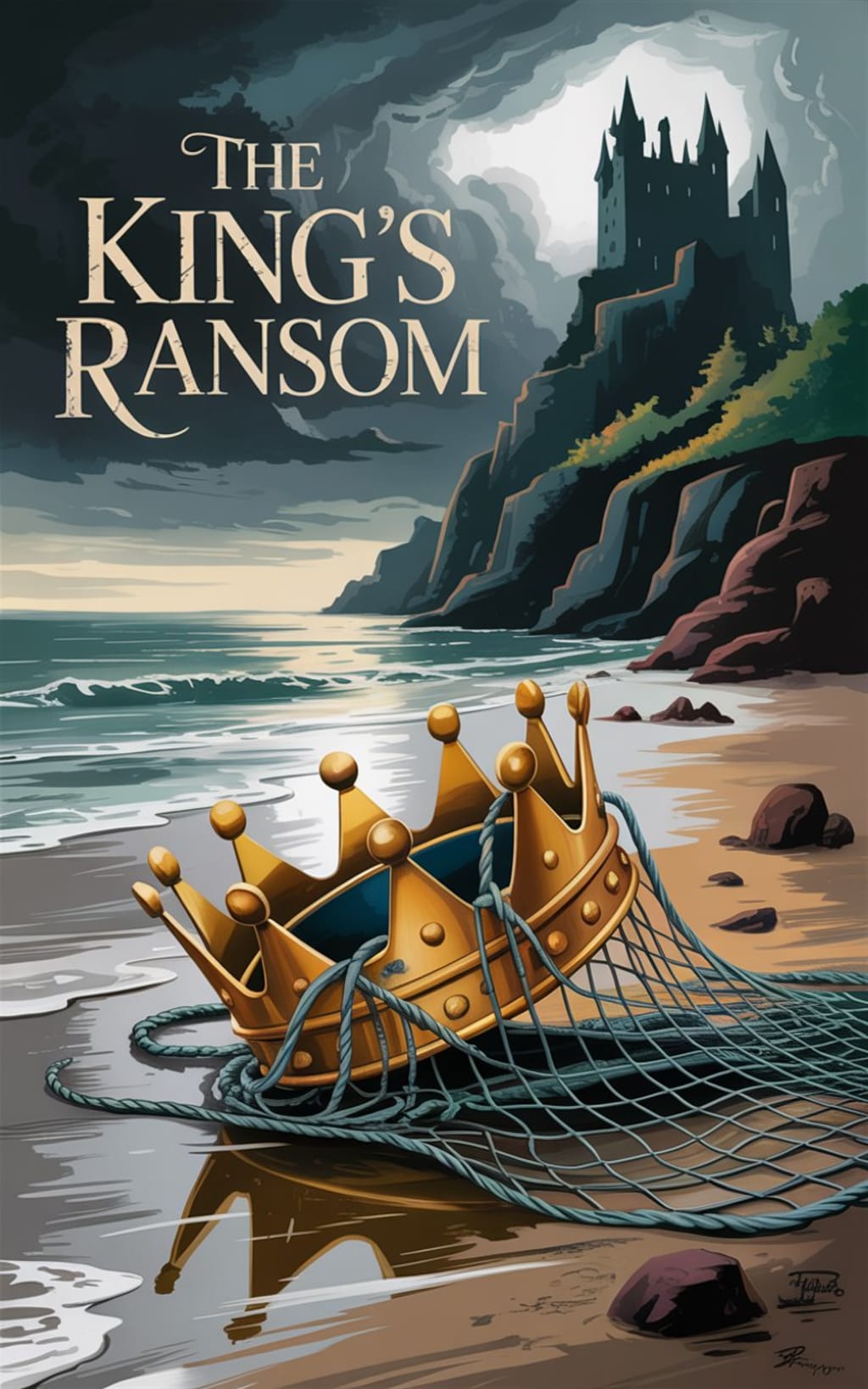
Long ago, when kingdoms rose like tides and fell like whispers, there reigned a king whose heart was colder than the steel of his sword. King Aldric of Varenthia ruled not with justice, but with fear. Gold was his god, and the people were little more than the dirt beneath his velvet-cloaked feet.
In a salt-worn village by the sea, there lived a poor fisher named Garrin. He rose before the sun and cast his nets into waters that gave less with each passing year. His wife had died with the last harsh winter, and his son, barely ten, bore the quiet eyes of hunger. Still, Garrin endured—because he had no choice.
One morning, as mist crawled over the surf like fingers from another world, Garrin hauled up his net and found something no fisherman should: a man. Not drowned, but bound. Gagged, robed in fine silks soaked with seawater and blood.
The man’s seal ring—etched with the lion of Varenthia—glinted through grime and salt.
Garrin dragged him ashore, slit the ropes with his knife, and built a fire. The man awoke coughing brine and curses.
“I should have died,” he rasped.
“You still might,” Garrin replied, feeding the flames. “Who are you?”
“I am Prince Ronar. The king’s only son.”
The fire cracked. Garrin stared. “Then why are you here, half-dead in a poor man’s net?”
The prince’s jaw tightened. “There was a plot. My father refused to ransom a captured noble. In retaliation, our enemies kidnapped me. But when they demanded my ransom... the king refused that, too.”
Garrin chuckled bitterly. “And now the crown’s too cheap to buy back its own blood.”
Ronar looked up. “He will not pay for me. But the people might.”
“The people?” Garrin scoffed. “You mean the starving, taxed, beaten people?”
“I know what he is,” the prince said. “But I am not him. And I have seen things now—things I never would have, had I stayed in those marble halls.”
There was a pause. Wind pushed the waves into sighs. The prince spoke again, lower now.
“Help me get to the city. Let me rally those still loyal. If I take the throne... I can change things.”
“Why should I trust you?” Garrin asked.
“You shouldn’t. But what other hope do you have?”
For a long while, Garrin said nothing. Then, slowly, he stood. “You’ll need a cloak. And a boat.”
By nightfall, the unlikely pair sailed toward the capital, a flickering dot beyond the dark horizon. Word traveled before them, as whispers often do. Rumors of a prince betrayed by his father spread like fire through dry grass. When Ronar and Garrin reached the outer boroughs of the city, they found not soldiers, but commoners—gathered with torches and tools, hungry not for food but for change.
A revolution was brewing.
They stormed the palace gates, not with battering rams, but with a wave of voices, truth, and fury. The king’s guard, half of whom had known hunger themselves, turned their blades sideways.
At the heart of the throne room, King Aldric stood as if time had broken around him. His crown glimmered under torchlight. Beside him, no allies. Only silence.
“You,” he said, his voice hoarse with disbelief. “My son... would bring them here?”
“They are my people,” Ronar replied.
“They are thieves. Liars. Dirt.”
“No, Father,” Ronar said. “They are the ransom you refused to pay.”
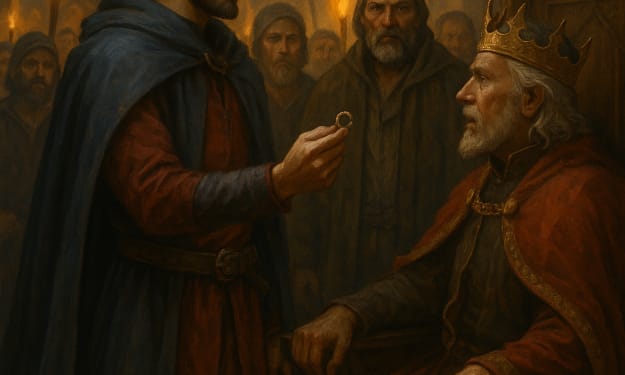
With that, Garrin stepped forward, pulling from his cloak the prince’s seal ring—the one he had saved.
“I believe this belongs to the future,” he said, tossing it to Ronar.
Within days, the lion’s banners were lowered, and a new crest was raised—a net and a flame, entwined. King Aldric was exiled to the coastal cliffs where wind never ceased and comfort never came.
Under King Ronar, the realm changed. Taxes were eased. Bread became more common than chains. Garrin was offered land, but he refused, choosing instead to fish the calmer seas with his son at his side.
But when asked, years later, how the kingdom had changed, Garrin would say, “Not by war. Not by blood. By a ransom no coin could pay—just a little mercy. And a man who learned to see with his eyes open.”
About the Creator
Keep reading
More stories from Sheheryar Khan and writers in Confessions and other communities.
Beneath the Tide and Throne
Long ago, when kingdoms rose like tides and fell like whispers, there reigned a king whose heart was colder than the steel of his sword. King Aldric of Varenthia ruled not with justice, but with fear. Gold was his god, and the people were little more than the dirt beneath his velvet-cloaked feet.
By Sheheryar Khan9 months ago in Fiction
Thoughts on Vocal and the way the world is
"Death cannot stop true love, only delay it." – Wesley in The Princess Bride. I decided to come back to Vocal on a very cold and dark night at the end of December. I had been, and still am, convalescing from a horrible staph infection that had gone misdiagnosed for months. This, paired with the increasing challenges of being healthy, making the best choices for my co-parented child, being a wife, and being a director at a new job, was a lot to manage.
By Jazzy 6 days ago in Confessions
Fela Or Wizkid- Who's Greater Nigerian Music Idol?
I love how Wizkid has set the trend for emancipation of one's mind from mental slavery especially through music. The debut of Wizkid then was an eye opener to teenagers and the GenZ’s to come who then were just "barely over being infants." We back then were somewhere in between our second year going on third as students in the University of Benin and you know what life in Nigeria was like then for young and aspiring minds like ours. The mantra was "go to school, get a good job and become responsible".
By Ikechukwu Modungwoa day ago in Confessions


Comments
There are no comments for this story
Be the first to respond and start the conversation.