
The Man Who Sat on the Bench
For years, she passed him without a word—until one quiet afternoon changed everything.

Every afternoon for the past year, I walked through the same park after work. Same path, same worn-out shoes, same thoughts buzzing in my head like static.
And every day, there he was.
An old man. Same bench. Always alone.
He didn’t beg for change. He didn’t feed birds. He didn’t even scroll through a phone like the rest of us. He just sat there—motionless, silent, watching the world pass him by like it didn’t owe him anything.
At first, I ignored him. Like we all do with strangers we see too often. We build imaginary walls. Maybe he was just someone’s grandpa. Maybe he was homeless. Or maybe he just liked being outside. I didn’t know. I didn’t ask.
Until one rainy Tuesday.
I had just gotten news that my best friend—my only real friend—had passed away in a car accident. The kind of sudden, cruel news that doesn’t fit in your head. I didn’t want to go home to the silence. So I walked. And walked.
And I ended up at that park.
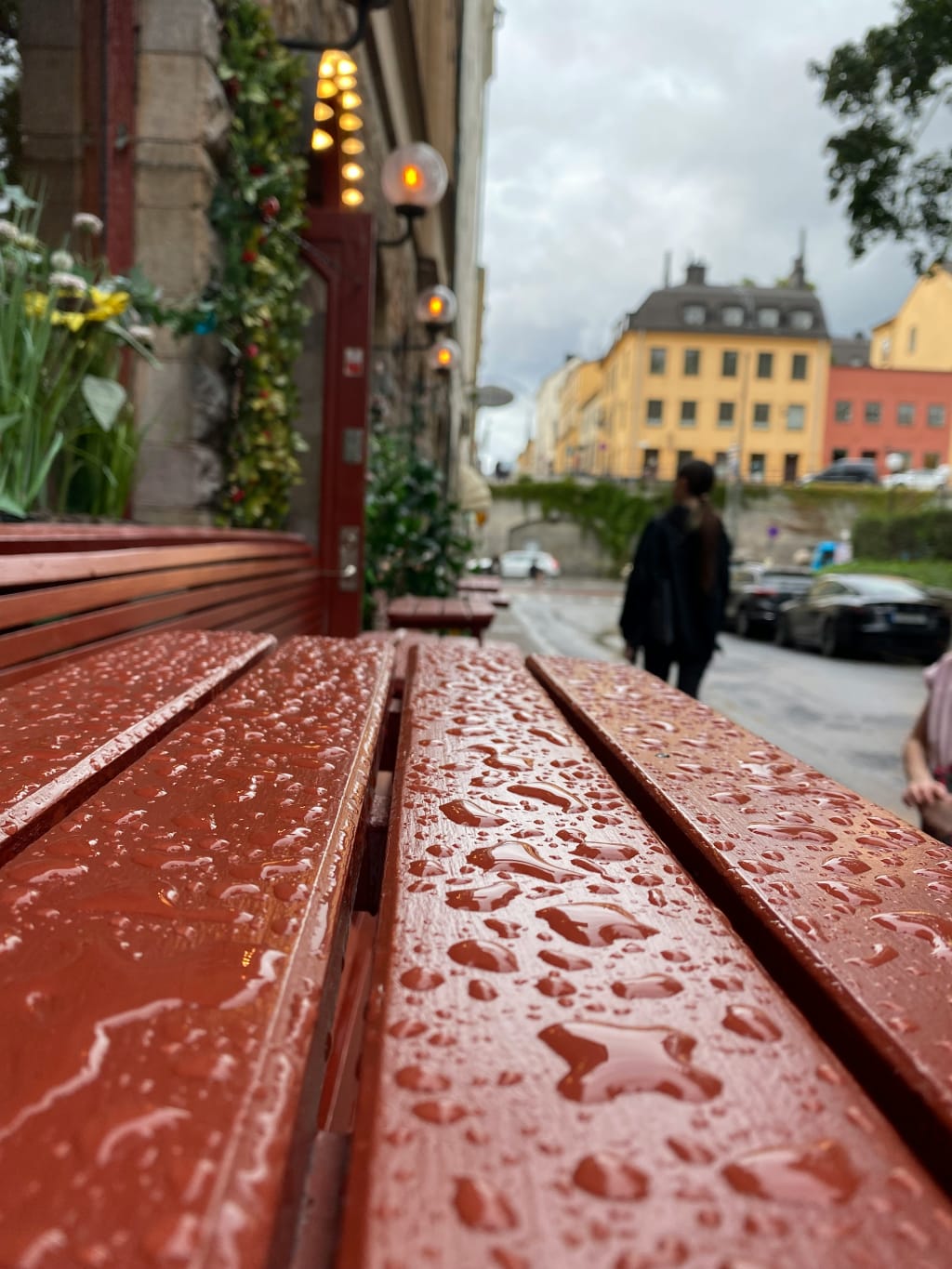
He was still there. Same bench. The only difference was a red umbrella leaning next to him. I don’t know why I did it, but I sat down.
He didn’t look at me. He didn’t speak. Neither did I.
For a few minutes, we just listened to the rain tap the trees.
Finally, I whispered, “I lost someone today.”
Still, he said nothing. But he reached into his coat pocket and pulled out a small, folded handkerchief. He handed it to me.
It was clean. Crisp. I hadn’t even noticed I was crying until then.
We sat for nearly an hour. No words. Just space. Shared space.
I left the bench that day different.
I returned the next day. And the next. He never initiated conversation, but he always nodded when I arrived. I told him about my friend. About how we used to get milkshakes and laugh until our stomachs hurt. I told him about the guilt I felt—for not texting her back fast enough. For taking her for granted. For being angry over something stupid just days before the accident.
He never judged. Never spoke. But his presence held me like a hand on my back—firm, steady, patient.
Weeks passed. I learned his name was Walter.
He had been coming to that bench for seven years.
“Why?” I finally asked one day.
He looked at me, and for the first time, I saw the ocean of pain behind his eyes. “My wife,” he said. “This was her favorite spot.”
He smiled faintly, as if smiling was a muscle he hadn’t used in a long time.
“She died of cancer. I used to bring her here when the chemo got too hard. We’d sit and listen to the trees. Now, I sit and listen for her.”
The silence that followed was not awkward—it was reverent.
Months went by. My grief softened. His smile returned more often. We became... unlikely companions.
Then one day, he wasn’t there.
I waited an hour. I came back the next day. And the next.
Gone.
I checked local news. I visited the library, the hospital, even the police station.
Finally, I found his name in an obituary tucked into the back pages of the local paper. No surviving family. No funeral service.
Just a name, a date, and the words “A quiet man, well-loved by few, but known to many.”
The next day, I brought my own red umbrella. I sat on his bench.
People passed me by. Some nodded. Most didn’t look.
And I realized something: Walter didn’t wait for people to see him.
He gave them space when they needed it.
Now, it’s my turn.
So I sit. Every day.
And one day, someone will sit beside me—not to fix their pain, not to hear advice.
Just to be seen. To be held. In the quiet.
The way Walter once did for me.
About the Creator
Saeed Anwar
Keep reading amazing content
Keep reading
More stories from Saeed Anwar and writers in Confessions and other communities.
Thoughts on Vocal and the way the world is
"Death cannot stop true love, only delay it." – Wesley in The Princess Bride. I decided to come back to Vocal on a very cold and dark night at the end of December. I had been, and still am, convalescing from a horrible staph infection that had gone misdiagnosed for months. This, paired with the increasing challenges of being healthy, making the best choices for my co-parented child, being a wife, and being a director at a new job, was a lot to manage.
By Jazzy 13 days ago in Confessions
I Don’t Want a Hero. I Just Want Someone to Talk To.
My first night back in Beijing, I went straight for "Old Beijing Hotpot." Living in the US, this was the flavor I missed the most: the hand-cut fresh lamb, the rich sesame paste, the sugar garlic, and that specific scent of chili oil that instantly hooks your appetite.
By Wena day ago in Confessions



Comments
There are no comments for this story
Be the first to respond and start the conversation.