
The Lies We Tell Ourselves
How Self-Deception Shapes the Choices We Make Every Day
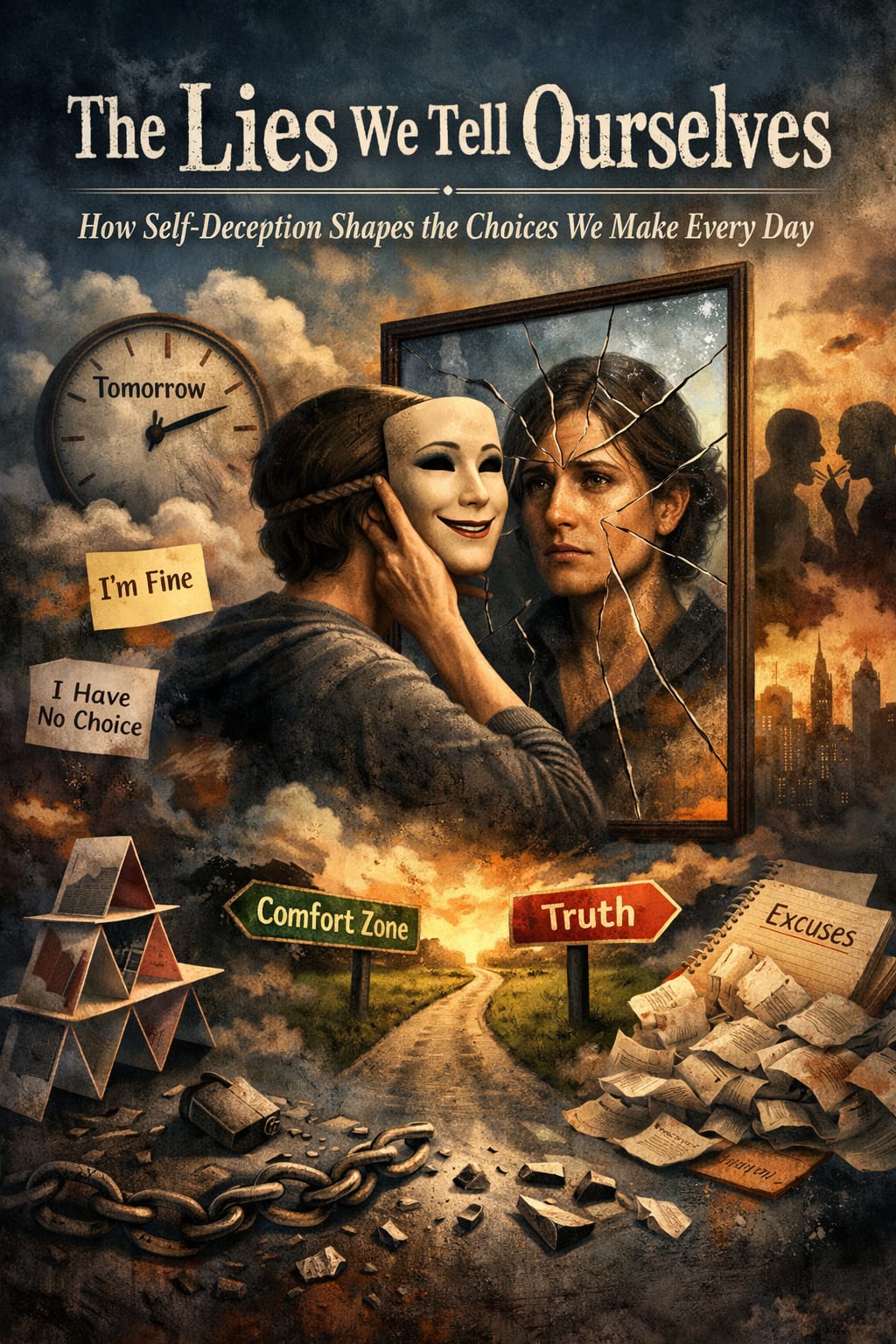
Human beings have an extraordinary ability to tell stories—not only to others but also to themselves. These stories help us make sense of the world, give meaning to our experiences, and protect us from uncomfortable truths. Yet sometimes the stories we tell ourselves are not entirely honest. They become small lies that shape our thoughts, decisions, and ultimately our lives.
These lies are rarely malicious or intentional. Most of the time, they arise quietly in our minds, disguised as hope, optimism, or self-protection. They whisper comforting explanations when reality feels too heavy. Over time, however, these small deceptions can shape our identity and determine the direction our lives take.
Understanding the lies we tell ourselves is not about blaming ourselves. Instead, it is about recognizing the patterns that influence our behavior and learning how honesty with ourselves can lead to growth.
The Comfort of Self-Deception
Self-deception often begins as a coping mechanism. Life is full of disappointments, uncertainties, and fears. When something goes wrong, admitting the truth can be painful. To protect ourselves, our minds sometimes create alternative explanations that feel easier to accept.
For example, someone who fears rejection might convince themselves they never wanted the opportunity they lost. A person stuck in an unhealthy relationship might say, “Things will change soon,” even when deep down they know the situation has remained the same for years.
These mental shortcuts offer temporary comfort. They reduce emotional pain and help us move forward without confronting difficult feelings. But comfort does not always equal truth. When self-deception becomes a habit, it can prevent us from addressing the real issues in our lives.
The Lie of “I’ll Start Tomorrow”
One of the most common lies people tell themselves is the promise of tomorrow. Tomorrow is where we plan to start exercising, writing that book, studying harder, or pursuing our dreams.
The idea of tomorrow feels safe because it removes the pressure of action today. It allows us to believe we are committed to change without actually making that change.
But tomorrow is a moving target. When it arrives, it often becomes another tomorrow.
This lie is powerful because it feels productive. We believe we are planning for improvement, yet we remain exactly where we are. Over time, months and even years can pass while we wait for the perfect moment that never arrives.
The truth is that meaningful change rarely begins with perfect timing. It begins with small, imperfect steps taken today.
The Lie of “I’m Fine”
Another common self-deception is the phrase “I’m fine.” People use it so frequently that it almost becomes automatic. Sometimes it is simply a polite response in conversation, but other times it reflects something deeper.
When we say we are fine while hiding stress, sadness, or exhaustion, we may be avoiding vulnerability. Admitting that we are struggling can make us feel weak or exposed. So instead, we build emotional walls and convince ourselves that ignoring the problem will make it disappear.
Unfortunately, emotions rarely vanish when ignored. They often grow stronger beneath the surface. Stress turns into burnout, sadness becomes loneliness, and unresolved pain begins to influence our relationships and decisions.
Acknowledging how we truly feel is not a sign of weakness. In many ways, it is the first step toward healing.
The Lie of “I Have No Choice”
People often tell themselves they have no choice in situations where they actually do. This belief usually appears when choices involve risk, discomfort, or responsibility.
Someone might stay in a job they dislike for years because they believe they cannot leave. A person may remain silent in a conflict because they feel they cannot speak up. Another might abandon a dream because they believe circumstances make success impossible.
While it is true that life sometimes limits our options, the idea that we have absolutely no choice is often exaggerated. What we really mean is that the available choices feel difficult or frightening.
Recognizing that we have choices—even hard ones—can be empowering. It shifts us from a mindset of helplessness to one of possibility.
The Lie of “People Will Judge Me”
Fear of judgment is another powerful form of self-deception. Many people avoid opportunities because they imagine others will criticize or reject them.
Someone may avoid sharing their creative work because they fear negative opinions. Another may stay quiet in meetings because they worry about sounding foolish. Some people even hide parts of their personality to fit in with others.
The truth is that while judgment exists, most people are far more focused on their own lives than on evaluating others. The harsh audience we imagine in our minds is often much louder than reality.
By believing that everyone is watching and judging us, we limit our potential. We silence our voices and miss experiences that could bring fulfillment and growth.
Why We Tell These Lies
Self-deception does not occur because people are weak or dishonest. It happens because the human mind is designed to protect itself. Psychological research suggests that our brains naturally seek to reduce discomfort and maintain a positive sense of identity.
When reality threatens our self-image or emotional stability, our minds may distort that reality slightly to maintain balance. This process can help us cope during difficult moments, but it can also prevent personal growth if it continues for too long.
The lies we tell ourselves often serve three main purposes:
Avoiding Pain – Protecting ourselves from uncomfortable emotions.
Preserving Identity – Maintaining the image we have of ourselves.
Reducing Fear – Minimizing anxiety about uncertain outcomes.
Understanding these motivations can help us approach self-deception with compassion rather than harsh judgment.
The Cost of Living in Denial
Although self-deception can provide temporary relief, it carries long-term consequences. When we repeatedly ignore reality, problems rarely disappear. Instead, they often grow larger and more complicated.
For instance, ignoring financial problems can lead to deeper debt. Avoiding difficult conversations can damage relationships. Postponing personal goals can lead to regret.
Perhaps the greatest cost is the distance it creates between who we are and who we could become. When we accept comforting lies, we stop challenging ourselves to grow.
Honesty with ourselves can feel uncomfortable, but it is often the beginning of meaningful change.
Learning to Recognize the Lies
Recognizing self-deception requires awareness and reflection. Often, the first sign appears when our actions repeatedly contradict our intentions.
If someone constantly says they want to improve their health but never takes steps toward it, there may be a hidden story they are telling themselves. If someone insists they are happy in a situation that consistently causes stress or sadness, it may be time to question that belief.
Journaling, self-reflection, and honest conversations with trusted friends can help reveal these patterns. Sometimes others can see the truths we struggle to admit.
Another helpful approach is asking simple but powerful questions:
What am I avoiding right now?
What would I do if I were not afraid?
Am I telling myself this because it is true, or because it is comfortable?
These questions can slowly uncover the narratives shaping our decisions.
Replacing Lies With Honest Growth
Once we recognize the lies we tell ourselves, the goal is not perfection but progress. Self-honesty does not mean constantly criticizing ourselves. Instead, it means acknowledging reality while still believing in our ability to grow.
For example, replacing “I’ll start tomorrow” with “I will take one small step today” creates momentum. Replacing “I’m fine” with “I’m struggling and I need support” opens the door to connection and healing.
Small acts of honesty build self-trust. Over time, this trust strengthens confidence and resilience.
Embracing Truth Without Fear
Truth can feel intimidating because it removes the protective layer that self-deception provides. Yet truth also offers clarity. When we see our lives clearly, we can make better decisions and pursue goals that truly matter to us.
Being honest with ourselves does not mean abandoning hope. In fact, hope becomes stronger when it is built on reality rather than illusion.
The lies we tell ourselves are part of the human experience. Everyone engages in them at times. What matters most is our willingness to question these stories and grow beyond them.
Conclusion
The stories we tell ourselves shape the way we experience the world. Some of those stories inspire courage, creativity, and resilience. Others quietly hold us back.
The lies we tell ourselves often begin as protection, but they can become barriers if left unexamined. By learning to recognize these internal narratives, we gain the opportunity to rewrite them with honesty and intention.
When we replace comforting illusions with honest reflection, we open the door to personal growth. We begin making choices aligned with our values rather than our fears.
In the end, the most powerful story we can tell ourselves is not a perfect one. It is simply a truthful one—one that acknowledges our flaws, our struggles, and our potential to become something greater than we were yesterday.
About the Creator
Keep reading
More stories from Aiman Shahid and writers in Confessions and other communities.
The People We Become After Goodbye
Goodbyes are among the most powerful moments in a human life. They rarely feel grand or dramatic when they happen. Sometimes they arrive quietly, disguised as a simple wave, a last message, or a door closing behind someone we once believed would always stay. Yet, long after the moment passes, we begin to realize that a goodbye does more than end a chapter—it reshapes who we are.
By Aiman Shahida day ago in Confessions
My Last Story on Vocal Media
A new article came out about new changes coming to vocal. A lot of them were great rules and warranted rules. AI is taking over the art world and we need to get back to the simplicity of writing for ourselves again. Paying those who earn it is a must and a priority. However, I will not be able to pay the way to earn. I am a free user and will not be continuing on this site if I won't be getting paid because I can't pay. I wasn't just here for the payout, but man was it nice. I liked seeing that I was getting paid for my writing. Like I was actually an author. Big LOL on my part. I just can't afford to pay, so out the door I go.
By Rich Burton44 minutes ago in Confessions
A More Human Vocal
When we launched Vocal nearly a decade ago, the world was a very different place. LLMs did not exist, and stories were created one at a time by people sitting down to write, revise, and share something personal. Many of our assumptions about publishing, trust, and participation were built for a world where effort and output were inseparable.
By Justin @ Vocal4 days ago in Resources




Comments
There are no comments for this story
Be the first to respond and start the conversation.