
The Happiness of Enough: How Contentment Beats Endless Pursuit
Why slowing down, embracing simplicity, and redefining success can lead to a more fulfilling life.
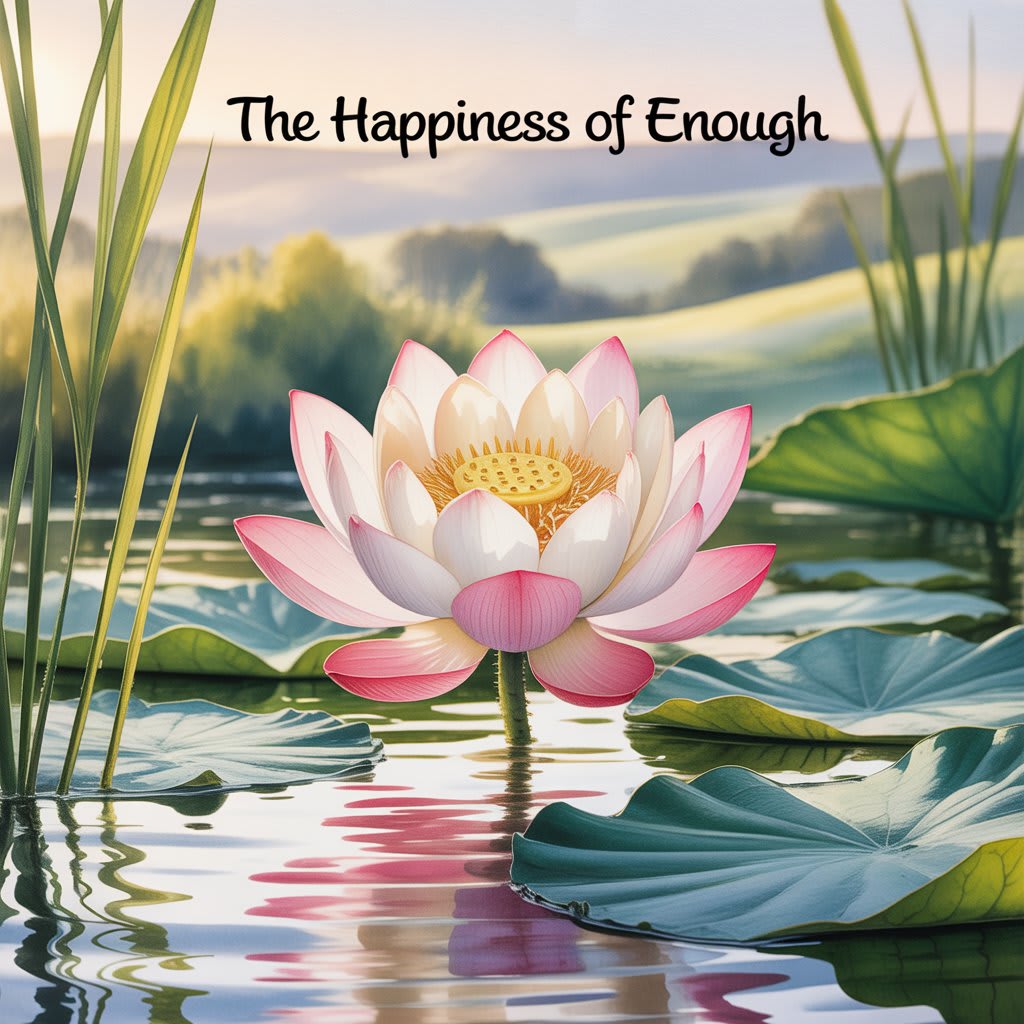
In a world that glorifies ambition, accumulation, and achievement, it often feels like we are all running on a treadmill set to maximum speed. The prevailing cultural message is clear: more is always better. More money, more possessions, more followers, more accomplishments—the endless pursuit of “more” is supposed to lead us to happiness. And yet, paradoxically, the harder we chase, the emptier many of us feel.
The concept of “enough” offers a powerful antidote to this cycle. It challenges us to reconsider what it means to live well, not by measuring success through endless expansion but by cultivating contentment with sufficiency. To understand the happiness of enough, we must explore why the pursuit of more often leaves us dissatisfied, how contentment rewires our well-being, and what practices can help us live more intentionally.
The Trap of Endless Pursuit
For centuries, human progress has been tied to striving. From survival to status, the drive to achieve has propelled societies forward. Yet, in today’s abundance-driven world, the once-useful instinct to pursue “more” has become distorted. Instead of fueling survival, it fuels comparison and dissatisfaction.
The Hedonic Treadmill
Psychologists describe a phenomenon known as the hedonic treadmill. No matter how much we achieve or acquire, we quickly adapt to the new baseline and crave more. The promotion, the dream home, the latest phone—each provides a short-lived thrill before fading into normalcy. Our happiness resets, and we are left chasing the next upgrade.
The Social Comparison Trap
Social media amplifies this treadmill by offering endless windows into curated versions of other people’s lives. Someone always seems richer, fitter, more successful, or more adventurous than we are. The comparison never ends, leaving us perpetually dissatisfied, even when we’ve already achieved what we once longed for.
The Burnout of Achievement Culture
Our workplaces often reward overwork, our culture glamorizes hustle, and our identities become tied to productivity. The cost of this pursuit is steep: rising levels of anxiety, depression, and burnout. Ironically, the more we strive, the less energy and presence we have to enjoy the lives we’re building.
The pursuit of more is not inherently bad, but without boundaries, it becomes a trap. The promise of happiness always remains just out of reach, deferred to the next milestone.
Redefining Success: The Power of Enough
To embrace the happiness of enough, we must first question the metrics we use to measure success. For many, success is synonymous with growth: higher salaries, larger homes, bigger platforms. But what if success could also mean balance, presence, or peace of mind?
Sufficiency vs. Scarcity
“Enough” is not about deprivation. It’s about sufficiency. It means recognizing when our needs are met and resisting the impulse to constantly escalate. When we accept sufficiency, we no longer live from a place of scarcity. We stop believing that happiness is always in the next thing.
Shifting from Achievement to Fulfillment
Achievements are external markers—degrees, awards, promotions. Fulfillment, on the other hand, is internal: joy in daily rituals, connection with loved ones, a sense of purpose. Fulfillment is sustainable; achievement is fleeting. Contentment arises when we prioritize the former over the latter.
The Paradox of Simplicity
Simplifying doesn’t mean living with nothing; it means living intentionally. A smaller home that feels warm and manageable may bring more joy than a mansion that drains finances and attention. Owning fewer clothes but loving each item can feel more satisfying than stuffing closets with unworn trends. Enough is about freedom, not restriction.
The Science of Contentment
Far from being just a feel-good philosophy, the happiness of enough has strong roots in psychology, neuroscience, and even economics.
Gratitude and Well-Being
Studies consistently show that practicing gratitude rewires the brain toward positivity. By appreciating what we already have, we shift focus away from what is missing. This doesn’t just make us happier—it lowers stress and strengthens resilience.
Minimalism and Mental Clarity
Research on minimalism highlights how reducing clutter lowers anxiety and enhances focus. When we have fewer distractions—both physical and mental—we experience greater calm and clarity. Enough creates space for presence.
Wealth and Happiness Plateau
Economists have long debated the link between money and happiness. While increased income does improve well-being up to a point (by meeting basic needs and providing security), the effect plateaus. Beyond sufficiency, more money brings diminishing returns. Enough, therefore, is not just philosophical but also practical.
Learning to Recognize “Enough”
The challenge, of course, lies in knowing where to draw the line. How do we know when we’ve reached “enough”? The answer varies for everyone, but there are some universal guiding principles.
Listen to Your Energy
If chasing a goal drains more joy than it brings, it may be a sign you’ve crossed the threshold of enough. For instance, working long hours for a promotion may seem worthwhile—until you realize the toll it takes on health and relationships.
Define Success for Yourself
Many of us unconsciously adopt societal definitions of success. Take time to ask: What truly matters to me? Is it freedom, time, relationships, creativity, or impact? Clarity here helps distinguish between goals that enrich versus goals that exhaust.
Practice Mindful Consumption
Before buying, ask: Will this add real value to my life, or is it just filling a gap of boredom, comparison, or insecurity? Mindful consumption helps break the cycle of craving more for the sake of more.
Practices for Cultivating Contentment
Contentment doesn’t mean abandoning ambition; it means balancing it with appreciation. Here are practices that can help anchor the happiness of enough.
Gratitude Journaling
Each day, list three things you are grateful for. Over time, this simple habit shifts focus from scarcity to sufficiency.
Digital Detox
Reduce exposure to comparison-driven platforms. Unplugging even for a few hours restores presence and reduces the constant itch for more.
Voluntary Simplicity
Try decluttering one area of your life—your wardrobe, your schedule, or your digital files. Notice the freedom and clarity that comes from less.
Savoring Rituals
Slow down to enjoy small pleasures: morning coffee, evening walks, meaningful conversations. Savoring amplifies joy in the present rather than deferring happiness to the future.
Setting “Enough” Goals
Instead of always aiming for maximum, set sufficiency-based goals. For example, instead of striving to run a marathon, perhaps “enough” is running three times a week for health.
Stories of Enough in Practice
Throughout history and across cultures, countless voices have spoken about the wisdom of enough.
Stoic Philosophy: Ancient Stoics taught that happiness lies in virtue and self-control, not external wealth. Seneca wrote, “It is not the man who has too little, but the man who craves more, that is poor.”
Eastern Traditions: Buddhism emphasizes detachment from craving as the path to liberation. Contentment is considered one of the highest forms of wealth.
Modern Movements: Minimalism, slow living, and sustainability movements are contemporary echoes of the same truth: that fulfillment often comes not from accumulation but from reduction and balance.
These timeless perspectives remind us that the idea of “enough” is not new—it’s a rediscovery of wisdom obscured by consumerism and busyness.
Why Enough Feels Radical Today
In an economy built on consumption, choosing enough can feel countercultural. Advertisers constantly tell us we lack something: the right clothes, the latest gadgets, the perfect body. Contentment, in this context, is an act of quiet rebellion.
By embracing enough, we shift power away from external validation toward internal stability. We no longer let algorithms, trends, or societal pressures dictate our worth. Instead, we reclaim the ability to say, “What I have is sufficient, and I am whole as I am.”
The Freedom of Enough
When we stop chasing endlessly, something unexpected happens—we gain freedom.
Freedom of Time: Less overwork and overconsumption means more space for relationships, hobbies, and rest.
Freedom of Energy: Contentment conserves energy previously spent on comparison, anxiety, and dissatisfaction.
Freedom of Self: We reconnect with authentic values and desires, no longer shaped entirely by external pressure.
Enough is not resignation. It is liberation. It allows us to step off the treadmill and live from a place of grounded abundance.
Conclusion: Choosing the Happiness of Enough
The pursuit of more promises happiness but often delivers exhaustion. Enough offers an alternative—a life rooted in sufficiency, presence, and gratitude. By redefining success, practicing contentment, and resisting the trap of endless comparison, we can find freedom and joy in the present moment.
The happiness of enough is not about giving up on dreams. It’s about pursuing them with balance, appreciating what is already here, and knowing when to stop running. Because sometimes, the greatest abundance comes not from having everything but from realizing we already have enough.
About the Creator
Keep reading
More stories from Aiman Shahid and writers in Confessions and other communities.
The Happiness Myth: Why Chasing Joy Can Leave Us Feeling Empty
Introduction: The Paradox of Happiness “Happiness” has become one of the most sought-after goals of our time. Entire industries—from self-help books to wellness retreats and productivity apps—promise us the key to joy. Social media platforms are filled with smiling faces, carefully curated lifestyles, and messages about “choosing happiness.” We live in a world that equates being happy with being successful, as if constant joy is the ultimate measure of a life well lived.
By Aiman Shahid4 months ago in Confessions
I can feel it
I dunno what is in store with me ,but I feel like there’s going to feel something great : Have you ever in your life felt like that? Like as your heart is beating real fast with joy ? That feeling where you know or aware what it is ,but do not know what it is ( if that makes sense )? That feeling that you cannot put your finger on it ? That one where you have to keep silent and say what it is but not even a single soul ? Yeah that feeling.
By Erica Williams4 days ago in Confessions



Comments
There are no comments for this story
Be the first to respond and start the conversation.