
THE FUTURE OF ARTIFICIAL INTELLIGENCE; OPPORTUNITIES & ETHICAL CHALLENGES
artificial interligence
Opportunities of AI
1. Revolutionizing Industries

AI is poised to revolutionize numerous industries, enhancing efficiency and productivity. In healthcare, AI algorithms can analyze medical images with remarkable accuracy, aiding in early diagnosis and personalized treatment plans. For instance, AI-powered tools are being used to identify cancerous cells in radiographs, potentially saving countless lives through earlier detection.
In finance, AI-driven analytics can detect fraudulent transactions in real time, significantly reducing financial losses. Automated trading systems also help investors make data-driven decisions, optimizing their portfolios. Similarly, in agriculture, AI can predict crop yields, monitor soil health, and manage resources more effectively, contributing to food security and sustainable farming practices.
2. Enhancing Daily Life
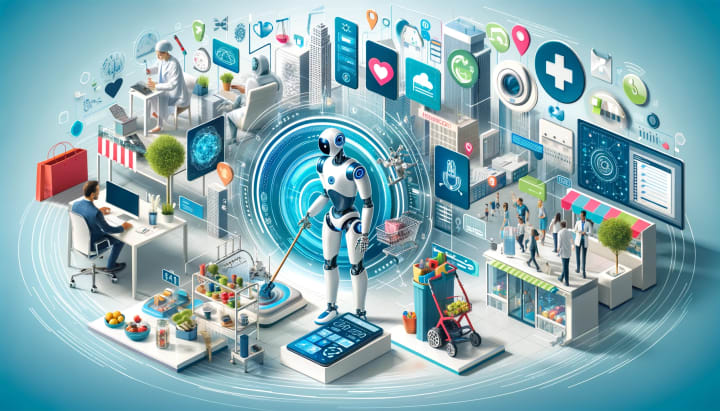
AI is enhancing everyday experiences in numerous ways. Virtual assistants like Siri and Alexa streamline tasks such as setting reminders, answering questions, and controlling smart home devices. AI-driven recommendation systems on platforms like Netflix and Amazon personalize content and shopping experiences, making it easier to find what users want.
Moreover, AI is making significant strides in accessibility. Tools like speech-to-text applications and AI-powered translation services are breaking down language barriers and aiding individuals with disabilities, fostering greater inclusivity and communication.
3. Driving Innovation

The potential of AI to drive innovation is immense. In scientific research, AI algorithms are accelerating discoveries by analyzing vast datasets and identifying patterns that might elude human researchers. This capability is speeding up advancements in fields such as drug discovery, climate modeling, and material science.
In the realm of transportation, AI is at the heart of developing autonomous vehicles. Self-driving cars have the potential to reduce traffic accidents caused by human error, lower transportation costs, and improve mobility for individuals unable to drive. Additionally, AI's role in optimizing logistics and supply chains is making global trade more efficient and responsive.
Ethical Challenges of AI
1. Privacy Concerns

As AI systems collect and analyze vast amounts of data, privacy concerns are a significant issue. Personal information, including browsing habits, location data, and biometric identifiers, can be exploited if not adequately protected. The use of AI for surveillance by governments and corporations raises questions about the balance between security and individual privacy.
To address these concerns, robust data protection regulations and transparent practices are essential. Organizations must prioritize data security and ensure that individuals have control over their personal information.
2. Bias and Discrimination

AI systems are only as unbiased as the data they are trained on. If the training data reflects societal biases, the AI can perpetuate and even amplify these biases. This issue has been observed in various applications, such as biased hiring algorithms and discriminatory loan approval processes.
To mitigate bias, it's crucial to use diverse and representative datasets and implement rigorous testing to identify and correct biases. Additionally, involving a diverse team in the development and oversight of AI systems can help address potential issues more effectively.
3. Job Displacement

The automation capabilities of AI have raised concerns about job displacement. As AI systems take over routine tasks, there is a fear that many jobs may become obsolete. While AI can create new job opportunities, the transition may be challenging for workers in affected industries.
Addressing this challenge requires a proactive approach, including investment in reskilling and upskilling programs. Governments, businesses, and educational institutions must collaborate to prepare the workforce for the changing job landscape and ensure a smooth transition to new roles.
4. Accountability and Decision-Making
AI systems are increasingly making decisions that impact people's lives, from credit approvals to legal judgments. The challenge lies in ensuring accountability for these decisions. When an AI system makes an erroneous or harmful decision, determining who is responsible—the developers, the users, or the AI itself—can be complex.
To ensure accountability, it is essential to establish clear guidelines for AI development and deployment. This includes creating transparent decision-making processes and mechanisms for redress when AI systems cause harm.
Conclusion
The future of artificial intelligence holds incredible promise, offering transformative opportunities across industries, enhancing daily life, and driving innovation. However, as AI continues to evolve, addressing its ethical challenges is crucial to ensuring that its benefits are realized while minimizing potential risks.
Balancing innovation with ethical considerations requires collaboration among technologists, policymakers, and society at large. By prioritizing privacy, fairness, job transition, and accountability, we can harness the power of AI to build a future that benefits everyone.
As we navigate this exciting frontier, it's essential to remain vigilant and proactive, ensuring that the development of AI aligns with our values and serves the greater good. The future of AI is not just about what technology can do but also about how we choose to shape its impact on our world.
About the Creator
ANEESHA RIZWAN
Iam writting article
Keep reading
More stories from ANEESHA RIZWAN and writers in Confessions and other communities.
DARK WEB
In the vast expanse of the internet, there lies a hidden realm known as the dark web. This segment of the internet is shrouded in mystery and often associated with illicit activities. However, understanding the dark web and its implications is crucial for navigating today’s digital landscape. This article will explore what the dark web is, how it differs from the deep web, its uses, and the risks associated with it.
By ANEESHA RIZWANabout a year ago in Criminal
I was in a Toxic Relationship, with my Workplace
“You got that?” My ex yelled. His hands were balled into fists at his side. At six foot three, he towered over me. A normal person would have been afraid, but I looked up a video of George Lopez repeatedly saying, “I got this,” and showed it to him. I had grown used to this treatment, so much so that I didn’t blink when he ripped the phone from my hand and threw it across the room.
By Jade M.2 days ago in Confessions




Comments
There are no comments for this story
Be the first to respond and start the conversation.