
The Dirty Truth Why Inbreeding Is So Dangerous
Incest's Genetic Gambit: Unmasking the Perils of Inbreeding

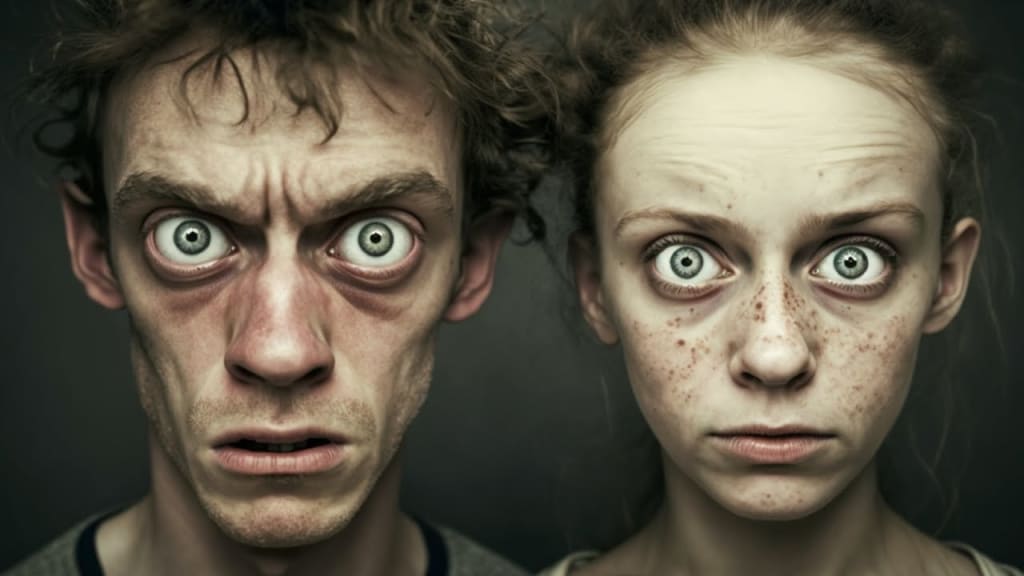
When contemplating the concept of the Doomsday Clock, it serves as a symbolic representation of our proximity to potential self-annihilation. This isn't a precise countdown but rather a metaphor for the perennial perils humanity faces. Midnight on this clock symbolizes the specter of our complete obliteration. The inception of this clock dates back to 1947, a time fraught with tension following the atomic bombings in Hiroshima and Nagasaki two years prior. The specter of nuclear conflict loomed large. In response, the Doomsday Clock was set at seven minutes to midnight.
Over the ensuing decades, this symbolic timepiece has undergone 24 recalibrations, reflecting the evolving existential threats humanity confronts. Presently, the clock's hands rest at 100 seconds to midnight, a historical proximity to our own annihilation that has not been witnessed since 1947.
In light of these circumstances, it is pertinent to ponder the not entirely implausible query: Can two individuals, the sole survivors of a global catastrophe, undertake the daunting task of repopulating the Earth? This scenario could arise from an asteroid impact, nuclear conflict, or some unforeseen cataclysm. Given this scenario, it appears conceivable to initiate the first generation, provided essential components of human existence endure and function optimally. The era of jokes like "I wouldn't sleep with you if you were the last man on Earth" has understandably lost its humor.
The initial phase of this endeavor may seem relatively straightforward, with the possibility of breaking records set by the 18th-century Russian couple, Mr. and Mrs. Vasilyev, who notably had 69 children, including 16 pairs of twins, seven sets of triplets, and four sets of quadruplets. However, challenges arise as we delve deeper into the process.
The first generation, born of post-apocalyptic survivors, would essentially comprise siblings, necessitating the occurrence of serious incest in the subsequent generation. While this might prompt a single iteration of the dreaded "birds and bees" talk, it is imperative to recognize that the universal taboo against incest holds sway in diverse human societies. This aversion to incestuous relationships appears to be ingrained in our collective human psyche.
The aversion to incestuous relations is not solely a cultural construct but, according to some scholars, an instinctual, deep-seated response. It's safe to assume that most individuals find the notion of sexual involvement with close relatives profoundly repugnant. Yet, there are scientific reasons underpinning this aversion. Inbreeding poses severe genetic risks.
The human genome project, a milestone in genetic research, revealed that humans possess between 20,000 and 30,000 genes. Each gene has two copies, inherited from each parent. Recessive gene mutations can lead to debilitating inherited diseases. Incestuous unions amplify the odds of offspring inheriting two copies of detrimental gene mutations due to the close genetic relatedness of siblings.
A stark real-world illustration of these dangers can be found in Pinglab, a Micronesian atoll. In 1775, a catastrophic typhoon decimated the population, leaving just 20 survivors. The king of the island suffered from complete achromatopsia, a rare condition causing complete color blindness. Today, one in 10 individuals on Pinglab grapple with this ailment, a significantly higher prevalence than the general population. This occurrence is attributed to the founder effect, the erosion of genetic diversity when a small group of founders repopulates an area.
Inbreeding is not without its catastrophic consequences. Historical accounts of Europe's Habsburg dynasty, which pursued strategic intermarriages among close relatives, reveal the perils of inbreeding. The dynasty's obsession with maintaining power through familial unions resulted in widespread health issues, notably the distinctive "Habsburg jaw." Charles II of Spain, the unfortunate result of this extensive inbreeding, suffered from numerous genetic disorders and marked deformities, making him the last of the Habsburg monarchs in Spain. His demise in 1700 set off the War of the Spanish Succession, underscoring the devastation inbreeding can wreak upon dynasties.
Further back in history, we encounter the Neanderthals, close human relatives who vanished around 40,000 years ago. While it was previously assumed that Homo sapiens outsmarted Neanderthals, recent research suggests a different, more tragic fate. Due to their small population, Neanderthals may have inadvertently succumbed to inbreeding, leading to their extinction.
The question of repopulating Earth after a global catastrophe is no mere whimsical pondering. Given the proximity of potential cataclysms, ensuring our species' survival necessitates expansion beyond Earth. Unfortunately, no nearby habitable planets exist. Mars, a potential candidate, would require advanced terraforming technology for human habitation. Proxima Centauri, the nearest star, lies 4.2 light-years away, presenting a formidable logistical challenge. As technology advances, the possibility of interstellar colonization beckons, with the need for self-sustaining generations aboard the colony vessel.
One critical consideration is determining the minimum viable population to maintain genetic diversity for repopulation. Astrophysicist Frederick Marin suggests a minimum of 98 individuals for a 6,000-year voyage to Proxima Centauri in a space ark. This inquiry holds paramount significance, as it pertains to the survival of our species and the preservation of our genetic diversity.
Before concluding, a captivating thought experiment awaits: How many ancestors do you have? While it may seem a straightforward calculation, it quickly spirals into complexity. As we trace our ancestry back through generations, the numbers soar exponentially, exceeding the population of all humans to have ever lived. This apparent paradox stems from the fact that all living individuals are interconnected in a vast family tree, resulting in shared ancestors among us all. Thus, the notion of being "inbred" takes on a broader, more interconnected meaning.
In conclusion, the contemplation of repopulating Earth post-catastrophe underscores the importance of genetic diversity and the challenges posed by inbreeding. It highlights the necessity of interstellar colonization and the quest for an optimal population size to secure the survival of our species. Additionally, the fascinating concept of shared ancestors among all humans provides a unique perspective on our interconnectedness.
About the Creator
Varisha Ahmed
With every turn of a page, she's transported away
Lost in the magic that stories convey
From the comfort of her chair, she's never alone
As long as there are books, her spirit will roam
Keep reading
More stories from Varisha Ahmed and writers in Confessions and other communities.
Step Inside The Disturbing Experiments Of The Mad Doctor
Hidden within a dusty cabinet at the University of Sao Paulo's medical department lies a 40-year-old human skeleton, a silent witness to a life shrouded in malevolence. Though its bones hint at a motorcycle accident and sinusitis, they tell just a fraction of the story. This ordinary skeleton, once a tool for Brazilian forensic science students, once belonged to one of the most sinister figures in history.
By Varisha Ahmed2 years ago in Criminal
The Royal News That Made Me Pause: Why This Upcoming Visit Feels Different
There are moments when a piece of celebrity news makes you stop and think a little deeper than usual. For me, that moment happened recently when I heard that Prince Harry and Meghan Markle might soon visit Australia again.
By CelebCast Central4 days ago in Confessions


Comments
There are no comments for this story
Be the first to respond and start the conversation.