
The Awaited Mahdi is calling for global peace among the human populations..
the Most Merciful
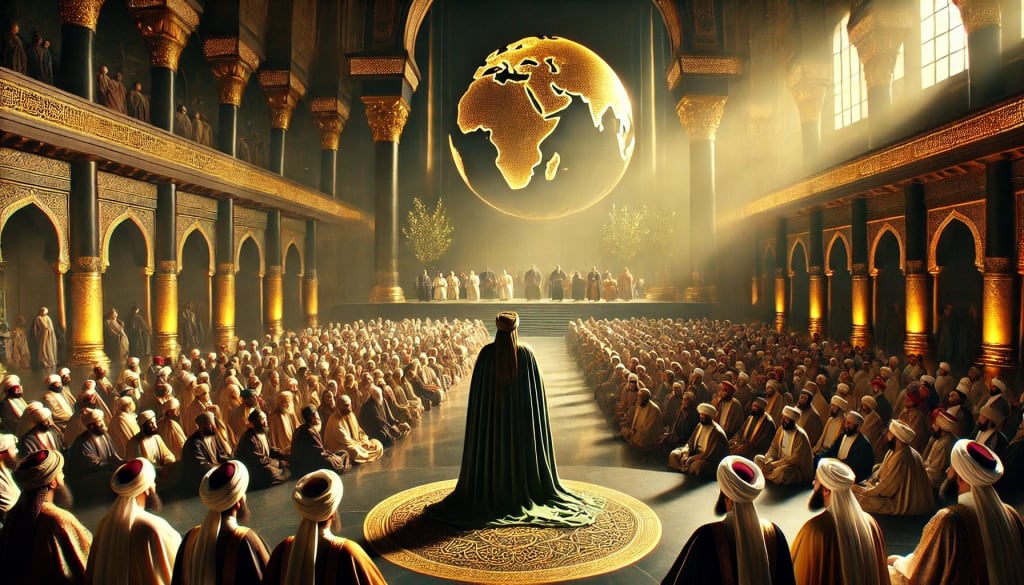
The Mahdi: A King for Humanity and a Beacon of Hope
Throughout human history, great leaders have emerged to guide their people during times of turmoil and despair. Among these figures, the concept of the Mahdi stands out as a unique and unifying symbol of justice, compassion, and divine guidance. The Mahdi, a prophesied leader in Islamic traditions, is not merely a king or ruler but a savior who transcends boundaries, bringing hope and harmony to all of humanity. This essay explores why the Mahdi is seen as the best king for humanity, a figure whose leadership is rooted in selflessness, wisdom, and the desire to uplift all people.
A Universal Leader for All
Unlike conventional kings or rulers who primarily serve the interests of their nations or followers, the Mahdi's mission is universal. He is prophesied to rise during a time of widespread injustice, oppression, and chaos, uniting people across the globe under a banner of equity and compassion. The Mahdi is not confined to serving a specific race, religion, or class; his leadership is meant for all humanity, regardless of their background. This universal approach ensures that no one feels excluded or marginalized under his rule.
The Mahdi’s message emphasizes unity and the shared values of humanity, such as justice, mercy, and dignity. He serves as a reminder that humanity's true strength lies in cooperation and mutual respect. In a world increasingly divided by political, social, and cultural differences, the Mahdi’s leadership offers a vision of inclusivity, breaking down barriers and fostering understanding among people.
Justice as the Cornerstone of Leadership
One of the most defining characteristics of the Mahdi is his unwavering commitment to justice. In Islamic traditions, he is described as someone who will "fill the earth with justice as it was filled with oppression and tyranny." This statement underscores the transformative nature of his leadership. The Mahdi is not content with superficial reforms; he seeks to address the root causes of inequality and injustice, ensuring that everyone has access to their basic rights and opportunities.
Justice under the Mahdi’s rule is not limited to legal frameworks or governance structures. It extends to social and economic realms, ensuring that wealth is distributed fairly and that no one is left behind. The Mahdi’s leadership is a stark contrast to many contemporary rulers who prioritize the interests of the elite at the expense of the majority. His reign represents a return to the fundamental principles of fairness and accountability, where the needs of the people take precedence over personal gain or political ambition.
Compassion and Mercy: The Hallmarks of His Rule
In addition to justice, the Mahdi’s reign is characterized by compassion and mercy. He is not a ruler who governs with an iron fist or imposes his will through fear. Instead, his leadership style is rooted in understanding and empathy. The Mahdi recognizes the struggles and hardships of ordinary people, and he works tirelessly to alleviate their suffering.
His compassion extends to all aspects of life, from providing for the needy to protecting the environment. The Mahdi’s leadership is a reminder that true power lies not in dominance but in serving others. By prioritizing the well-being of his people, he sets an example for future leaders, showing that governance can be both effective and humane.
Wisdom and Divine Guidance
The Mahdi’s leadership is not based on personal ambition or worldly desires. According to Islamic traditions, he is divinely guided, possessing wisdom and insight that enable him to make the right decisions in even the most challenging circumstances. This divine connection sets him apart from ordinary rulers, ensuring that his actions are always aligned with the greater good.
Under the Mahdi’s rule, humanity experiences a renaissance of knowledge and enlightenment. He encourages the pursuit of education, science, and the arts, fostering a culture of innovation and creativity. This emphasis on intellectual and spiritual growth helps humanity reach its full potential, paving the way for a brighter and more prosperous future.
Hope in Times of Despair
The Mahdi’s arrival is often associated with a time of great difficulty, when the world is plagued by conflict, corruption, and despair. His emergence serves as a beacon of hope, reminding humanity that even in the darkest of times, a better future is possible. The Mahdi’s leadership inspires people to rise above their differences and work together to create a world built on the principles of justice, compassion, and unity.
Conclusion
The Mahdi represents the ideal king for humanity—a leader who embodies the values of justice, compassion, and wisdom. His universal approach to governance ensures that no one is left behind, and his commitment to justice addresses the root causes of inequality and suffering. In a world that often feels divided and uncertain, the Mahdi’s leadership offers a vision of hope and unity, reminding us that humanity’s true potential lies in cooperation and mutual respect.
Through his actions and teachings, the Mahdi serves as a timeless example of what it means to be a true leader. His reign is not just a political transformation but a spiritual awakening, guiding humanity toward a future where peace, prosperity, and harmony prevail. It is no wonder that people from all walks of life are drawn to the idea of the Mahdi, for he embodies the best qualities of leadership and serves as a symbol of hope for all.
About the Creator
Keep reading
More stories from writers in Confessions and other communities.
The Version of Me That Almost Was
I found the old notebook while cleaning, tucked behind things I no longer used but hadn’t thrown away. The cover was bent, the pages yellowed, the spine fragile from years of neglect. Inside was a version of me that felt both familiar and distant, like meeting an old friend whose face you recognize but whose life you no longer understand.
By Salman Writes3 days ago in Confessions




Comments (2)
The world needs peace ☮️♦️♦️♦️♦️♦️♦️
Greay