
The Ache of “I’m Fine”
Between What We Say and What We Feel

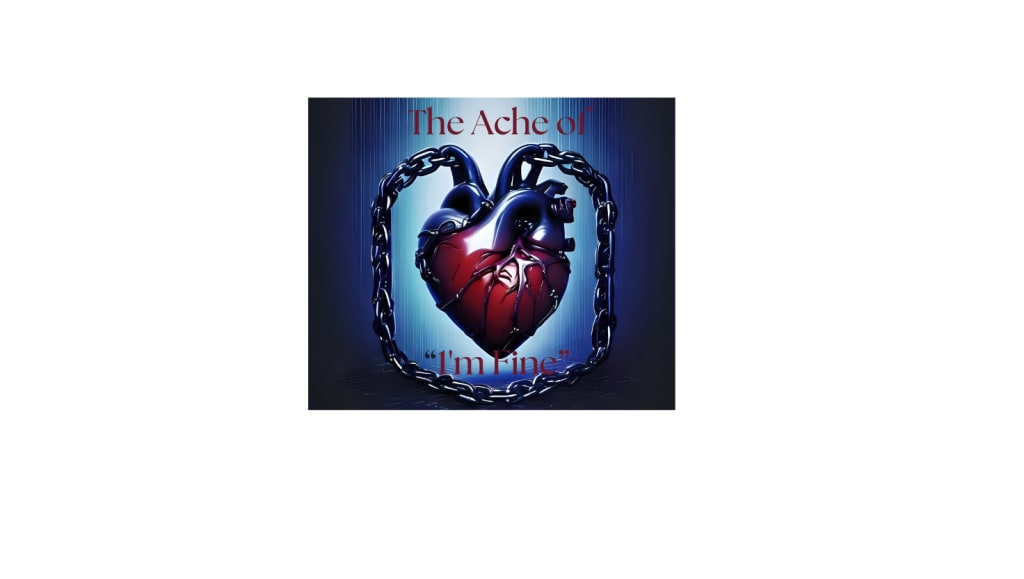
There is a peculiar weight that comes with those three words: “I’m fine.” Spoken softly, almost automatically, they roll off the tongue like a shield, a polite dismissal of curiosity. Yet beneath their simplicity, they carry a quiet ache—one that swells in the chest when no one is looking, a weight that no hug or smile can quite lift.
To the world, “I’m fine” is enough. It signals that you are capable, composed, in control. But inside, it can feel like a small betrayal, a refusal to let someone in. It is a language of survival, a habit honed from years of needing to appear strong when your heart is fragile. Saying “I’m fine” becomes a reflex, a way to deflect concern, avoid questions, and mask the storm that churns silently beneath your ribs.
The ache begins in small moments. A friend asks how you are, their eyes warm with genuine care, and you respond without thought: “I’m fine.” It tastes like ash in your mouth because it is untrue. Your mind flashes through the list of bruises—emotional ones, sleepless nights, doubts that gnaw at your confidence—but they remain unspoken. You smile politely, and the conversation moves on, leaving your ache tucked away in the shadows.
It is in these tiny betrayals to yourself that the ache grows. Over time, “I’m fine” becomes a mask not just for others but for you. You begin to ask yourself whether you are fine at all. Perhaps fine is a comfortable lie, a neutral space where nothing is too bright or too dark, where emotions are flattened so they do not disrupt the fragile order of your life. Yet every time you say it, your chest tightens slightly, a reminder that hiding your truth is never free.
There is also a certain loneliness that comes with this phrase. You hear other people share, laugh, cry, vent, and you wonder why it is easier for them to unravel in the presence of someone who cares. You know that “I’m fine” is not really protection—it is isolation. Each repetition reinforces a wall around your feelings, a barrier meant to prevent discomfort, but which also blocks intimacy. You want someone to ask again, gently, persistently, to peel back the layers without judgment—but society trains us to nod, smile, and move along.
Still, even within the ache, there is resilience. Saying “I’m fine” can sometimes be an act of survival, a temporary shield while you gather the courage to face the raw truth. The ache becomes a quiet teacher, reminding you that words matter, that hiding always has a cost. And in those rare moments when the mask slips—when a tear escapes, a voice trembles, or a hand reaches out—you feel the relief of being seen. That ache, as heavy as it is, carries the hope that one day “I’m fine” may no longer be necessary.
Until then, the ache persists, a gentle pulse beneath your ribs, a secret rhythm only you know. It is the quiet grief of restraint, the yearning for connection, the longing for a world where honesty is met not with discomfort, but with understanding. Saying “I’m fine” is safe, it is easy, it is convenient—but it is never truly without cost. And perhaps, in acknowledging that cost, we find the first small step toward saying what we really mean.
About the Creator
Zhel
A naturally shy soul, I find my voice in words—through prose and poetry, I transform into a free spirit, sharing thoughts and emotions that might otherwise remain silent.
Keep reading
More stories from Zhel and writers in Confessions and other communities.
The Echo Chamber of Self-Doubt
It begins quietly, almost imperceptibly. A single thought, feather-light and unassuming: Are you sure? It doesn’t arrive with urgency or force. It simply drifts in, settling into the soft spaces of your mind where uncertainty already lives. You barely notice it at first. But it stays.
By Zhel5 months ago in Confessions
Word of the Day: ホチキス
I don't know the word for Staples. I remember I used to think that Hochikisu was an Onomatopoeia for a stapler rather than a brand name. I am pretty sure I already have this title as a theme, which is making me feel many sort of ways as Vocal is harassing me about payments currently.
By Kayla McIntosh23 days ago in Confessions
“It’s Not You, It’s Me!”
There comes a time in life when I look at the things I used to do, especially when I was much younger and wanted to get along with others. There were times when I went along with the routines, the invitations, and habits of others that no longer fit me. Theref0re, I am breaking up with those habits.
By Margaret Minnicks4 days ago in Confessions
Miss Persephone's Manual to a Seemingly Ordinary Life
Miss Persephone was found at the dining table, her blue eyes swollen, her tears arriving and retreating like the tides of the ocean. Earlier that day, her family had visited her in the retirement home where she had lived for eight years. It was her eightieth birthday.
By Imola Tóth4 days ago in Fiction


Comments
There are no comments for this story
Be the first to respond and start the conversation.