
Technology Shapes Humanity in 2025
"Balancing Innovation and Isolation in an AI-Driven World"

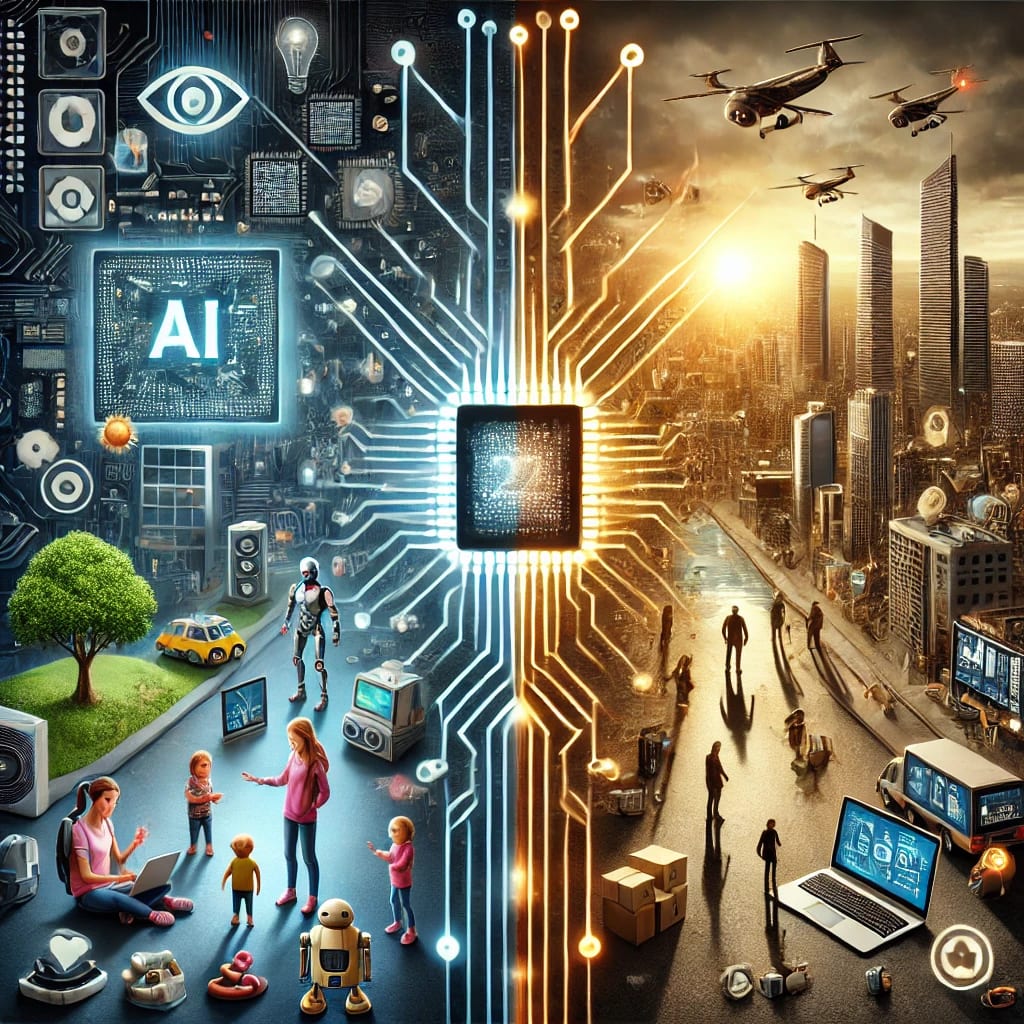
“Two Sides of the Circuit: Living with Technology in 2025”
In 2025, technology is no longer just part of our lives—it’s woven into every second of it. From the moment we wake up to a smart mirror that recommends outfits based on the weather, to the AI-generated lullabies that help our children sleep, the digital and physical worlds have fused into something... well, electric.
But with every light that tech shines, it casts a shadow too.
Take 34-year-old Mira, a teacher from Mumbai. Her mornings begin with a holographic assistant reviewing her schedule, followed by AI-assisted lesson plans that adapt in real time to student emotions using wearable feedback devices. “It’s amazing,” she says, “my students are more engaged than ever. The tech helps me be more human with them.”
Yet, she admits, it’s also exhausting. Every movement, every smile, every pause is tracked. “Sometimes I feel like I’m teaching for the algorithm, not the kids.”
That’s the paradox of 2025: technology brings us closer, yet sometimes makes us feel more watched than ever.
The Good
The list of benefits is long and impressive. Remote surgeries with robotic arms are now routine in many parts of the world, giving rural patients access to world-class care. AI-powered diagnostics have lowered cancer detection time by over 40%. In classrooms, personalized learning powered by machine learning helps children of all backgrounds reach their potential at their own pace.
Daily life has become smoother. Smart homes now predict energy usage and reduce waste. Digital wallets and crypto micro-payments make international trade and personal finance seamless. AI companions help the elderly combat loneliness, with some even speaking in the voices of lost loved ones—an eerie but comforting innovation for some.
Transportation has seen a revolution too. With electric autonomous vehicles and AI-optimized traffic flows, urban pollution levels have dropped in major cities. Commutes are quieter, faster, and sometimes even enjoyable.
In short, technology in 2025 is doing what it promised: making life easier, longer, and sometimes more meaningful.
The Bad
But not everyone is thriving.
Outside the glowing cities and tech hubs, many feel left behind. Digital literacy gaps are more visible than ever. Entire communities, especially in developing nations, struggle to keep up with constant changes, leading to rising inequality between the hyper-connected and the digitally disconnected.
Mental health professionals report a new wave of “tech burnout”—a mix of overstimulation, digital fatigue, and identity confusion, especially among Gen Z and Alpha generations. Social media, now powered by hyper-intelligent recommendation engines, keeps people scrolling deeper into echo chambers, often blurring fact and fiction beyond recognition.
Jobs, too, are transforming faster than people can adapt. Automation has replaced millions of roles in retail, transportation, and even creative sectors. AI-generated art, music, and content now compete with human creators, sparking debates about authenticity and value.
Even our relationships have changed. With dating apps powered by genetic and psychological data, matches are more compatible than ever—but many report a loss of mystery, spontaneity, and human connection. “It’s like falling in love with a formula,” one user said.
Then there’s the question of privacy. In 2025, data is currency. While laws have improved, the average person still shares more personal information in a day than most did in a lifetime just a generation ago. Voice, face, heartbeat—everything is data. And someone, somewhere, is always collecting it.
Looking Forward
So where do we go from here?
Experts believe the next frontier isn’t just about more tech—but about better boundaries. Building “slow tech” solutions that enhance life without consuming it. Designing AI that collaborates, not competes. Teaching digital ethics alongside programming in schools.
As Mira puts it, “The tech isn’t the problem. It’s how we use it—and how we let it use us.”
In 2025, humanity stands at a fork in the digital road. On one path lies efficiency, longevity, and insight. On the other lies isolation, dependency, and fatigue. The challenge, as always, is choosing wisely.
About the Creator
Aima Charle
I am:
🙋🏽♀️ Aima Charle
📚 love Reader
📝 Reviewer and Commentator
🎓 Post-Grad Millennial (M.A)
***
I have:
📖 reads on Vocal
🫶🏼 Love for reading & research
***
🏡 Birmingham, UK
📍 Nottingham, UK
Status : Single
Keep reading
More stories from Aima Charle and writers in Confessions and other communities.
The Anatomist's Masterpiece
In the hushed stillness of his attic studio, bathed in the soft glow of a single oil lamp, Professor Armitage hunched over his workbench. The air was thick with the scent of linseed oil and graphite, a familiar comfort to a man who had dedicated his life to the pursuit of anatomical perfection. Before him lay a sheet of pristine vellum, its surface yearning for the touch of his skilled hand. His tools, a collection of finely sharpened pencils, lay beside him, each one a conduit for his artistic vision. Tonight, he sought to capture the very essence of life itself: the human heart.
By Aima Charle9 months ago in Confessions
I was in a Toxic Relationship, with my Workplace
“You got that?” My ex yelled. His hands were balled into fists at his side. At six foot three, he towered over me. A normal person would have been afraid, but I looked up a video of George Lopez repeatedly saying, “I got this,” and showed it to him. I had grown used to this treatment, so much so that I didn’t blink when he ripped the phone from my hand and threw it across the room.
By Jade M.3 days ago in Confessions
Pearl
1980 something. we all hung out at Pearl and you and i were nothing special, or so i thought. i mean we all danced, drenched in our own sweat, our own saline solution of fear, too many beers, shots, laughter, tears, fucks in the bathroom and i don't know when we began to be afraid. do you?
By ROCK aka Andrea Polla (Simmons)4 days ago in Fiction




Comments
There are no comments for this story
Be the first to respond and start the conversation.