
Space Exploration and Colonization
Humanity's Journey Beyond the Stars

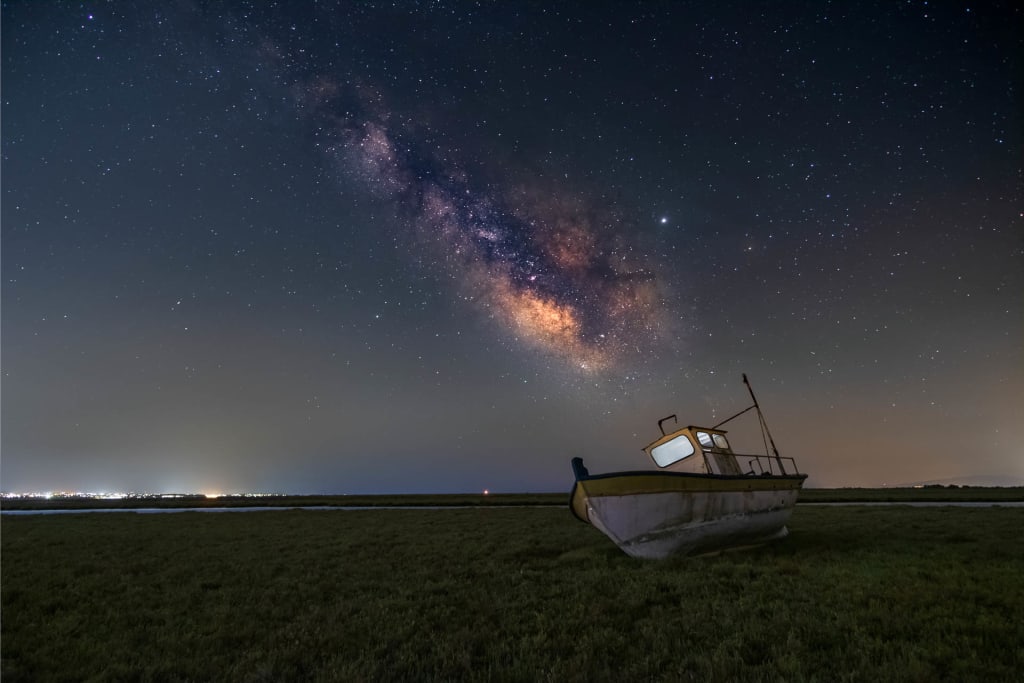
Space, the final frontier, has always captured the imagination of humanity. From the earliest civilizations gazing up at the night sky to the revolutionary advances in science and technology, our fascination with space has only grown stronger over the centuries. Space exploration and colonization have become the pinnacle of human achievement, representing our innate desire to venture beyond the confines of our home planet. In this blog, we will delve into the exciting realm of space exploration, the dreams of colonizing distant worlds, and the potential impact on humanity's future.
1. The History of Space Exploration
The journey of space exploration began in the 20th century with the launch of the first artificial satellite, Sputnik, by the Soviet Union in 1957. This event marked the dawn of the space age, and since then, humanity has achieved remarkable feats.
Manned space missions, such as the Apollo program, saw astronauts set foot on the moon in 1969, a milestone that expanded our understanding of the cosmos and showcased the boundless potential of human ingenuity. Over the decades, space agencies like NASA, ESA, and Roscosmos have continued to explore our solar system and beyond, sending missions to study planets, moons, and asteroids, unlocking the mysteries of the universe.
2. The Quest for New Horizons
Space exploration is not merely about satisfying our curiosity; it serves a profound purpose in expanding our knowledge, developing new technologies, and addressing critical challenges on Earth. Space missions have led to numerous scientific discoveries, from the composition of distant celestial bodies to understanding the origins of our solar system.
Additionally, the technologies developed for space exploration have found applications in various industries, such as telecommunications, medicine, and environmental monitoring. The search for habitable planets and extraterrestrial life has sparked contemplation about our place in the cosmos and the possibility of future interactions with other civilizations.
3. Colonizing the Cosmos
Beyond exploration, the prospect of space colonization has increasingly become a focus of scientific and public interest. The idea of human colonies on other celestial bodies, such as the moon or Mars, has been a topic of fascination for science fiction writers for decades. Today, with advancements in technology and the collective ambition of nations and private companies, this vision is edging closer to reality.
Mars, often referred to as the "Red Planet," has been the primary target for potential colonization due to its relative proximity to Earth and its potential resources for sustaining human life. Space agencies and private enterprises have proposed ambitious plans to establish Martian colonies, envisioning self-sustaining habitats and eventually creating a multi-planetary society.
4. Challenges and Opportunities
While the prospect of space colonization holds immense promise, it is not without its challenges. The harsh environments of other planets and celestial bodies present significant hurdles to overcome, including radiation exposure, extreme temperatures, and the lack of a breathable atmosphere. Additionally, long-duration space travel poses potential health risks to astronauts, requiring extensive research into mitigating the effects of microgravity on the human body.
The question of ethics and governance in space colonies also looms large. How will societies be structured, and what rules will govern human behavior in such extraterrestrial habitats? It is essential to address these ethical questions to ensure that future space colonization endeavors are carried out responsibly and in harmony with universal values.
On the other hand, space colonization offers a multitude of opportunities. Establishing off-world colonies could serve as a safeguard against existential threats to humanity, such as asteroid impacts or natural disasters on Earth. Additionally, space colonies may unlock new resources and raw materials, leading to technological advancements and economic growth. Moreover, the exploration and colonization of other worlds could inspire the next generation of scientists, engineers, and explorers, fostering a passion for science and innovation.
5. International Collaboration
Space exploration and colonization are endeavors that transcend national boundaries. In recent years, international collaboration has become a hallmark of space missions. Space agencies from different countries join forces, pooling their expertise and resources to achieve shared goals.
International partnerships in space exploration not only advance scientific discovery but also promote diplomacy and foster peaceful cooperation among nations. Such collaborations are critical in tackling global challenges, including climate change and resource management, which require a unified effort by the international community.
Space exploration and colonization are a testament to human ingenuity, ambition, and curiosity. From the first steps on the moon to the plans for establishing colonies on Mars, humanity's journey beyond Earth exemplifies our unyielding desire to explore the unknown and expand our horizons.
While the challenges of space exploration and colonization are substantial, the potential benefits are equally remarkable. By pushing the boundaries of what is possible, we may one day witness the establishment of self-sustaining colonies on other celestial bodies, securing our species' survival and unlocking the secrets of the cosmos.
As we continue this epic journey, it is vital to approach space exploration and colonization with a sense of responsibility, cooperation, and ethical consideration. Collaboration among nations, private enterprises, and the global scientific community is crucial in ensuring the success and sustainability of these endeavors.
Ultimately, space exploration and colonization represent the pinnacle of human achievement, uniting us in a shared dream of a future that extends beyond our terrestrial home. As we embark on this cosmic adventure, let us be guided by the spirit of curiosity, courage, and cooperation, for the stars beckon us onward, and the possibilities are limitless.
About the Creator
Moin Chopra
Dive into a world of captivating insights and fresh perspectives! Explore with my blogs and embrace knowledge, inspiration, and connection. 🌟📚 #Blogger #Exploration #Inspiration
Reader insights
Outstanding
Excellent work. Looking forward to reading more!
Top insights
Excellent storytelling
Original narrative & well developed characters
On-point and relevant
Writing reflected the title & theme
Keep reading
More stories from writers in Confessions and other communities.
Word of the Day: 推し
I am not putting any more time on my timer right now. I am just trying to get by here. There is almost no point to school because, like 35% of the time is technical difficulties and the rest of the time is things that actually aren't really useful.
By Kayla McIntosh6 days ago in Confessions


Comments
There are no comments for this story
Be the first to respond and start the conversation.