
Raised by Silence: A Childhood with No ‘I Love You’
In a house full of words left unspoken, I learned that silence can be louder than love.

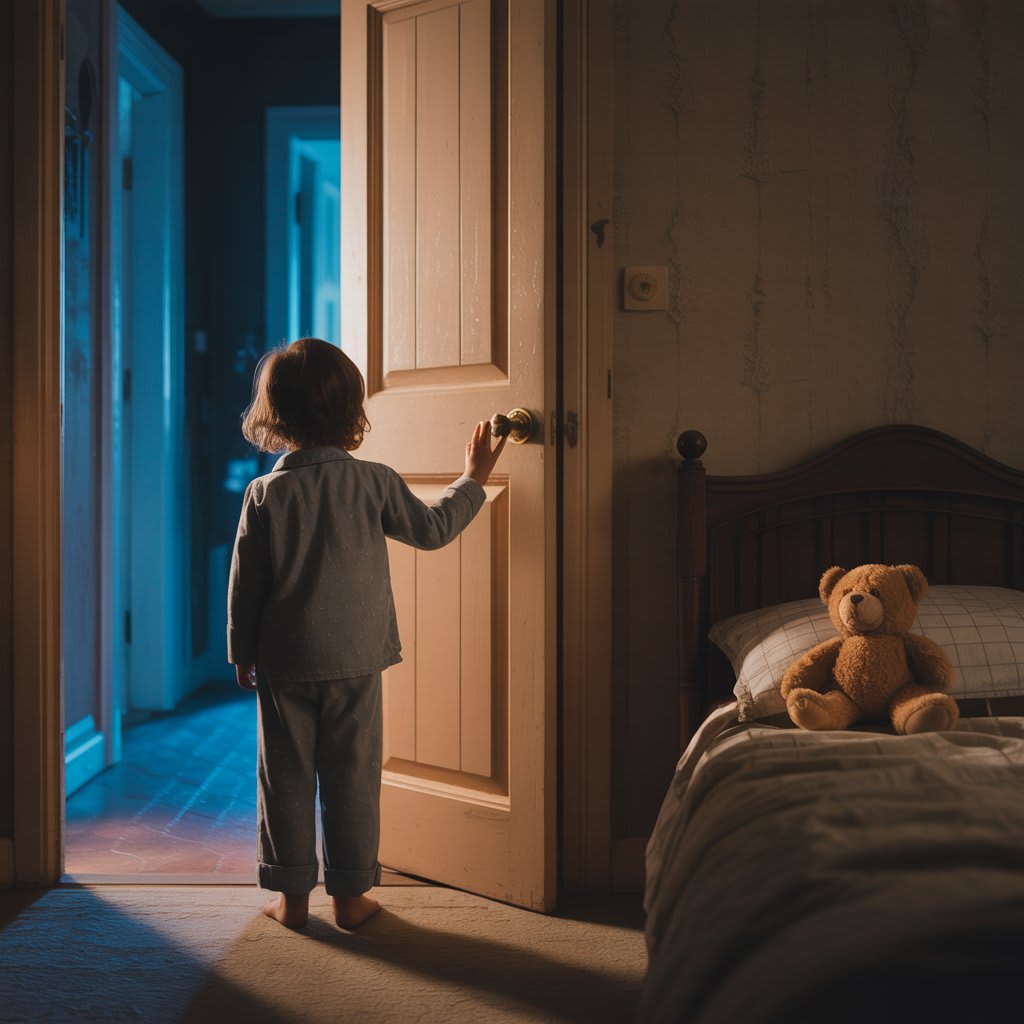
Silence has a sound.
It echoes in the walls of childhood homes, reverberates through family dinners, and hums between every unsaid word.
I grew up in a house that never said, “I love you.”
Not once. Not in passing. Not at bedtime. Not even in moments of fear, crisis, or celebration. It wasn’t because my parents didn’t care—at least, not in the ways society measures love. It was just that affection, in our house, was not spoken. It was assumed. Or worse… ignored.
As a kid, I didn’t know that was strange.
You think whatever you're born into is normal. You think every dad comes home without saying hello and every mom folds laundry without looking you in the eye. You think love is quiet. Invisible. Conditional.
My parents were hard-working, responsible, and present—but emotionally absent. They fed me, clothed me, made sure I got good grades. But they never hugged me unless it was mandatory. Never praised me unless it was perfect. Never said the three words every child deserves to hear.
Instead, there were quiet dinners. Tense car rides. Muted birthdays.
In school, I noticed the difference.
I’d see classmates run into their parents' arms after school. Hear moms whisper “I love you, baby” at pick-up. Watch dads ruffle their kids' hair and smile.
I began to realize I was missing something. Something big.
Once, in fifth grade, we were asked to write a letter to someone we loved. I chose my mom. I wrote, “I love you even if you don’t say it.” When she read it later, she didn’t say anything. She just handed it back and said, “That’s nice.”
I cried that night, alone in my room. Not because I was unloved, but because I was unseen.
As I got older, the silence became louder.
It screamed at me in moments when I needed reassurance. When I had my first panic attack and my dad just said, “Get some air.” When I told my mom I didn’t get into my dream college and she responded with, “I told you not to aim so high.”
Those moments stick to your bones. They shape how you think about love, vulnerability, and self-worth.
Emotional neglect doesn’t always look like abuse.
Sometimes, it looks like a parent scrolling through their phone while you cry quietly on the couch.
Sometimes, it's a locked bedroom door when you knock, just needing to be held.
Sometimes, it's hearing the words “You're being dramatic,” when all you're doing is trying to be heard.
Years later, I began to understand the cycle.
My parents were raised the same way. Their parents had survived war, poverty, trauma. Affection was considered weak. Vulnerability was dangerous. They learned to survive, not connect. And they passed that silence down like a family heirloom.
I don’t blame them anymore.
But I won’t excuse it either.
Because silence, when it replaces love, becomes a form of emotional starvation.
You grow up full of doubt. You question your worth. You chase affection from all the wrong places. You seek validation in unhealthy relationships, risky choices, and invisible battles with anxiety.
It took years of unlearning to accept that I am worthy of love.
Without conditions. Without proving myself. Without being perfect.
I remember the first time someone told me they loved me and meant it. I froze.
Not because I didn’t feel the same. But because I didn’t know how to respond. I had never been taught the language of love. I was fluent in silence.
Therapy helped.
Journaling helped.
Crying in the shower helped.
But what truly began to heal me was realizing I wasn’t alone.
So many of us were raised in quiet houses.
Where love was measured by effort, not emotion.
Where tears were weakness and hugs were rare.
Where praise came only when excellence was achieved.
We are the generation breaking the pattern.
Learning how to say “I love you” without stuttering.
Learning how to hug without feeling awkward.
Learning how to feel—fully, openly, unapologetically.
Now, I say “I love you” a lot.
To friends. To family. To myself in the mirror on hard days.
I text it first. I say it loud. I say it even when it feels vulnerable—especially then.
Because I know what it’s like to grow up without it.
And I will never let silence win again.
If you were raised in a home where “I love you” was never said, you’re not broken.
You’re not unlovable. You were just taught a language that never included affection.
But you can rewrite it.
You can be the voice you needed.
You can love loudly.
And that matters.
Because silence may raise us, but it doesn’t have to define us.
We get to choose what echoes forward.
About the Creator
Jawad Khan
Jawad Khan crafts powerful stories of love, loss, and hope that linger in the heart. Dive into emotional journeys that capture life’s raw beauty and quiet moments you won’t forget.
Keep reading
More stories from Jawad Khan and writers in Confessions and other communities.


Comments
There are no comments for this story
Be the first to respond and start the conversation.