
The Day My Mother Forgot My Name
A memory lost, a bond tested, and the silence that said everything

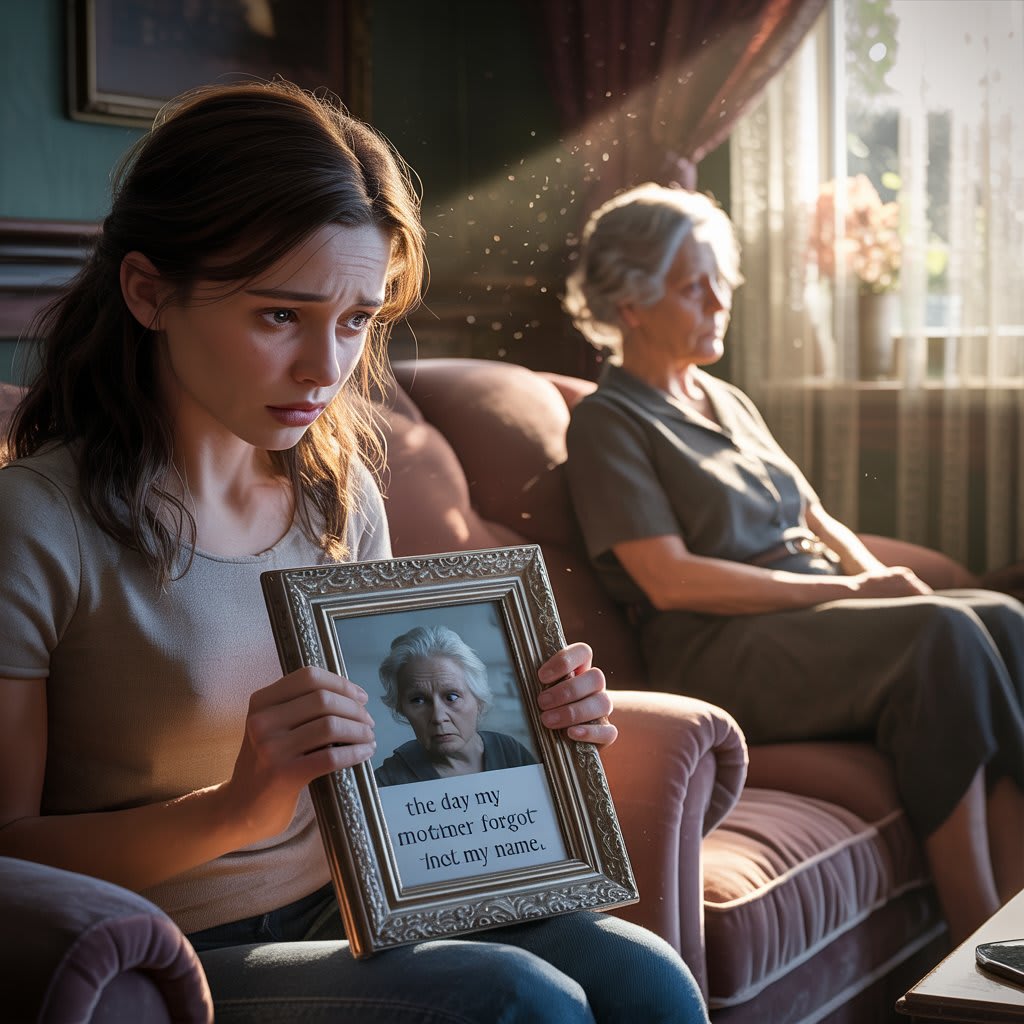
It started with something small.
She asked me where the cups were. Not unusual, except they had been in the same cabinet for twenty years.
I laughed. "Same place as always, Mama."
She smiled sheepishly, but there was something behind her eyes—confusion she tried to hide. I ignored it. I didn’t want to believe what I already knew.
Two weeks later, she forgot how to turn off the stove. Then came the missed bills, the burned toast, the forgotten birthdays. But none of it hit me the way that day did.
The day my mother forgot my name.
It was a Tuesday.
The kind of dull, quiet afternoon where the air sits heavy in the house and everything feels paused. I had taken the day off work to spend time with her—something I’d been doing more of lately. Partly because I missed her. Mostly because I was afraid I’d wake up one day and she’d be gone without warning.
She was sitting in her armchair, the same one she nursed me in when I had the chickenpox, the one she used to rock herself to sleep in when Dad passed. Her frail fingers were picking at the edge of a knitted blanket, her eyes glazed over as she stared at the wall.
“Mama,” I said softly, kneeling beside her, “do you remember the summer we went to the lake? You wouldn’t let me eat ice cream before swimming, and I cried so loud the whole beach heard me.”
She chuckled. “That does sound like something I’d say.” But there was hesitation. Her smile didn’t reach her eyes.
I reached for her hand. “Do you remember what you used to call me? Your little shadow. Because I followed you everywhere.”
She looked at me. Really looked.
Then tilted her head and asked, “I’m sorry, dear... what’s your name again?”
I didn’t cry right away.
I just sat there, holding her hand as if clinging to the last string of a rope fraying at both ends. My heart didn’t shatter all at once. It cracked quietly, like porcelain beneath slow pressure.
She smiled at me like I was a kind nurse. A stranger who had done something nice.
“Mama,” I whispered, my voice trembling, “It’s me. It’s Ava.”
Her brows furrowed. “Ava,” she repeated slowly, the name strange on her tongue. “That’s a beautiful name.”
It was the moment I had feared for months. But fear doesn’t prepare you for reality. It doesn’t warn you how your chest will tighten, how the air will suddenly feel too thick, how the silence between two heartbeats will stretch like an endless chasm.
That night, I found myself going through old photo albums. Pictures of birthdays, holidays, road trips. Evidence of a life we built together—frozen smiles on glossy paper. In every one, her arm was around me. Her eyes were full of light. She knew me.
She loved me.
I called my brother. He didn’t answer. He never did when it came to this. He couldn’t watch her fade.
So I sat alone in her living room, surrounded by ghosts of memories she no longer remembered.
I heard her shuffle into the kitchen. "Do you want some tea?" she called.
“Yes, please,” I said, trying to sound cheerful.
She came back a few minutes later with two mugs, steam rising in lazy curls. She sat next to me and smiled, proud.
“I used to make tea like this for my daughter,” she said wistfully. “She loved honey in hers. No sugar. Said sugar was for amateurs.” She chuckled at the memory.
I laughed through a lump in my throat. “She sounds like a smart girl.”
“She was,” she nodded, her eyes misty. “I miss her sometimes.”
I looked at her then—not with frustration, not even with sorrow. But with the kind of deep, aching love that accepts what is, rather than what was.
“She misses you too,” I whispered.
Over the weeks that followed, I became “the nice girl who visits.” I introduced myself every morning with a smile. And every morning, she said, “Ava... that’s a beautiful name.”
Sometimes, she had glimpses—fleeting sparks of recognition that lit up her face. Once, she reached out, touched my cheek, and said, “You have your father’s eyes.”
That moment was enough to carry me for days.
People think grief only happens after death. But no one tells you about the slow grief—the one that drips into your life like a leaky faucet. The kind that comes with every memory lost, every conversation repeated, every birthday unremembered.
Caring for someone with dementia isn’t noble. It’s messy. It’s frustrating. It’s full of guilt and helplessness. But it’s also full of unexpected beauty—like seeing your mother laugh at a joke she thinks is brand new. Or watching her marvel at a flower she’s forgotten she planted.
One evening, I brought her a scrapbook. Each page was filled with photos, little notes, pieces of the life we shared.
She flipped through slowly. “Who made this?” she asked.
“I did,” I said.
She touched a photo of us from when I was five. I was missing two front teeth, grinning like a maniac, and she was laughing beside me, her arm wrapped around my shoulders.
She looked at the picture for a long time.
Then whispered, “My little shadow.”
That night, as I tucked her in, she looked at me and said, “Goodnight, Ava.”
It was the first time in weeks she’d said my name without asking for it.
I didn’t cry until I got to the car.
Some things may be forgotten. But love, somehow, always remembers.
About the Creator
Jawad Khan
Jawad Khan crafts powerful stories of love, loss, and hope that linger in the heart. Dive into emotional journeys that capture life’s raw beauty and quiet moments you won’t forget.
Keep reading
More stories from Jawad Khan and writers in Confessions and other communities.
When the Rain Knew My Secrets
There’s something about rain that makes people honest. Maybe it’s the way it softens the world around us, washing away the noise, or how it gives us permission to pause. Or maybe it’s because, in those moments, we feel like the sky is crying for us—giving us the freedom to feel without explanation.
By Jawad Khan8 months ago in Confessions
The First Rainbow Baby
Pitter-patter, pitter-patter. The rain fell in rhythmic splatters, slowly slowing, but still constant. Mira rolled onto her side pulling the blanket tight against her ears, but still she could hear chitter-chatter and scurrying feet of the creatures that refused to sleep in the lower decks.
By A. J. Schoenfeld2 days ago in Fiction


Comments
There are no comments for this story
Be the first to respond and start the conversation.