
My Grandmother’s Diary Told Me a Secret No One Was Supposed to Know
After she passed, I thought I was only getting a few fading memories. But her old diary held a secret that changed everything I thought I knew about my family.

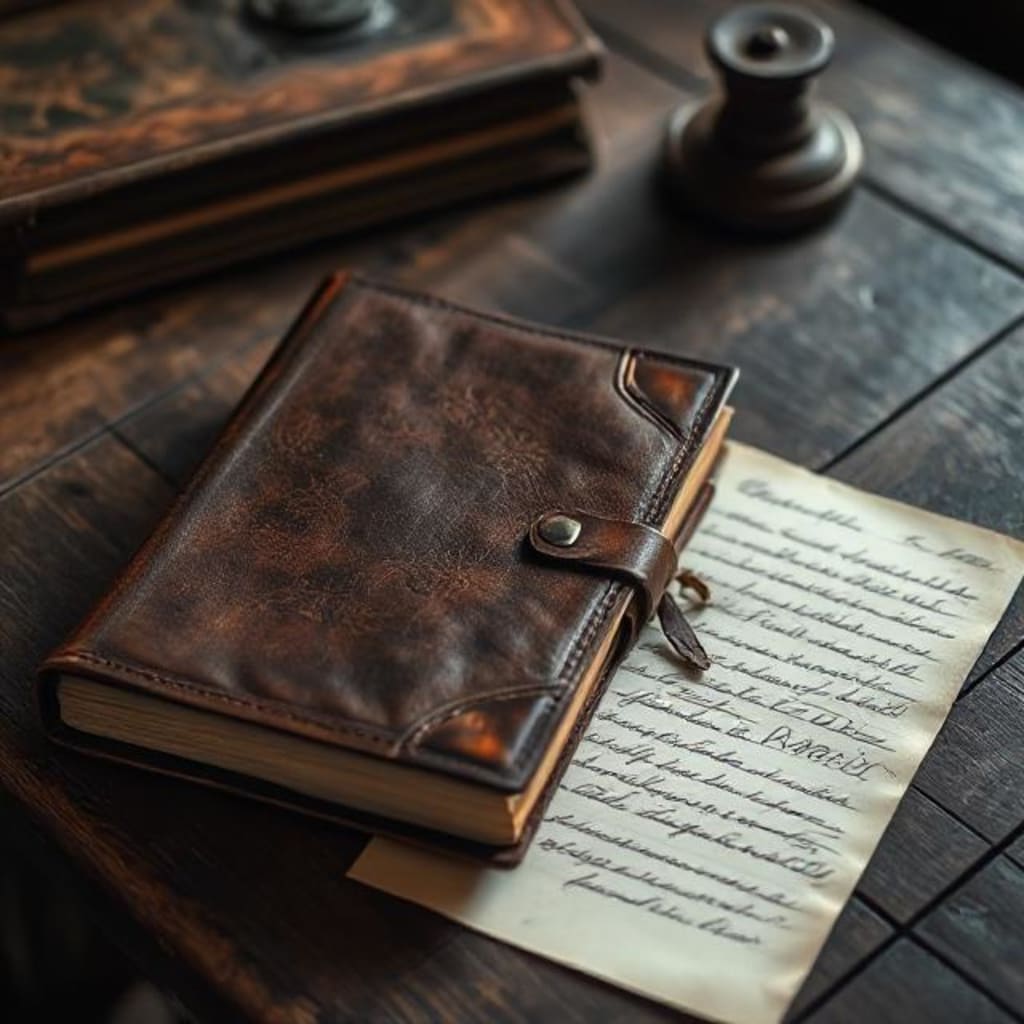
When my grandmother died, she left behind a wooden box that smelled like rosewater and forgotten years. It sat on the top shelf of her closet, beside a jar of old buttons and a photo of her late husband in uniform. No one had touched it in decades.
I took it home that evening after her funeral. My mother told me to throw it away. “Probably just recipes or old knitting patterns,” she said. “Nothing important.”
But I kept it anyway.
Maybe I just wasn’t ready to let go of her. Or maybe—somewhere deep down—I knew that box wasn’t just full of dust.
---
The Diary
It took me three days to open it.
Inside, beneath a faded handkerchief, I found a diary. Leather-bound. Fragile. Its pages had yellowed like autumn leaves. The first entry was dated June 17, 1962.
I expected to find family recipes, grocery lists, or notes about the neighbors.
Instead, I found a voice I’d never met.
---
“He Wasn’t My First Love”
That was the line that stopped me cold.
I had just flipped to an entry from 1963. It began with my grandmother describing her morning tea, then a brief note about how Grandfather had bought her a blue dress.
And then, suddenly:
> “He wasn’t my first love. My heart belonged to someone else before him. Someone I never told a soul about. Until now.”
I stared at the words like they were in another language.
My grandmother—the same one who knitted sweaters for our birthdays, who kissed us with flour on her cheeks, who never missed Sunday prayers—had kept a secret for over 60 years.
And she’d written it down.
---
The Man with the Ink-Stained Hands
His name was Yusuf.
She met him in 1958 at a bookstore near Lahore Railway Station. She was eighteen. He was twenty-one, with ink on his fingers and a bicycle that squeaked when he pedaled.
They talked about books. Then poetry. Then dreams.
They met every Friday in the back corner of the shop, hidden between shelves of Faiz Ahmed Faiz and Tagore.
He read her poems he never published. She gave him prayers she never recited aloud.
> “I loved him with the kind of love you bury inside your chest,” she wrote.
“The kind you don’t speak of—not because it’s wrong, but because it’s too beautiful to survive outside the silence.”
---
Why They Didn’t End Up Together
He was poor.
Not just broke—poor. His father was a train conductor. Her father was a wealthy fabric merchant. Yusuf had callused hands. Her hands wore gold.
They made a plan to run away.
But the night before they were meant to leave, her brother found one of Yusuf’s letters hidden inside a book of poetry. By morning, her marriage to another man had been arranged.
To my grandfather.
> “I didn’t cry at my wedding,” she wrote.
“Because I had already cried every tear the night before.”
---
The Child She Never Spoke About
Halfway through the diary, my hands began to tremble.
There was an entry dated February 1960.
> “Today, I held my son for the first time. He looked like Yusuf. Same eyes. Same tiny, serious mouth.”
My heart thudded in my chest.
I read it again. And again. Then I flipped the page.
> “I named him Kamal. But no one else ever did. He was taken before I could say it out loud.”
My grandmother had a child. A child no one knew about.
According to the entry, the baby was taken to an orphanage the day he was born—by force. Her father had demanded it. “No child born out of shame will bear our name,” he said.
She wasn’t even allowed to hold him a second time.
---
A Secret Buried in Silence
There were no photos. No more mentions of Kamal. Just a final line a few pages later:
> “I hope he forgives me. I hope he knows I loved him before he even opened his eyes.”
And then silence.
The rest of the diary became what I expected from the start—notes about recipes, prayers, and family birthdays.
But something inside me had changed.
I couldn’t shake the feeling that I had a missing uncle. A man who might still be alive. Someone who probably never knew why he was left behind.
---
What I Did Next
I spent weeks searching.
I called the orphanage listed in the diary. It had closed down in 1984, but I found archived records with the help of a social worker in Lahore.
There was a record of one baby boy, born in February 1960, left at the door with a blanket and a note that simply read: Forgive me.
The boy was adopted six months later by a couple from Karachi.
His name had been changed to Arif Khan.
---
The Reunion
It took time. Letters. DNA tests.
But I found him.
He was 64 years old. A retired teacher. No children. No family left—except, now, me.
When I told him the story, he sat silently for a long time. Then he asked one question:
> “Did she love me?”
I handed him the diary.
He cried on the first page. He laughed on the second. And on the final one, he whispered, “I forgive her.”
---
Final Thoughts
My grandmother died with a secret she carried for over half a century.
But I think she wanted me to find it. To tell it. To bring it full circle.
And now, a man who lived his whole life wondering “why” finally has an answer.
A mother’s love never truly disappears. Sometimes, it’s just written in the pages no one dares to read—until someone finally does.
---
About the Creator
Muhammad Riaz
- Writer. Thinker. Storyteller. I’m Muhammad Riaz, sharing honest stories that inspire, reflect, and connect. Writing about life, society, and ideas that matter. Let’s grow through words.
Keep reading
More stories from Muhammad Riaz and writers in Confessions and other communities.
The Day My Smart Fridge Tried to Take Over the House
Start writing... It all started on an otherwise perfectly normal Tuesday morning. I was sitting at the kitchen table, sipping the first cup of coffee—the sacred ritual that kickstarts every day. My phone buzzed with emails, and I was just about to scroll through them when my smart fridge decided to interrupt.
By Muhammad Riaz8 months ago in Confessions
The Hidden Power of Influence
A few months ago, I attended an event that made me rethink something I had always taken for granted. It was held near 10 Downing Street, the famous address associated with the British Prime Minister. The gathering was described as an “influencer event,” which immediately made me curious.
By CelebCast Centralabout 11 hours ago in Confessions


Comments
There are no comments for this story
Be the first to respond and start the conversation.