
My First Business Venture
or a Soviet kid’s guide to medicinal plant entrepreneurship

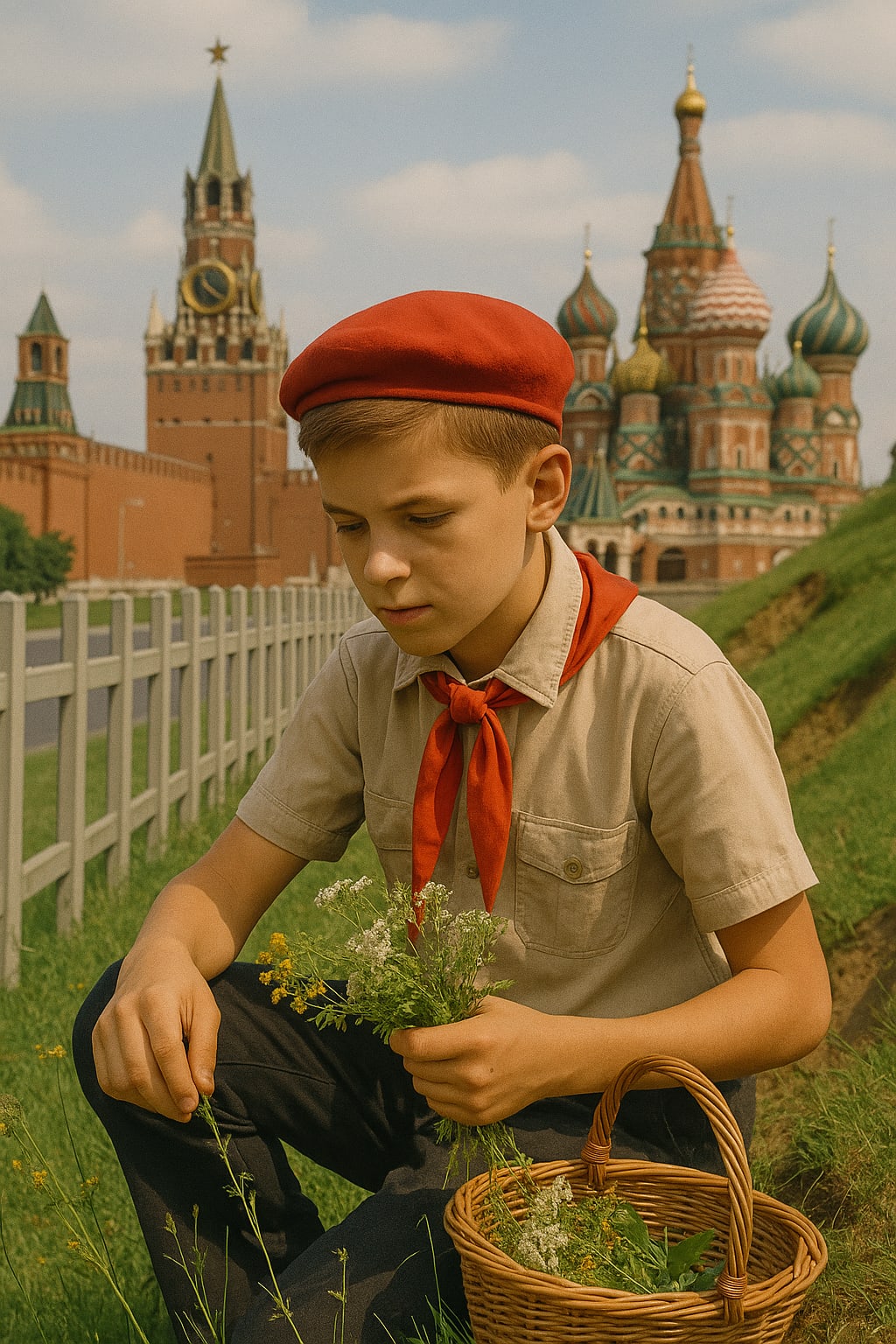
I’ve been reflecting on my current business project a lot lately, and I realized that my very first venture occurred when I was just ten years old in the Soviet Union. It’s a story I enjoy sharing because it illustrates that universal childhood desire to earn money and the creative lengths kids will go to achieve it.
Summer of 1981
Picture this: it’s 1981, maybe ’82, and I’m facing every Soviet kid’s summer dilemma. My parents are working, and they want to ship me off to a pioneer camp. Now, if you’ve never experienced a Soviet pioneer camp, consider yourself lucky. The previous summer had been… let’s just say it left me with zero desire for a repeat performance. But staying home meant finding my own entertainment, and more importantly, finding money for the essentials — ice cream and whatever small luxuries a ten-year-old considers vital to survival.
The solution came to me during a routine trip to the local pharmacy with my mother. While she was getting whatever she needed, I noticed something interesting: official government posters advertising that they’d buy medicinal plants from private citizens. In the USSR, pharmacy administration was responsible for collecting medicinal herbs to meet government quotas, and apparently, they weren’t having much success.
Being a curious kid, I filed this information away for later investigation…
Market Research (Soviet Style)
A few days later, I returned to the pharmacy on my own mission. I approached the elderly woman behind the counter, you know the type, the kind of pharmacist who’d been there since before the Revolution and knew everything about everything medical. I asked her about the plant collection program.
Her face lit up.
“Oh, you want to help collect herbs?”
She handed me an official printed booklet titled “Rules for Collecting and Drying Medicinal Plants” and launched into what can only be described as a sales pitch.
It turned out that the pharmacy was desperately behind on its government quota. The employees were being dragged into Saturday “volunteer” work sessions to go harvest plants themselves — imagine having to spend your weekend crawling around fields looking for chamomile because the state needed cough medicine ingredients. They were practically begging people to bring in medicinal plants.
Here’s where it got interesting: there were two price scales.
Fresh plants collected that day commanded one price, while properly dried herbs fetched significantly more money.
I can’t remember the exact figures now, this was over forty years ago, but the difference was substantial.
Identifying My Competitive Advantage
I studied that booklet as if it were a treasure map. The most common plants they needed were Plantago (plantain) and Coltsfoot. Now, here’s where growing up in a Soviet city actually gave me an advantage: I knew every vacant lot, every overgrown area, every patch of “wasteland” where these plants grew wild. Kids back then spent their time exploring, not staring at screens, so I had a mental map of every plant-rich location within walking distance.
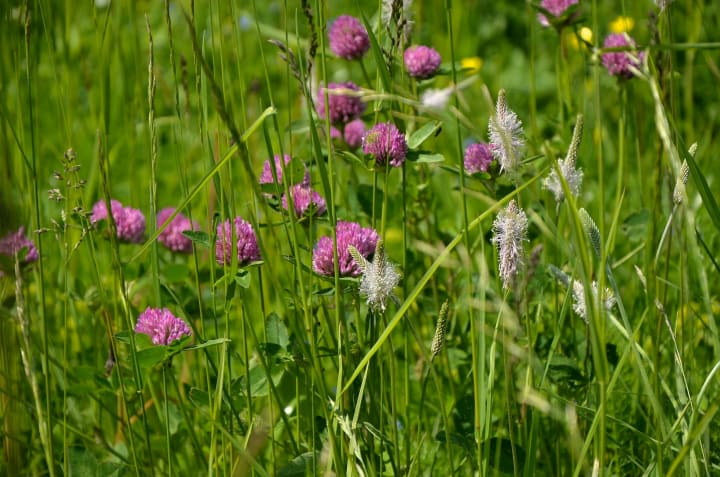
Coltsfoot leaves (Tussilago farfara, if you want to get technical) were particularly valuable because they were used in several cough medicines, especially for whooping cough. The stuff was gold for treating chronic bronchitis, laryngitis, bronchopneumonia — basically, if you had any kind of respiratory issue, coltsfoot tea was your friend. It liquefied mucus and made coughing more productive. Not exactly glamorous, but highly in demand.
The First Sale
The next morning, I showed up at the pharmacy with two massive sacks stuffed with herbs. The same elderly woman greeted me, and here’s what’s remarkable: she didn’t ask about my collection locations or even seem surprised that a ten-year-old was conducting business with her. This was the Soviet Union — stranger things happened daily.
She also didn’t inquire about environmental concerns or contamination. This was 1981; environmental awareness wasn’t exactly at the forefront of anyone’s mind. People generally assumed the environment was fine, or at least, they didn’t discuss problems if they existed. Her only concern was quality control: had I collected the right plants? Were there impurities mixed in? Was I trying to pass off random weeds as valuable medicinal herbs?
After inspection and weighing, she handed me cash on the spot. No paperwork, no questions, just rubles in my palm. The earnings from one full sack of plantain bought me exactly one shortbread cookie at 11 kopecks or one ice cream. Considering it took me about an hour to fill a sack, this meant two hours of work equaled two ice creams. Not bad for a ten-year-old’s hourly wage.
Scaling Up: The Drying Operation
I repeated this process for several days, but I kept thinking bigger. June was peak collection season, and summer doesn’t last forever. If I wanted to maximize profits, I needed to get into the dried herb business, where the real money was.
The challenge was finding a drying location. Our apartment wasn’t suitable — imagine explaining to Soviet parents why their living space was suddenly full of drying weeds. But I knew the neighborhood well, and across from our typical Soviet apartment blocks stood this older building with an accessible attic.
I’m still not entirely sure how I got that key — this is one of those childhood memories where the details are a bit fuzzy, probably because what I was doing was technically trespassing. But I got access to that attic, and it was perfect: well-ventilated, warm, and completely private.
Within a couple of days, my first batch was properly dried. After a week of this operation, I was pulling in serious money by ten-year-old standards.
Discovering Market Complexity
Success taught me that the herb market was more complex than I’d initially realized. Yes, plantain and coltsfoot were easy to collect and always in demand, but there were premium plants that commanded much higher prices: linden flowers, chamomile, shepherd’s purse, and St. John’s wort.
The catch? These required significantly more effort to harvest. Linden flowers meant climbing trees or finding a stepladder. Chamomile and St. John’s wort grew in specific locations that weren’t everywhere. Higher profit margins, but higher barriers to entry.
Competition and Strategic Response
Here’s where my story takes an interesting turn: I wasn’t the only kid who’d figured out this system. I started running into other students from my school at the pharmacy, all of us clutching sacks of herbs and waiting for our payouts. The market was getting competitive.
My solution was beautifully simple: I offered to pay other kids 10% more than the pharmacy’s fresh herb rate for their collections. They got instant money without the hassle of drying, and I got raw materials for my higher-margin dried herb operation.
Just imagine this scene: I’m standing outside the pharmacy in the evenings, ten years old, buying sacks of herbs from other kids like some kind of tiny herb broker. The other children would go into the pharmacy, get their herbs weighed for pricing purposes, then walk straight back out to sell to me instead of completing the transaction with the pharmacy.
The elderly pharmacist was completely baffled. She’d watch kids come in, get their herbs weighed, then leave without collecting payment. She had no idea there was a miniature arbitrage operation happening right outside her door.
The End of Summer: Lessons Learned
By the end of summer, my attic looked like an herb warehouse. I was processing significant volumes and earning what felt like a fortune. But summer ended, as summers do, and my money disappeared just as quickly as I’d earned it — probably on ice cream, comic books, and whatever else seemed essential at the time.
But the lessons stuck with me. I’d learned about identifying market opportunities, understanding supply and demand, scaling operations, managing competition, and creating value through processing (turning fresh herbs into dried ones). I’d also learned that sometimes the best business opportunities are hiding in plain sight, advertised on pharmacy walls where most adults walk by without a second glance.
Looking back, I realize this experience taught me more about business fundamentals than many formal courses could.
It was hands-on education in entrepreneurship, Soviet style:
- find what people need,
- figure out how to provide it better than anyone else, and
- don’t be afraid to get a little creative with your approach.
Not bad for a ten-year-old trying to avoid pioneer camp and earn some ice cream money…
About the Creator
Baruh Polis
Neuroscientist, poet, and educator—bridging science and art to advance brain health and craft words that stir the soul and spark curiosity.
Keep reading
More stories from Baruh Polis and writers in Confessions and other communities.
The Weight of Walking Forward
There are moments when life distills its essence into a single, devastating clarity. Today, it really hit me like a punch to the gut. It was not actually frightening, though deeply depressing in the way that only truth can be. As someone who has dedicated years to studying aging and wrestling with philosophical questions, I suddenly found myself confronted with both the meaning and meaninglessness of our existence in one brief encounter.
By Baruh Polis8 months ago in Confessions
Political Fallout and Hidden Ties: Behind the Headlines
Power and politics have always been closely watched, but sometimes the true story behind headlines is more complex than the public realizes. Recently, attention has focused on the British Prime Minister and the fallout surrounding controversial figures connected to his administration.
By CelebCast Central2 days ago in Confessions


Comments (1)
That's quite a story. I remember similar entrepreneurial moments as a kid. Figuring out ways to make a buck, no matter how small, is a universal childhood thing.