
Political Fallout and Hidden Ties: Behind the Headlines
A revealing look at how scandals ripple through power, reputation, and public perception.

Power and politics have always been closely watched, but sometimes the true story behind headlines is more complex than the public realizes. Recently, attention has focused on the British Prime Minister and the fallout surrounding controversial figures connected to his administration.
At the center of this story is Peter Mandlesson, a figure whose past associations have come under intense scrutiny following revelations linked to the Epstein files. Publicly, these connections cast a shadow on anyone even tangentially related, and the optics are difficult to manage.
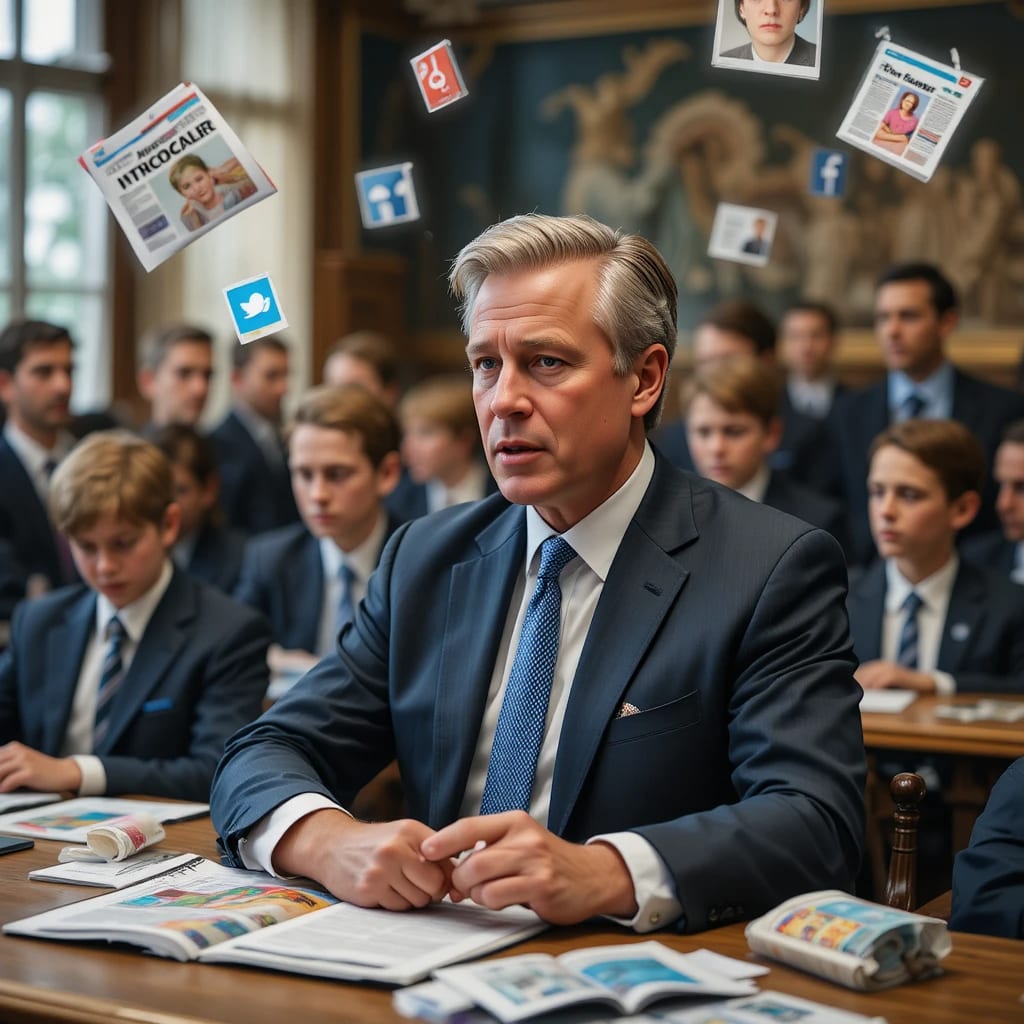
The Prime Minister, aware of the sensitivity, addressed the issue directly in a public statement—even standing in front of schoolchildren to demonstrate transparency. While this may have been well-intentioned, the choice of venue sparked criticism and raised questions about judgment. After all, discussing such a serious matter in front of a classroom can appear both awkward and politically calculated.
The challenge for leaders in these situations is always balancing responsibility with perception. A misstep, however small, can amplify public scrutiny. And when powerful figures like the President of the United States publicly distance themselves, it compounds the difficulty, signaling to the world that even allies are losing confidence.
Adding complexity to the narrative are photographs surfacing of Prince Andrew with Peter Mandlesson, images that unintentionally feed into speculation and concern. While these royals are not directly connected to current political events, the public perception of association can be damaging. Media coverage often highlights these moments, giving them weight far beyond their factual significance.
The issue extends further to trust and loyalty within political and professional circles. According to sources, Mandlesson had shared information that should have prompted caution, yet decisions were made that exposed vulnerabilities. In politics, every relationship, every endorsement, and every appointment can have ripple effects. Ignoring warnings or minimizing risks can backfire quickly, as evidenced in this unfolding situation.
Kia Starmer, the Prime Minister, faces criticism not just for past choices but for how he manages the fallout. Efforts to demonstrate accountability are scrutinized against prior decisions and the public’s growing awareness of underlying missteps. The delicate interplay between transparency and strategy becomes critical: acknowledging mistakes can preserve credibility, but failing to act proactively risks losing public trust entirely.
This scenario exemplifies a broader truth about leadership and scandal. Powerful positions inherently involve exposure, and decisions often come under a magnifying glass. Even minor oversights—ignoring counsel, underestimating public perception, or failing to manage optics—can escalate into major political crises.
The story of Peter Mandlesson is illustrative of this principle. When sensitive information is mishandled or connections are not fully assessed, consequences emerge unpredictably. Leaders and their teams must constantly weigh what they reveal, whom they trust, and how decisions will be interpreted. Mistakes are amplified by media coverage, and the narrative often shapes reality as much as events themselves.
One striking element is the visual impact of leaked images or public appearances. Media coverage of informal or seemingly casual photos can create a narrative independent of fact. A relaxed photo may be interpreted as complacency; a friendly interaction may appear as complicity. Leaders must navigate these perceptions while maintaining focus on their actual responsibilities—a challenge made only more intense when high-profile investigations are ongoing.
Ultimately, the lesson is clear: power is inseparable from scrutiny. Every action is observed, every connection analyzed, and every misjudgment amplified. Public perception becomes a currency, and even the best-intentioned attempts at transparency can be overshadowed by past associations or missteps.
For the Prime Minister, this is a cautionary tale. Actions taken today resonate beyond immediate politics, affecting trust, reputation, and public confidence. And for the public, it offers a revealing look into how influence, decisions, and human judgment intersect with media narratives, illustrating the fragile balance leaders must maintain in the spotlight.
In this intricate web of politics and perception, the smallest detail—a photograph, a statement, or a public visit—can trigger waves of speculation. Understanding the interplay between reality and narrative is essential to comprehending how power operates in modern society.
About the Creator
CelebCast Central
CelebCast Central brings you explosive celebrity scandals, royal drama, Hollywood gossip, and viral stories — unfiltered and uncensored. Follow us for bold takes and trending tales the world is buzzing about!
Keep reading
More stories from CelebCast Central and writers in Confessions and other communities.
Behind the Scenes: How Celebrity Media Shapes Reality
Watching modern celebrity culture has taught me something fascinating: the story you see is not always the story that happened. Sometimes, it’s carefully orchestrated, edited, and packaged for public consumption.
By CelebCast Centralabout 3 hours ago in Confessions



Comments
There are no comments for this story
Be the first to respond and start the conversation.