
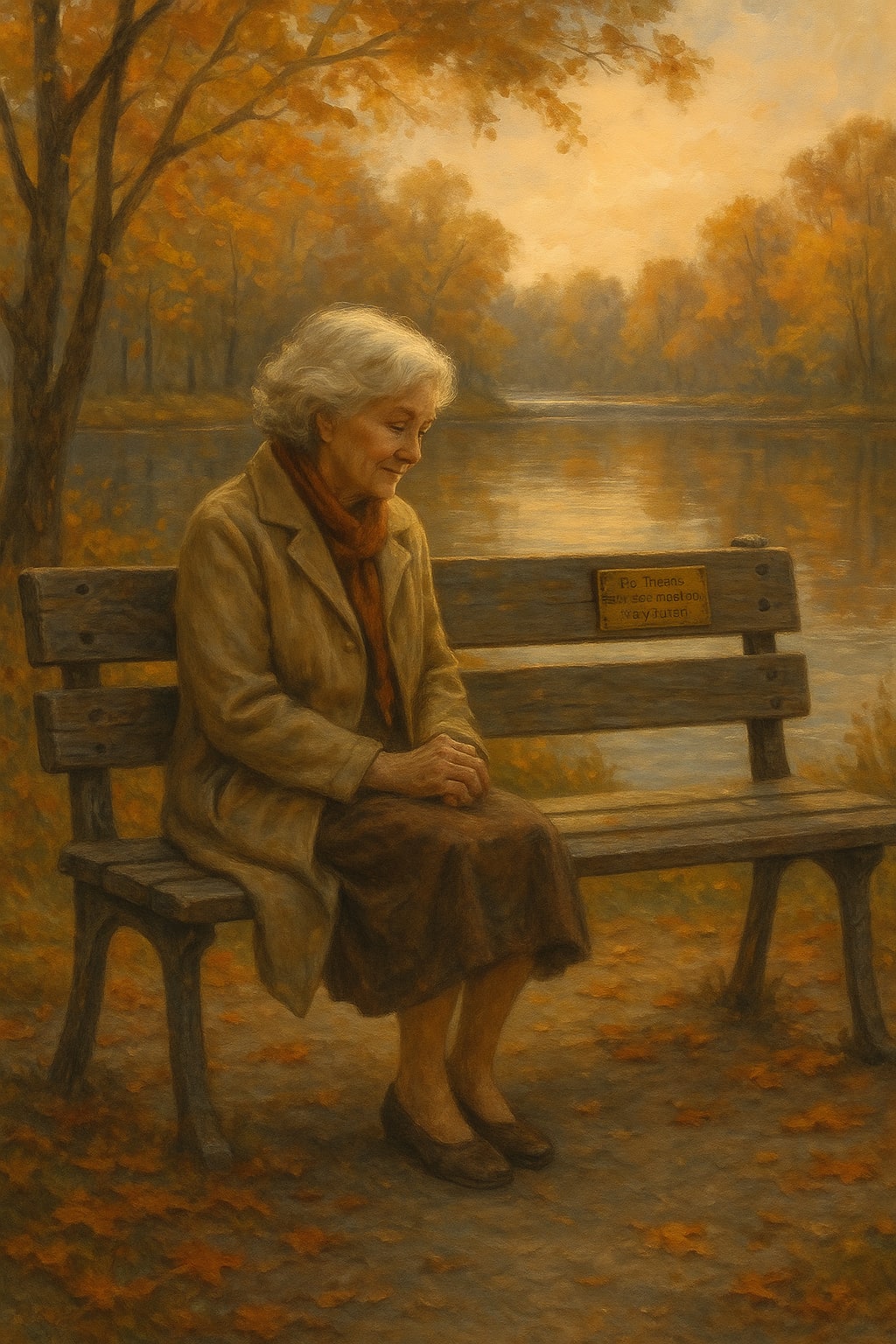
Every Sunday at dawn, Claire would walk to the old wooden bench by the lake. It was worn, its paint chipped by time, but it had once been new—new like the love she found on it years ago.
She had met Thomas there one rainy afternoon in 1993. She was reading a book under an umbrella, and he was jogging, caught by the storm. Without asking, he sat at the other end of the bench, soaked, laughing at the sky like it was an old friend. Claire glanced over, annoyed at first. But when he turned and smiled, something settled in her heart.
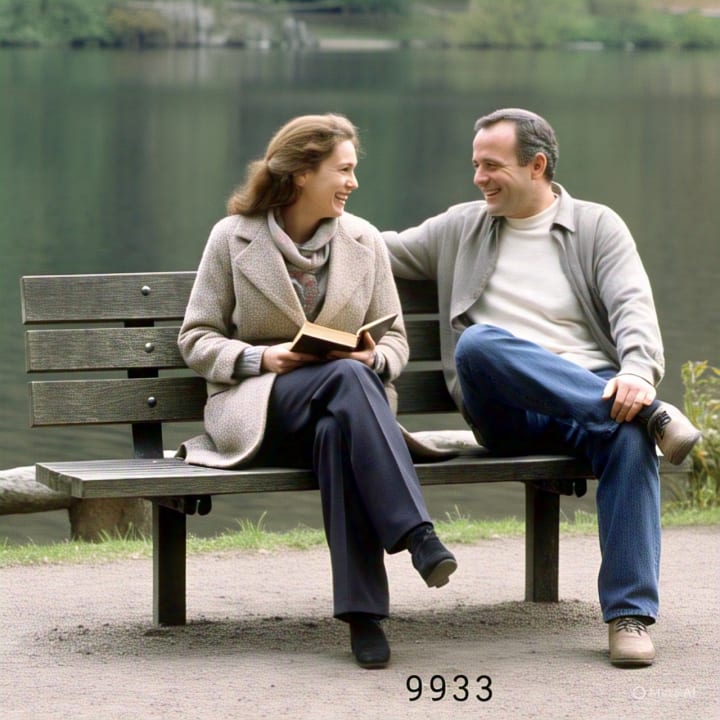
They talked about everything—books, cities they wanted to visit, the taste of strawberries in June. That bench became their Sunday ritual. Seasons changed around them, and so did they. They married, built a life, and every Sunday, even with children and work and age creeping in, they met at that bench—sometimes in silence, sometimes with laughter.
Then came the winter Thomas didn’t return. Illness had taken him quickly, and the lake seemed colder than ever. For a long time, Claire didn’t go back. But one spring morning, she walked there again. The world was blooming, and for the first time in months, so did her heart.
On the bench was a small plaque she hadn’t noticed before:
“For Thomas – who loved, and was loved, every Sunday.”
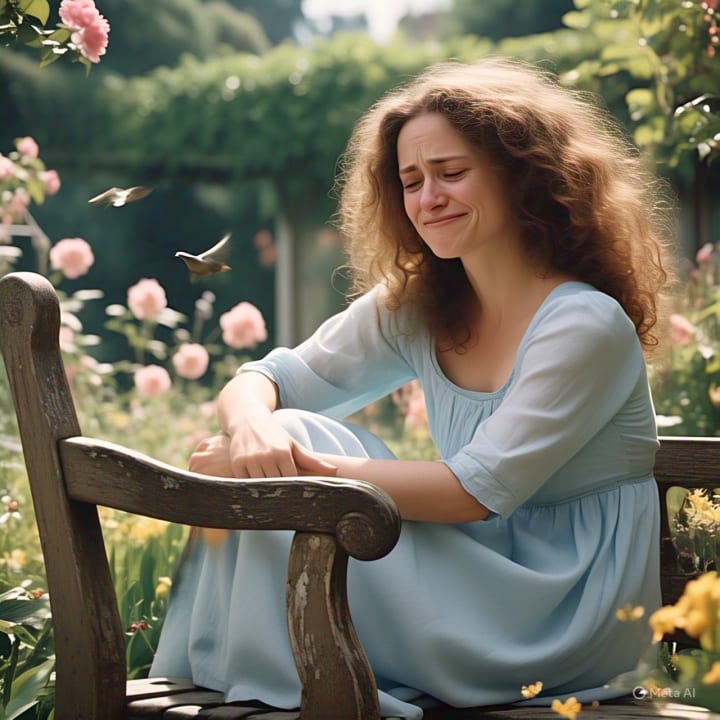
Claire smiled through tears. Love, she realized, doesn’t leave—it lingers in laughter, in quiet moments, in a wooden bench by the lake.
Claire visited the bench more often after that spring morning. Not just on Sundays, but sometimes on Tuesdays, or Thursdays when the wind was soft and the clouds didn’t press down so hard. She brought a small notebook with her, one of Thomas’s old ones, and she’d write in it—not stories, but memories.
She wrote about the way Thomas had once danced with her in the rain, right there by the water, not caring who saw. She scribbled down his terrible jokes, the way he burned toast every Sunday morning and still claimed he was “culinary gifted.” She remembered how he’d pick wildflowers from along the trail, even after all those years, and place them on the bench before she arrived.
One morning, a young couple passed by with their toddler. The little girl ran ahead, squealing with delight, and nearly collided with Claire. Her parents apologized, but Claire smiled and waved it off. The girl, curious, climbed onto the bench beside her and stared at the plaque.
“Who’s Thomas?” she asked.
Claire blinked, surprised, and then laughed softly. “Someone very special.”
The girl’s mother gently called her away, but before she left, she said, “It’s a nice bench.”
“Yes,” Claire whispered. “It really is.”
From then on, Claire started noticing more people at the lake. Some sat at the bench, others jogged past like Thomas used to. The world hadn’t paused after her loss—it had kept turning, quietly inviting her back into its rhythm.
One autumn morning, Claire brought a thermos of coffee and a second cup. She poured one for herself, then filled the other and placed it on the far side of the bench, where Thomas used to sit. She talked to him aloud for the first time in years.
“You would have loved today,” she said. “The leaves are perfect. Like that time we tried to rake them and ended up just jumping in.”
A breeze rustled through the trees, and for a moment, Claire felt the warmth of presence—not in a ghostly way, but in the way the heart holds on when it knows what it had was real.
By winter, Claire was slower in her steps, but she never missed her visits. She brought a scarf and wrapped it around the bench’s armrest, saying, “You always hated the cold, remember?”
One snowy Sunday, she didn’t come. But the next day, the park ranger found something tucked between the slats of the bench—a letter, folded neatly, addressed simply: To the next person who sits here.
“If you are reading this, you’ve found a place where love once sat. Maybe you’re here for quiet, or for reflection, or because someone is missing from your life.
This bench has seen laughter, tears, arguments, forgiveness, and the kind of love that doesn’t need grand gestures—just presence.
I was lucky enough to find someone who made the ordinary feel sacred. If you haven’t yet, I hope you do. If you have, I hope you hold it close.
And if you’re alone, you’re not. Not really. Love lingers. Right here.
Take a breath. Sit awhile. And when you leave, leave a little love behind.”
From that day on, the bench wasn’t just a memory—it was a monument. People came, read the plaque, and sometimes left flowers or notes of their own.

And though Claire’s visits eventually stopped, her story didn’t. It simply found new hearts to sit with.
About the Creator
Keep reading
More stories from writers in Confessions and other communities.
Thoughts on Vocal and the way the world is
"Death cannot stop true love, only delay it." – Wesley in The Princess Bride. I decided to come back to Vocal on a very cold and dark night at the end of December. I had been, and still am, convalescing from a horrible staph infection that had gone misdiagnosed for months. This, paired with the increasing challenges of being healthy, making the best choices for my co-parented child, being a wife, and being a director at a new job, was a lot to manage.
By Jazzy 13 days ago in Confessions
I Don’t Want a Hero. I Just Want Someone to Talk To.
My first night back in Beijing, I went straight for "Old Beijing Hotpot." Living in the US, this was the flavor I missed the most: the hand-cut fresh lamb, the rich sesame paste, the sugar garlic, and that specific scent of chili oil that instantly hooks your appetite.
By Wen3 days ago in Confessions



Comments
There are no comments for this story
Be the first to respond and start the conversation.