
Kim Jong Un’s Secretive Visit to China: A Turning Point in Asian Diplomacy.
Behind Closed Doors: What the North Korean Leader’s Arrival in Beijing Could Mean for the Future of Global Politics

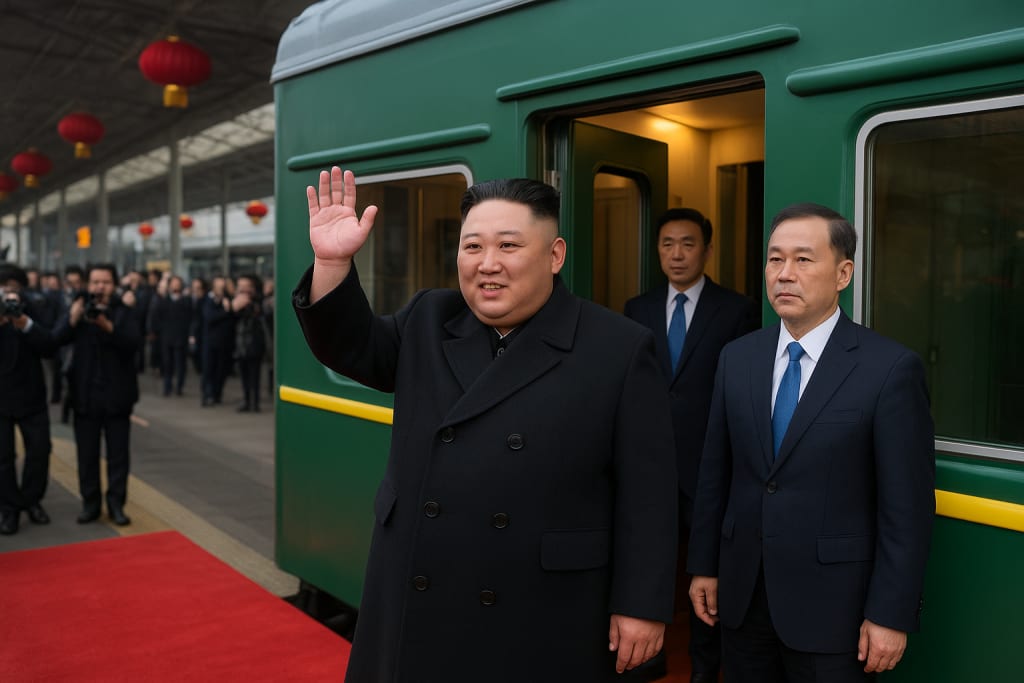
The sudden arrival of North Korea’s leader Kim Jong Un in China has sent ripples across the world of international politics. Rarely does Kim leave the confines of Pyongyang, and when he does, it signals something far more significant than a courtesy call. His appearance in Beijing is not simply a matter of routine diplomacy—it is a calculated move, staged against the backdrop of mounting global tension, changing regional dynamics, and the delicate balance of power between East and West.
For decades, North Korea has stood as one of the world’s most secretive and isolated nations. Yet, every move its leader makes—especially outside of the hermit kingdom’s borders—sparks speculation, intrigue, and often anxiety. Kim Jong Un’s decision to visit China is not a surprise to seasoned analysts. After all, China has been North Korea’s closest ally, economic lifeline, and political protector since the days of Kim’s grandfather, Kim Il Sung. But the timing and secrecy of this visit suggest deeper motivations.
A Historical Relationship Renewed
China and North Korea share more than just a border. They share a long history forged in war, ideology, and survival. During the Korean War in the 1950s, it was Chinese soldiers who crossed the Yalu River to fight alongside North Korean troops. Since then, Beijing has been Pyongyang’s most vital supporter, providing aid, trade, and a diplomatic shield in international forums like the United Nations.
In recent years, however, that relationship has faced strain. North Korea’s nuclear ambitions and repeated missile tests have often embarrassed Beijing, placing China in a difficult position between supporting its unpredictable ally and maintaining credibility as a global power. Yet, despite the tensions, China remains North Korea’s economic lifeline. Nearly 90 percent of North Korea’s trade flows through China, making Beijing a critical partner Kim cannot afford to ignore.
By stepping onto Chinese soil, Kim is reaffirming this bond, signaling to the world—and particularly to the United States and South Korea—that North Korea’s ties with China remain strong and unshakable.
Strategic Timing
The timing of Kim’s arrival in China is perhaps the most fascinating aspect of this story. The world is witnessing rapid changes in geopolitics: strained relations between Washington and Beijing, ongoing war in Ukraine, shifting alliances in the Indo-Pacific, and rising U.S. influence in South Korea and Japan.
Kim’s visit suggests he is recalibrating North Korea’s strategy in light of these shifts. As sanctions continue to squeeze Pyongyang’s fragile economy, and as the West grows increasingly united against authoritarian regimes, Kim is seeking reassurance from his most powerful ally.
This trip also comes amid speculation about renewed talks—or possible escalations—on the Korean Peninsula. With South Korea strengthening ties with both the U.S. and Japan, and with the U.S. military presence in Asia growing, Kim likely views Beijing as the key to ensuring his survival and bolstering his negotiating position.
What’s Happening Behind Closed Doors
While official reports remain scarce, it’s not hard to guess the main topics on the agenda. Military cooperation, economic support, and coordination on regional security are almost certainly being discussed. Beijing may offer Kim economic relief in exchange for stability, while Pyongyang might seek stronger guarantees of Chinese support should tensions with Washington flare up.
Energy and food aid are also critical. North Korea continues to face chronic shortages, worsened by international sanctions and isolation during the COVID-19 pandemic. A quiet promise of Chinese supplies could help Kim weather internal challenges and maintain his grip on power.
Perhaps most importantly, both sides may be discussing how to counter the growing trilateral cooperation between the U.S., South Korea, and Japan. For Beijing, a closer alignment with Pyongyang serves as a strategic counterweight in East Asia. For Kim, China’s backing ensures that North Korea remains relevant in the global balance of power.
The Symbolism of the Visit
Every detail of Kim’s visit carries symbolic weight. His armored train—reminiscent of his father and grandfather—signals continuity with the past. His meetings with Chinese officials demonstrate respect and reliance. And his mere presence in Beijing shows that, despite years of isolation, North Korea is still a player in the geopolitical chessboard.
For the international community, this visit is a reminder that alliances are not static. The North Korea–China relationship may ebb and flow, but it endures. For Kim, it is a chance to show strength at home and leverage abroad. And for Beijing, it is an opportunity to reaffirm its influence in a region increasingly contested by U.S. power.
What Comes Next
The world will be watching closely in the days to come. Will this visit lead to renewed dialogue on denuclearization, or will it pave the way for further military cooperation? Will China provide economic lifelines that blunt the impact of sanctions? Or will the meeting remain shrouded in mystery, leaving analysts to interpret subtle gestures and diplomatic language?
One thing is clear: Kim Jong Un’s arrival in China is not an isolated event. It is part of a broader narrative of shifting alliances and rising tensions in Asia. As the world edges toward an uncertain future, this visit may mark the beginning of a new chapter in the story of North Korea’s survival—and China’s role in shaping the destiny of the region.
Conclusion
Kim Jong Un’s visit to China is more than a diplomatic courtesy. It is a declaration of loyalty, a plea for support, and a warning to adversaries. In the theater of global politics, where every move is scrutinized, his trip is both symbolic and strategic.
Whether this signals stability or confrontation ahead remains to be seen. But one truth is undeniable: when the North Korean leader travels to Beijing, the world pays attention—and the consequences are felt far beyond the borders of China and the Korean Peninsula.
About the Creator
osam khan
"I’m a passionate storyteller who loves exploring every topic
Reader insights
Outstanding
Excellent work. Looking forward to reading more!
Top insight
Excellent storytelling
Original narrative & well developed characters
Keep reading
More stories from osam khan and writers in Confessions and other communities.
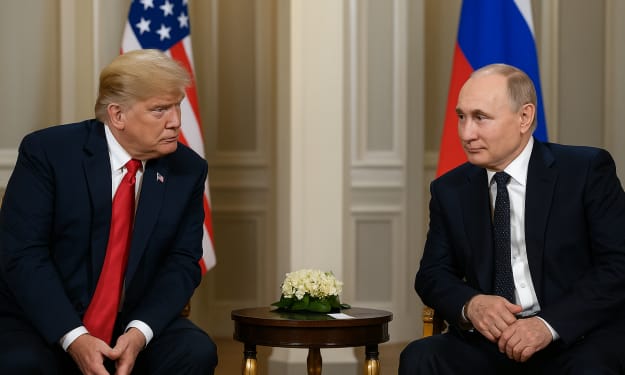
Did Trump Really Meet Putin—or a Putin Lookalike?
The Long History of Putin Body Double Rumors Rumors about Putin’s alleged use of doubles are not new. In fact, speculation stretches back more than two decades. According to some reports, the Russian president has employed trained doubles at different times for public appearances, military parades, or situations where security risks were high.
By osam khan5 months ago in Confessions
The Ghost in the Garden
The moon tonight, it's a cold, white disk, slicing through the bare branches outside my window. Same kind of moon we used to have, wasn't it? Full and unforgiving, spilling silver across the lawn like a spilled vial of mercury. I stare at it, my fingers tracing the condensation on the glass. This house, it’s quiet now, the kind of quiet that lets you hear your own heartbeat thrumming against your ribs, a drumbeat of old, buried things.
By HAADI7 days ago in Confessions



Comments
There are no comments for this story
Be the first to respond and start the conversation.