
Israel’s Strikes on Iran Ignite Global Debate: Is Regime Change the Real Goal?
As Israel launches a powerful wave of airstrikes on Iran, questions arise about deeper ambitions — and why Donald Trump is drawing a red line on toppling the regime.

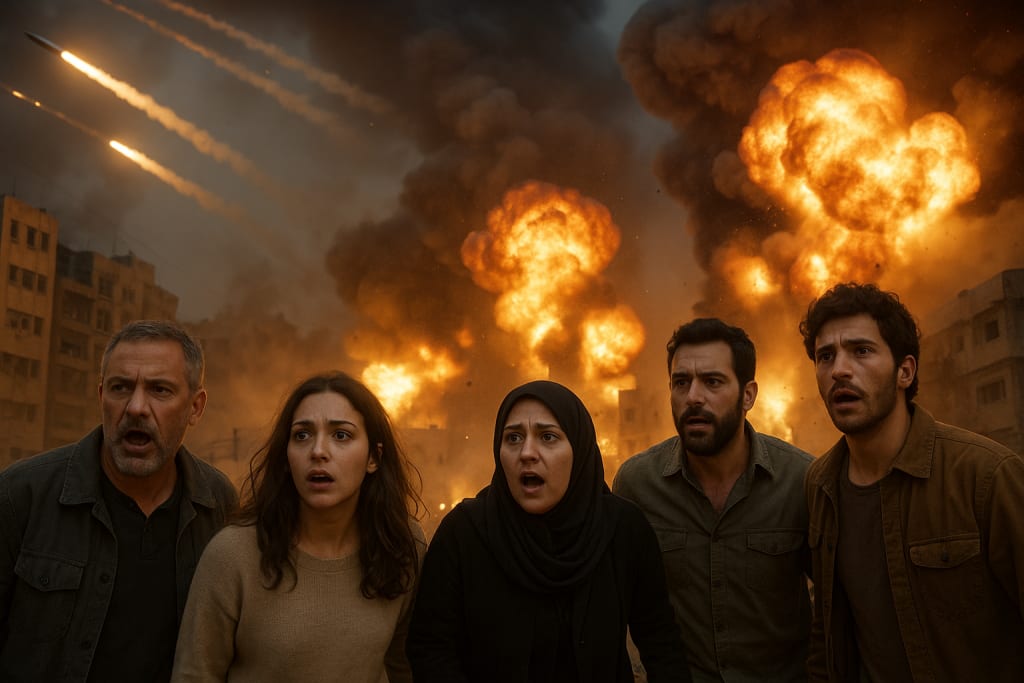
As tensions in the Middle East reach a boiling point, Israel's latest airstrike campaign on Iran has not only escalated regional instability but also reignited one of the most controversial geopolitical topics: regime change in Tehran. With air raids targeting Iranian nuclear and military infrastructure, Israeli officials have started suggesting a broader objective — one that could reshape the power balance in the Middle East for decades.
But as the smoke clears, a familiar voice is pushing back — former U.S. President Donald Trump. Though supportive of Israel’s security efforts, Trump appears to be drawing a red line when it comes to the idea of toppling Iran's leadership.
Israel’s Precision Airstrikes: A Show of Military Power
On Friday, Israel launched one of the most extensive and daring air raids in recent history, penetrating deep into Iranian territory. The targets included suspected nuclear facilities, long-range missile depots, intelligence sites, and even state media offices, which Israel claims serve a dual military purpose.
According to Israeli defense officials, the mission aimed to "cripple Iran’s capability to build and launch nuclear weapons." The IDF (Israel Defense Forces) also suggested that some of the strikes were preemptive, intended to neutralize possible retaliation from Iran following recent escalations.
But Israeli Prime Minister Benjamin Netanyahu hinted at something more during interviews over the weekend. He spoke of a “historic opportunity” to weaken Iran’s ruling elite, openly suggesting that eliminating Ayatollah Ali Khamenei — Iran’s Supreme Leader — could permanently change the equation.
This rhetoric has shocked global observers and sparked fears of a broader war or collapse within Iran — something that could have ripple effects far beyond the Middle East.
Trump’s Strategic Resistance: “Don’t Remove the Devil You Know”
Interestingly, former President Donald Trump has reportedly rejected similar ideas during his administration, according to senior aides who spoke to Axios. While Trump championed aggressive sanctions and cyberattacks against Iran’s nuclear program, he was adamantly opposed to assassinating Ayatollah Khamenei or destabilizing the regime outright.
His rationale? The fear of unintended consequences.
“Trump believed in deterrence, not chaos,” one former official said. “He didn’t want to create a power vacuum in Iran. You get rid of the devil you know, you might end up with one you don't.”
Even now, Trump remains supportive of Israel's military operations but has distanced himself from any language suggesting full-blown regime change. His messaging strikes a balance — supporting allies while avoiding entanglement in foreign overthrows.
The World Reacts: A Mixed Bag of Alarm and Endorsement
Global leaders are watching closely. While many Western nations have condemned Iran’s support for terrorism and nuclear ambitions, they also fear that an Israeli-led regime change effort could trigger massive unrest, unleash civil war, and potentially open the door for even more extreme factions within Iran.
European diplomats have called for de-escalation. The United Nations Security Council has convened for emergency consultations. Meanwhile, Middle Eastern neighbors like Saudi Arabia and the UAE — long critics of Iran’s policies — are wary of the fallout. Publicly, they applaud Israel’s decisive action, but privately, many worry that regime collapse in Iran could lead to refugee crises and destabilize already fragile borders.
🛡️ Iran’s Regime: Shaken But Not Toppled
Despite the damage from Israeli airstrikes, Iran's government remains intact — at least for now. Supreme Leader Khamenei appeared on state television dismissing the attacks as “cowardly” and vowing retaliation. While some Iranians took to social media to express outrage or fear, the streets of Tehran have not seen the kind of widespread uprising that some Israeli hawks had hoped for.
Experts point to Iran’s unique political system — power is diffused across various institutions, including the Islamic Revolutionary Guard Corps (IRGC), religious bodies, and elected parliament. Even if Khamenei were removed, the regime would not crumble overnight.
This complexity is likely why Trump, and many within the U.S. intelligence community, resist the idea of pushing for regime change. Removing a symbolic figurehead doesn’t guarantee democratic reform — and could potentially empower hardliners even more radical than the current leadership.
🕊️ Diplomacy on the Back Burner?
Though missiles are flying, diplomacy isn’t completely off the table. Behind closed doors, U.S. and Israeli diplomats are reportedly working through back channels in Oman, Qatar, and Switzerland to keep communication open with Iran’s moderate elements.
Some sources suggest that Trump’s team is exploring ways to restart nuclear talks if the situation stabilizes. The aim would be to reinstate controls on Iran’s uranium enrichment program while offering economic incentives. But for now, these plans remain hypothetical, as Iran’s leadership has shown no signs of yielding.
📌 Final Thoughts: Regime Change or Strategic Containment?
Israel’s recent military action has reignited the long-dormant debate over regime change in Iran. While the airstrikes have showcased Tel Aviv’s military prowess and resolve, they also risk destabilizing a volatile region and drawing the world into a wider conflict.
Trump’s caution highlights a recurring lesson from U.S. foreign policy — removing a dictator is easy; rebuilding a stable nation afterward is much harder.
As both allies and rivals consider next steps, one thing is clear: the fallout from Israel’s strikes will shape the Middle East’s future for years to come.
rael Iran conflict 2025
Iran airstrike news today
Regime change in Iran
Netanyahu vs Khamenei
Donald Trump Iran stance
Middle East military tensions
Israel Iran war updates
US foreign policy 2025
About the Creator
NextGen Mobile Tech
- I review the latest smartphones, mobile accessories, and tech essentials to help you make smart buying decisions. Explore my curated kits for phones and gear here: [Kit.co link].
Keep reading
More stories from NextGen Mobile Tech and writers in Confessions and other communities.
I Failed, I Lost, I Learned: The Unexpected Lesson That Changed My Life
We don’t talk about failure enough. Not the filtered version with tidy lessons, but the raw, painful kind—the type that makes you question everything you believed about yourself. I didn’t expect to fall apart in my 30s, but life has a funny way of handing you the exact storm you need to rebuild. And that’s exactly what it did when I lost my job, my confidence, and temporarily, my sense of self.
By NextGen Mobile Tech9 months ago in Confessions
Word of the Day: ホチキス
I don't know the word for Staples. I remember I used to think that Hochikisu was an Onomatopoeia for a stapler rather than a brand name. I am pretty sure I already have this title as a theme, which is making me feel many sort of ways as Vocal is harassing me about payments currently.
By Kayla McIntoshabout a month ago in Confessions
What We Carry Without Saying
There is a particular weight to the things we don’t talk about. Not heavy enough to crush us outright, but constant enough to change the way we stand, the way we move through rooms, the way we pause before answering simple questions.
By Megan Stroupabout 17 hours ago in Confessions



Comments (1)
Israel's airstrikes are escalating tensions. Trump's stance against regime change shows a more cautious approach. This could prevent a wider conflict.