
India-Pakistan Conflict Escalates
Missile Strikes Ignite Fears of Wider War
May 2025 Military Tensions Erupt After Kashmir Massacre
On May 6, 2025, the fragile peace between two nuclear-armed neighbors—India and Pakistan—was shattered as India launched a series of missile strikes into Pakistani territory. This unprecedented escalation comes just two weeks after a deadly attack in Indian-administered Kashmir, which killed 26 Indian tourists. India has blamed the massacre on Pakistan-based militants, and these strikes appear to be a direct retaliation.
Operation Sindoor: India’s Coordinated Strikes
India's Ministry of Defence confirmed the launch of "Operation Sindoor", a military campaign aimed at what it calls "terror infrastructure" operating across the border. The operation reportedly involved precision-guided missiles targeting nine locations in Pakistan-administered Kashmir and parts of eastern Pakistan, including Muzaffarabad, Kotli, and Bahawalpur.
The Indian government stated that the strikes were aimed at key hideouts and training camps run by banned groups like Jaish-e-Mohammed and Lashkar-e-Taiba, both of which have long been accused of cross-border terrorism by Indian officials.
"We have acted in self-defense," said Indian Defense Minister Rajnath Singh. "The world must understand that India will no longer tolerate cross-border terror attacks. We took decisive action based on credible intelligence to neutralize imminent threats."
Civilian Casualties Spark Outrage
While Indian authorities claim the operation was carried out with "surgical precision," Pakistan reported heavy civilian casualties. At least 31 people, including women and children, have been confirmed dead, with more than 40 injured, according to Pakistan’s National Disaster Management Authority.
Pakistani Interior Minister Rana Sanaullah accused India of violating international law and committing acts of aggression. “This is not counterterrorism. This is state-sponsored violence against civilians. Schools, homes, and even a mosque have been destroyed,” he stated during a press conference in Islamabad.
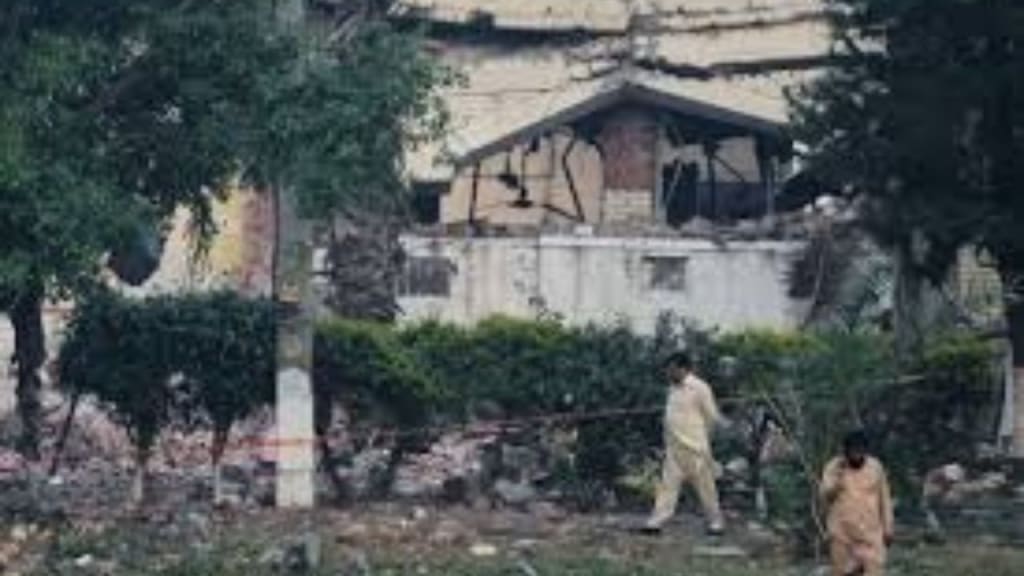
Footage circulating on Pakistani media shows collapsed buildings, civilians digging through rubble, and overwhelmed hospitals treating the wounded. While the authenticity of some of the footage has yet to be verified independently, the images have ignited international concern.
Pakistan Strikes Back
In swift retaliation, Pakistan’s military claimed to have downed five Indian fighter jets that reportedly entered its airspace during the operation. Pakistan’s Air Force also conducted artillery shelling across the Line of Control (LoC) in Jammu and Kashmir, leading to additional casualties on the Indian side, although exact figures remain unconfirmed.
Prime Minister Shehbaz Sharif condemned India's actions as an "act of war" and vowed a “measured yet firm response.” He convened an emergency session of the National Security Council, which authorized the military to take "corresponding actions in self-defense."
Tensions at a Boiling Point
The current flare-up is among the most serious confrontations since the Pulwama-Balakot episode in 2019, when India similarly launched airstrikes in response to a terror attack. However, analysts warn that the stakes are even higher this time.
“This is not just a border skirmish,” says Dr. Ayesha Siddiqa, a security analyst based in Islamabad. “Both sides are engaging in offensive actions that could spiral out of control. With public opinion inflamed and political pressure mounting, neither government wants to appear weak.”
The situation has also had immediate humanitarian impacts. Thousands of villagers along the border in Punjab and Jammu regions have been evacuated due to fears of full-scale war. Schools and businesses have shut down, and both nations have put their armed forces on high alert.
Global Powers Urge Restraint
The international community has responded with deep concern. The United Nations Secretary-General António Guterres called for immediate de-escalation and urged both countries to return to diplomatic dialogue.
The United States, United Kingdom, China, and Russia—all of whom share strategic ties with one or both nations—have also issued statements urging calm. “Any miscalculation between two nuclear powers can be catastrophic,” warned U.S. Secretary of State Antony Blinken.
Airlines from several countries have already suspended flights over northern India and Pakistan due to safety risks. Financial markets in the region also showed signs of nervousness, with stocks dipping amid fears of prolonged conflict.
A Call for Dialogue
Despite the sharp rise in hostilities, there is still hope among observers that back-channel diplomacy could prevent a wider war. Reports suggest that officials from both countries may be engaging in indirect talks through intermediaries in the Middle East and Europe.
Human rights organizations have called for an independent investigation into the civilian casualties and urged both governments to prioritize peace over retaliation.
About the Creator
Keep reading
More stories from gul malook and writers in Confessions and other communities.
The world is short-staffed
Depending on where you live, it might be hard for you to tell but the world is short-staffed. You may be in a buzzing city, crowded all the time so it would be difficult for you to believe this but overall, the world is short staffed and it doesn’t matter what industry you are talking about. In this article, I am going to cover the hardest hit industries, but before that, let’s try to understand the “why” first.
By real Jemaa day ago in Confessions



Comments
There are no comments for this story
Be the first to respond and start the conversation.