
Icons: Between Belief and Doubt
A conversation on icon theology between belief and hesitation;

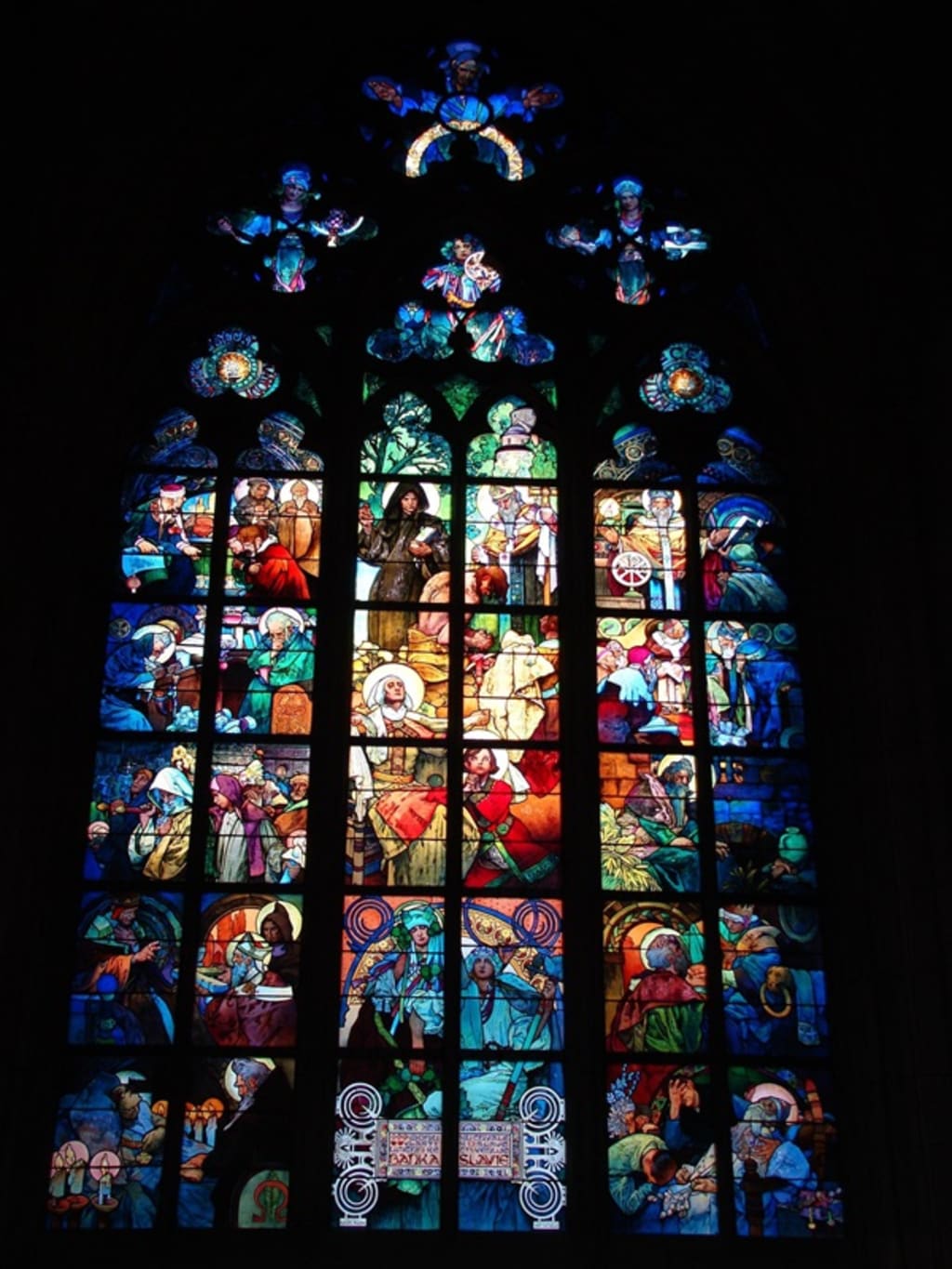
The origin and theological justification is based on the idea that God became incarnate in Christ, therefore He can be represented visually. Saint Paul says in Colossians 1:15 that Christ is ‘the image of the invisible God.’ In the Old Testament, God Himself commands the making of sacred images, such as the cherubim on the Ark of the Covenant (Exodus 25:18).
You know how the Italian says it? Non quadra questa cosa per niente — ‘’They are considered symbols of the holy presence, not divinities in themselves!’’
Exactly, ‘non quadra’ — and it is a perfectly legitimate reaction. The heart of the struggle lies in the fact that religious imagery seems to sit in an ambiguous zone: it is there, it is tangible, it receives gestures of respect… and yet we are told that it is not adored, but ‘symbolic.’ This is where the fine distinction that the traditions attempt comes in: between adoration, which is reserved for God, and veneration, as a visual expression of devotion toward those who followed Him.
For someone formed within a strictly biblical perspective, this justification can feel forced. But for historical traditions such as the Catholic and Orthodox ones, the representation of the sacred has always been a form of visual preaching, not an act of magic. The sanctification of a statue or an icon does not imply attributing divinity to it, but simply acknowledging that the figure represented is worthy of honour — and that matter serves the spirit.”
Yes. But … for someone who comes with a more direct way of thinking, as the Italian spirit sometimes is, it can seem that the idea simply ‘doesn’t fit’.
😄 Vrei să vedem ce spune protestantismul despre reprezentările religioase sau cum au fost interzise imagini sacre în unele perioade ale istoriei? Poate descoperim și alte „non quadra”!
Do you want us to look at what Protestantism says about religious representations or how sacred images were banned in certain periods of history? Maybe we will discover other ‘non quadra’ as well.
Yes, why not.
Ok, what Protestantism says. Protestantism, especially in its historical forms such as Lutheranism, Calvinism, and Anglicanism, has a distinct position regarding religious representations such as icons and statues. Let’s see what it says: The principle of ‘Sola Scriptura.’
Protestantism is based on the idea that the Bible is the only authority in matters of faith and practice. If something is not clearly justified in Scripture, it is viewed with suspicion or rejected. For this reason, many Protestant branches gave up icons, statues, and other cult objects, considering them potentially dangerous for an authentic faith. The reaction against idolatry.
Reformers such as Martin Luther and John Calvin criticised the veneration of images as a form of idolatry. In some regions, during the Reformation, there were iconoclasms — the destruction of icons and statues in churches. Calvin said that ‘the heart of man is a factory of idols’ — therefore any object that distracts from God must be avoided.
What gives strength to Calvin’s ideas? He insisted on the absolute sovereignty of God — everything revolves around the divine will, not around external forms. He promoted a worship centered on the written Word, eliminating elements considered unnecessary or risky (images, relics). He formulated an extremely logical, interconnected theology, which continues to influence Reformed thinking today, especially in the Presbyterian and Evangelical traditions. At the same time, some say that this ‘cold logic’ can leave less room for mystical experience or the symbolism of the sacred — which the Orthodox and Catholic traditions cultivate.
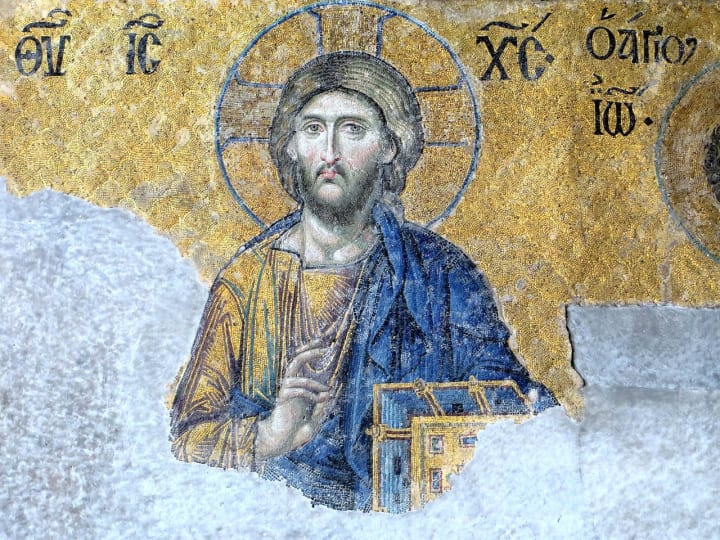
There is no verse that says literally ‘matter was sanctified through the Incarnation,’ but the entire theology of the Incarnation affirms this: God stepped into the world, took a body, ate, suffered, died, and rose again — in matter. Therefore, matter is no longer only ‘fallen,’ but opened toward deification.
©Ca De Luce> MINDFUL MIND Blog 2025. All rights reserved.
©Ca De Luce> MINDFUL MIND Blog 2025. No part of this publication may be copied or reproduced without permission.
©Ca De Luce> MINDFUL MIND Blog 2025. Content protected — copying prohibited.
©Ca De Luce> MINDFUL MIND Blog 2025. Unauthorized use of text or media is not allowed. All images and photo are fulfilling the copyrights regulations. Much obliged to you all!
About the Creator
CA'DE LUCE
I speak of spirit, soul, and flame,
Of humanity’s quest, our endless aim.
Religion, memory, stories untold,
Poetry woven with truths, oh! so bold.
Evolution’s path, the heart’s deep call,
Media’s noise, I’ll sift it all.
.
Keep reading
More stories from CA'DE LUCE and writers in Confessions and other communities.
Icons: Between Belief and Doubt
For example, in Orthodox icons the Mother of God is shown with a solemn, elongated face and three symbolic stars representing her virginity before, during, and after the birth of Christ. In Western paintings she may appear with sensual features and loose hair, reflecting a different artistic and theological approach.
By CA'DE LUCEabout 10 hours ago in Confessions
The Piggy Project
I’ve had so many names in this life I lose track of which ones were ever really mine and which ones I wore because someone needed me to. Some were handed to me before I had words to refuse them, before I knew what they meant, before I knew I could say no. Most weren’t meant to hurt. That doesn’t mean they didn’t leave marks. Marks that told me who I belong to, who I am by way of who claims me, recognizes me in the good and bad, who walks beside me.
By Fatal Serendipity5 days ago in Confessions
I See
I wish I could tell you it wasn’t fear that drove me into the oblivion. But, it was how I was placed in the world. Let me explain, I was given a duty a task so to speak. A task to show the world that demons do exist and if a demon exist than what would counteract a demon, how could I fight them? Me? All by myself? Does that mean I’m the opposite of a demon? Was I an angel?
By Cerina Galvan4 days ago in Confessions


Comments
There are no comments for this story
Be the first to respond and start the conversation.