
Icons: Between Belief and Doubt
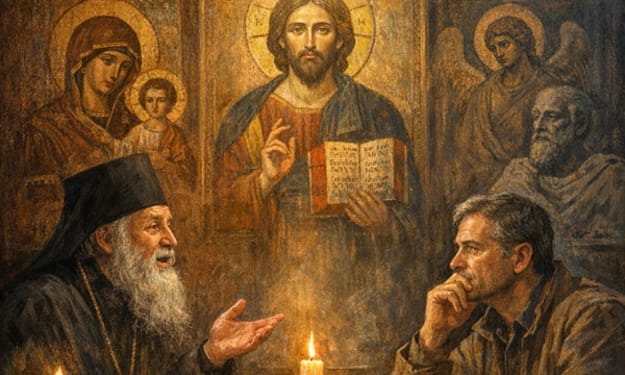
A conversation on icon theology between belief and hesitation;

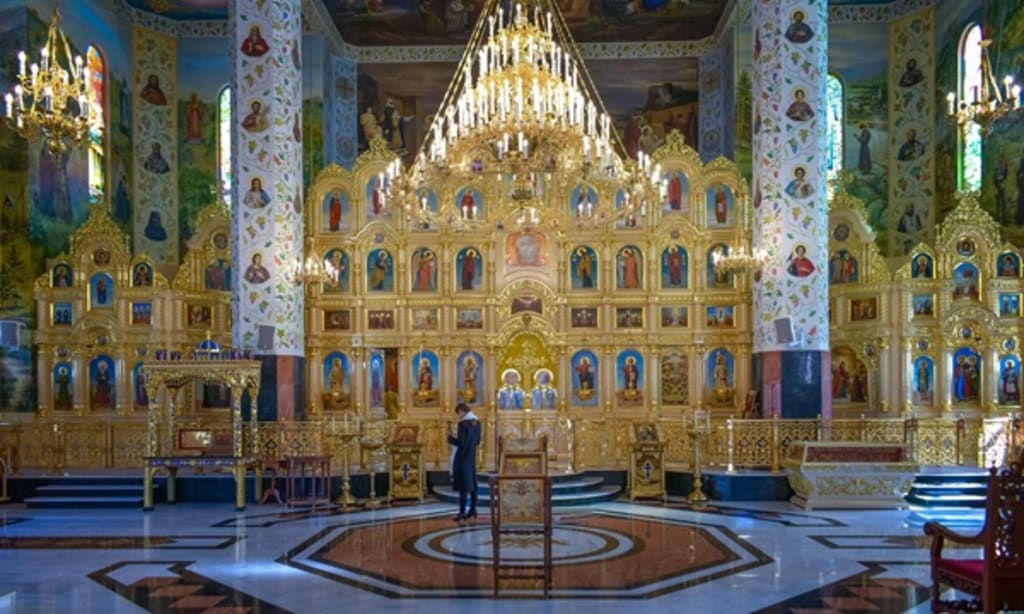
For example, in Orthodox icons the Mother of God is shown with a solemn, elongated face and three symbolic stars representing her virginity before, during, and after the birth of Christ. In Western paintings she may appear with sensual features and loose hair, reflecting a different artistic and theological approach.
That phrase “a liturgical act” can feel a little opaque if you’re not used to church language, so it helps to put it in simple terms. In Orthodoxy, the liturgy is the formal worship of the Church, the shared prayer of the community, carried out through established rites and gestures. When the Church blesses an icon, it isn’t doing something casual or symbolic. It’s performing an action that belongs to its official worship, using prayers and gestures that set the icon apart for sacred use. The blessing marks the moment when the icon stops being a piece of art and becomes something meant for prayer, a presence that participates in the life of the Church.
This matters because Orthodoxy never treats icons as decoration. Once they are blessed, they are approached as holy objects, meant to draw the heart toward the divine. They are understood as openings toward the reality they depict, not simply images on wood. The blessing is the Church’s way of dedicating them to God, giving them a place within its spiritual life.
If you want a simple way to picture it, think of the difference between an ordinary table and an altar. The table is just furniture. The altar, once consecrated, becomes something entirely different, something that belongs to worship. Icons undergo a similar shift once they are blessed.
Help me t understand this=>’’ The blessing of icons in Orthodoxy is a liturgical act that consecrates them as objects of worship rather than simple works of art’’ = a liturgical act?
When people hear the phrase “a liturgical act,” it can sound a little distant or technical, but the idea itself is simple. In the Orthodox world, the liturgy is the heart of the Church’s worship, the shared prayer of the community shaped by long‑established rites. So when an icon is blessed, the Church isn’t just saying a quick prayer over it. It is performing something that belongs to its formal worship, something done with intention and with the weight of tradition behind it. Through that act, the icon is no longer treated as a piece of craftsmanship but as something set apart for prayer.
This is why the blessing matters so much. In Orthodoxy, an icon isn’t decoration. Once it has been blessed, it is approached as a sacred presence, a way of turning the mind and heart toward the reality it depicts. The Church dedicates it to God, and from that moment it belongs to the life of prayer rather than the world of art.
A simple way to picture this is to think of the difference between an ordinary table and an altar. The table is just furniture. The altar, once consecrated, becomes something entirely different, something woven into the worship of the Church. An icon undergoes a similar transformation when it is blessed.
The role of statues in the Catholic tradition is that they are considered symbols of the holy presence, not divinities in themselves. They help the faithful to focus in prayer and to express their devotion toward the person represented. They are often accompanied by candles, flowers, or gestures of respect, as a sign of love and gratitude.
The difference from idolatry is that Catholics do not adore the statues, but honour them as visual reminders of the saints who lived in communion with God. Adoration (latreia) is reserved only for God, while veneration (dulia) is offered to the saints, and the Mother of God receives a special form called hyperdulia. It is similar to keeping a photograph of a loved person: you do not worship the paper, but you express your love toward the one represented.
©Ca De Luce> MINDFUL MIND Blog 2025. All rights reserved.
©Ca De Luce> MINDFUL MIND Blog 2025. No part of this publication may be copied or reproduced without permission.
©Ca De Luce> MINDFUL MIND Blog 2025. Content protected — copying prohibited.
©Ca De Luce> MINDFUL MIND Blog 2025. Unauthorized use of text or media is not allowed. All images and photo are fulfilling the copyrights regulations. Much obliged to you all!
About the Creator
CA'DE LUCE
I speak of spirit, soul, and flame,
Of humanity’s quest, our endless aim.
Religion, memory, stories untold,
Poetry woven with truths, oh! so bold.
Evolution’s path, the heart’s deep call,
Media’s noise, I’ll sift it all.
.
Keep reading
More stories from CA'DE LUCE and writers in Confessions and other communities.
What Happens to Your Sex Life When You First Get Out of a Relationship?
As I prepare to discuss this story that I very nearly titled: Sexual Gratification and the Missing Boyfriend, I ask that the reader keep in mind, this material was initially written for women, however, the valid points I attempt to make can just as easily apply to men.
By Justiss Goode4 days ago in Confessions
The BAFTA Awards
By now, in a stunning departure from recent years, most of the world is aware of what happened at the BAFTA film awards. Social Media Headlines will tell you the bare bones: that John Davidson, a Tourette's Syndrome advocate, shouted a racial slur at two Actors of Colour, Michael B Jordan and Delroy Lindo.
By Natasja Rose6 days ago in Psyche


Comments
There are no comments for this story
Be the first to respond and start the conversation.