
I Took the Fall for Something I Didn’t Do
Loyalty felt like the right choice—until regret came calling.
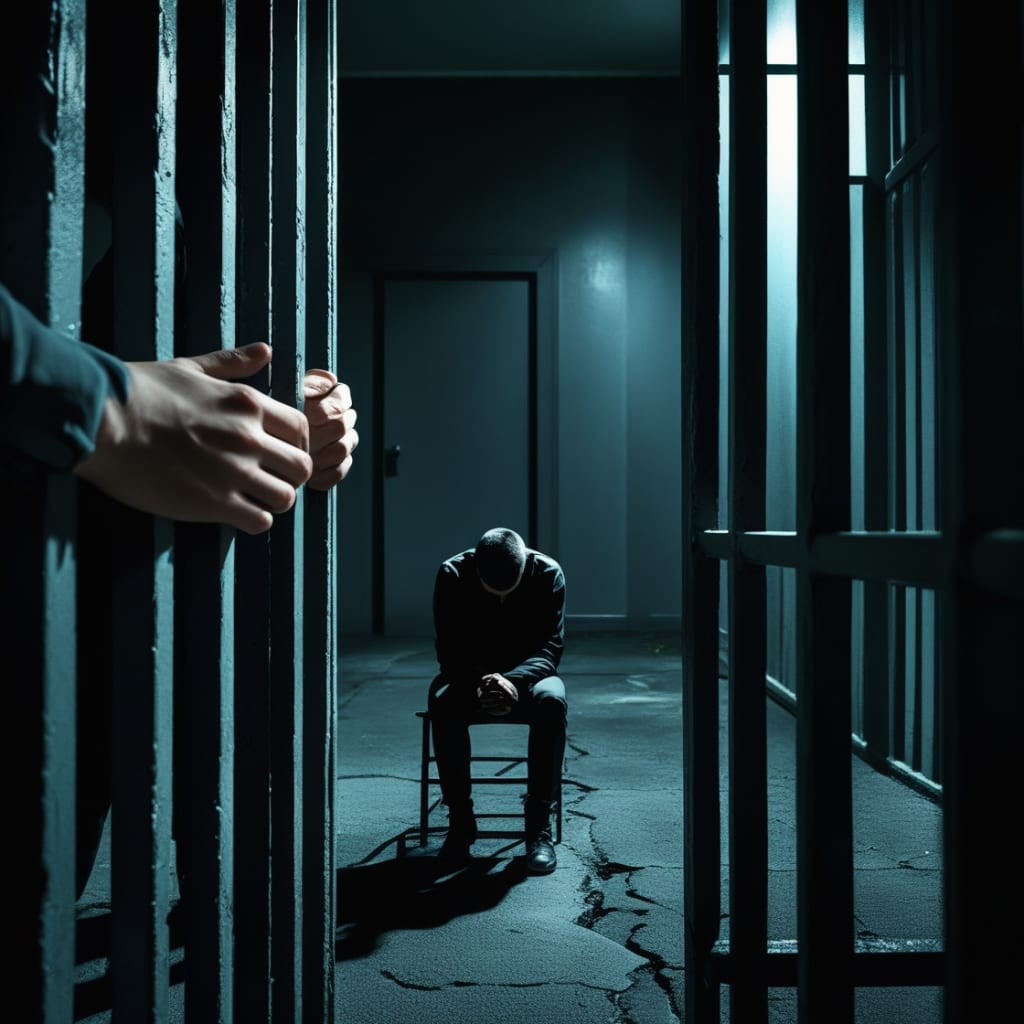
I never meant to be the one in handcuffs.
But when the sirens came wailing down 12th Street, my hands were already in the air. Sweat trickled down my back, and my best friend, Marcus, was already gone—vanished like smoke through the alleyway.
I stood there, heart pounding, watching the cruiser’s lights blur against the brick walls. It wasn’t guilt that froze me. It was choice.
And in that moment, I made the wrong one.
The cops found the backpack at my feet. Inside: a Glock, two ounces of uncut heroin, and a stack of cash wrapped with a rubber band that still had blood on it.
I didn’t run. I didn’t argue. I didn’t say Marcus’s name.
Because Marcus had been my brother since we were nine years old. We’d been through it all—evictions, bruises, stolen bikes, scraped knuckles, late-night hospital visits, and empty fridges. We’d both promised that if one of us got out, we’d pull the other out too.
So when the police asked, “Is this yours?”, I said yes.
Even though it wasn’t.
The trial was a blur of gray suits and cold stares. My public defender barely made eye contact. No one believed a word of what I didn’t say. The evidence stacked up like bricks in a cell. I kept quiet. Silent loyalty.
They gave me six years.
Six years for something I didn’t do.
Prison doesn’t make you tough—it makes you hard. There’s a difference.
I watched the seasons change through a six-inch window. I read books I never thought I’d pick up. I learned how to stay invisible. And I waited.
Waited for Marcus to show up.
Waited for the apology.
Waited for something—anything—to make the sacrifice worth it.
But he never came.
No letter. No call. Not even a mention from anyone on the outside. It was like he’d erased me.
Two years in, I saw a newspaper in the prison library. Tucked inside was a headline that nearly made me drop it:
“Local Entrepreneur Marcus Wren Opens Second Auto Shop in Southside.”
His face—my best friend’s face—smiled back at me in a button-up shirt, hands greasy, standing next to a custom-painted Camaro. He was doing well. Real well.
And I was still in here, rotting for him.
That’s when regret first knocked on the door.
I got out early on good behavior—four years and a few bruises lighter.
The world had changed. Phones had faces now. People had moved on. But the bitterness in my gut stayed exactly where I left it.
I didn’t go looking for him. Not at first. I told myself I’d moved on.
But lies don’t hold up long when they’re the only thing keeping you warm at night.
So I went to his shop.
He didn’t recognize me at first.
“Can I help you?” he asked, wiping his hands on a rag.
I stepped into the light.
His face went pale. “Ty…”
I nodded.
“You look good,” he said, awkwardly.
I didn’t smile. “Four years.”
He swallowed hard. “I didn’t ask you to do it.”
“No,” I said. “But you didn’t stop me either.”
There was a long silence.
“I didn’t know how to fix it,” he said finally. “You made your choice.”
“And you cashed in on it.”
He looked away. “What do you want?”
I didn’t know how to answer. I didn’t want his money. I didn’t want revenge. I didn’t want an apology anymore, either.
“I wanted to believe loyalty meant something,” I said. “But I was just a convenient alibi, wasn’t I?”
He didn’t deny it.
I walked out without another word.
That night, I sat on my mattress in a cheap rented room with peeling paint and a fridge that hummed too loud. I pulled out a pen and started writing everything down—not for Marcus, not for the courts, not for pity.
For me.
Because sometimes the only way to heal from a silence that deep… is to give it a voice.
I don’t know if I’ll ever forgive myself for taking the fall.
I don’t know if I’ll ever forgive him.
But I do know this:
Loyalty is only noble when it’s mutual.
Otherwise, it’s just another name for self-destruction.
About the Creator
Keep reading
More stories from HAFSA and writers in Confessions and other communities.
Thoughts on Vocal and the way the world is
"Death cannot stop true love, only delay it." – Wesley in The Princess Bride. I decided to come back to Vocal on a very cold and dark night at the end of December. I had been, and still am, convalescing from a horrible staph infection that had gone misdiagnosed for months. This, paired with the increasing challenges of being healthy, making the best choices for my co-parented child, being a wife, and being a director at a new job, was a lot to manage.
By Jazzy 5 days ago in Confessions
Word of the Day: 年寄
I could have sworn that I already had a page open. I guess I am more keen on writing right now because I can't see anything right now. I mean I do have all these great ideas for art and such but half of my stuff is still packed in the suitcase and the other is sprawled out on the floor.
By Kayla McIntosh3 days ago in Confessions



Comments
There are no comments for this story
Be the first to respond and start the conversation.