
I Love My Parents, But I Don’t Like Them
Nuanced exploration of adult children, emotional debt, guilt, and boundaries.
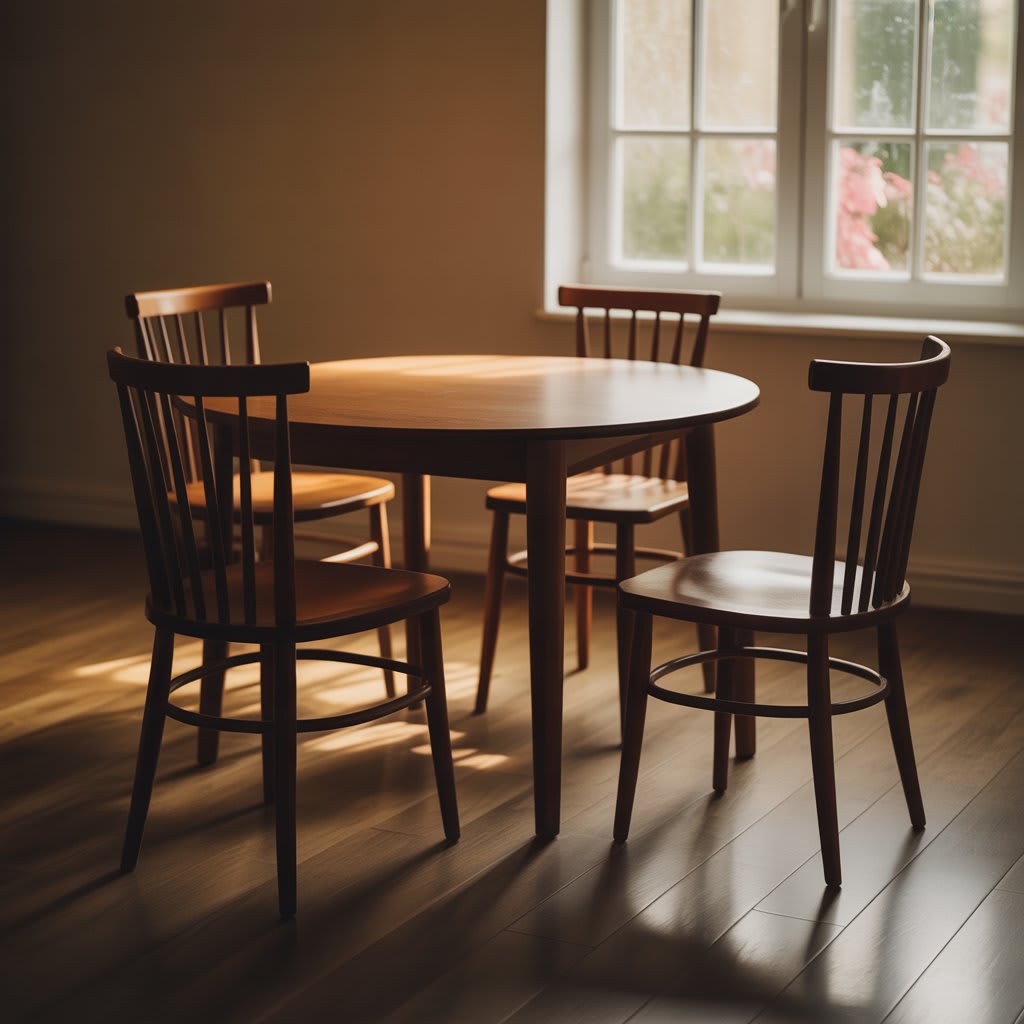
I Love My Parents, But I Don’t Like Them
I love my parents in the way you love the house you grew up in, even after the roof leaks and the walls remember every argument. The love is structural. Foundational. It exists whether I tend to it or not. Liking them, though—that feels conditional, fragile, something I have to negotiate every time the phone rings.
This distinction used to scare me. I thought it made me ungrateful, cruel, broken in some subtle moral way. Love was supposed to be warm and instinctive and endlessly forgiving. Love was supposed to mean wanting to sit at the table longer, wanting to hear the same stories again, wanting to share yourself freely. But adulthood teaches you that love and liking are not synonyms. Sometimes they barely recognize each other.
My parents did not hit me. They fed me, clothed me, showed up to school events when they could. They did what they understood as parenting, which is the part that makes everything complicated. There is no villain here. Just people who loved me deeply and still managed to leave me with knots I am untangling in my thirties.
When I am with them now, I feel myself shrink. Not dramatically—no obvious collapse—but a quiet folding inward. I become careful with my words. I edit my opinions. I brace for commentary disguised as concern. Everything is said with a tone that implies I am still unfinished, still slightly wrong, still in need of correction. They ask questions that are really statements. Advice that arrives uninvited and overstays.
“Are you sure that’s a good idea?”
“I just worry about you.”
“When I was your age, I would never have—”
These sentences carry an emotional invoice. Not explicit, but heavy. After everything we did for you, you owe us agreement. You owe us proximity. You owe us access.
This is the emotional debt adult children rarely talk about—the sense that your autonomy comes with interest. That choosing differently feels like ingratitude. That boundaries feel like betrayal. My parents never say this outright, but it hums beneath every interaction. A low-grade expectation that love should look like compliance.
Guilt becomes the background noise of adulthood. It shows up when I don’t call often enough, when I choose holidays with friends, when I don’t share details of my life. Guilt tells me that withholding information is a kind of theft. That privacy is punishment. That independence is abandonment.
And yet, when I do share, it is often used against me later. Not maliciously, but carelessly. A vulnerability remembered at the wrong moment. A fear repeated as a joke. A confidence questioned because it doesn’t align with their idea of safety. Liking someone requires trust. And trust requires the belief that your interior life will be handled gently.
I love my parents. I don’t like how they listen.
There is also grief in this—not for what was, but for what will never be. I grieve the fantasy of adult friendship with them. The imagined version where conversations are curious instead of corrective, where differences are held without judgment, where I don’t feel like a child masquerading as an equal. I grieve the parents I keep hoping they will become, even though hope has proven itself unreasonable.
Boundaries, I’ve learned, are not walls. They are instructions. They say: If you want access to me, here is how to handle me. My parents struggle with instructions they didn’t write. They interpret boundaries as rejection, limits as punishment. When I say “I don’t want to talk about that,” they hear “I don’t love you.” When I take space, they hear abandonment.
So I live in the tension. I answer some calls and let others ring. I share selectively. I prepare myself emotionally before visits, like packing for a climate I know will be harsh. I remind myself that discomfort does not mean wrongdoing. That protecting my peace is not the same as harming them.
There are moments, small and unremarkable, when I like them. When my mother laughs without sharp edges. When my father tells a story without a lesson attached. These moments are real, and they matter. But they are not the whole story, and pretending they are would cost me something I can’t afford anymore.
Loving my parents does not require me to like the way they move through the world. It does not require me to absorb their fears or live out their unfinished lives. It does not require me to make myself smaller so they can feel bigger, safer, more certain.
This is the quiet revolution of adulthood: realizing that love can exist without closeness, without constant contact, without approval. That you can honor where you come from without living there forever. That gratitude does not mean self-erasure.
I love my parents. I don’t like them. And both things can be true without canceling each other out.
What I am learning—slowly, imperfectly—is that my life is not a repayment plan. It is not a continuation of their choices. It is not a compromise negotiated in guilt. It is my own, and loving them does not mean giving it back.
About the Creator
Keep reading
More stories from ANAS KHAN and writers in Confessions and other communities.
Blessed 33
So I woke up on the morning of February 5, 2026 and guess what and you know what I realized? It’s my 33rd birthday. Do you know what that means? Yes, technically I’m getting old, but what I couldn’t have guessed was this would be one of the best days of my life.
By Joe Patterson7 days ago in Confessions
"I COULDN'T BELIEVE IT" Katt Williams Recalls Watching Celebrities Board Shuttle Buses To Diddy Parties! "I'm Not Scared To Say Nothing"
With all the truths that stay in shadows, Katt Williams continues to shine light in those dusky areas. He told Big Boy during an interview that he had witnessed men with their heads bent low, hunched over and shoes untied, inexplicably.
By Skyler Saunders6 days ago in Confessions


Comments (2)
i love you
Great insight. This hits so many emotions in me a child and as a parent. Blessings 🙏🏾