
I Carried His Silence Longer Than His Sins
Forgiving my father was never the hardest part — it was surviving the parts of me he never understood.

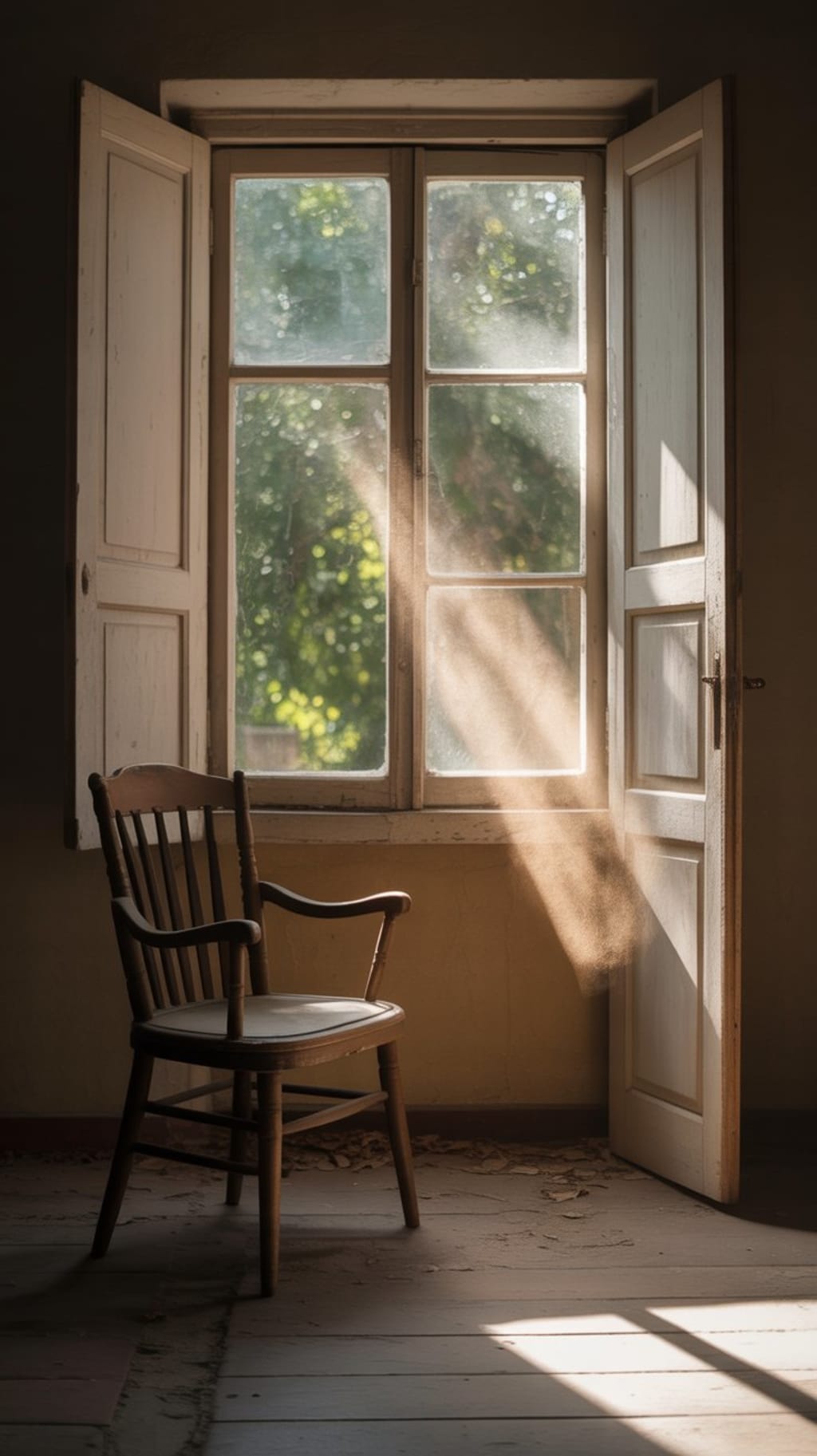
They say time heals everything, but they never tell you what to do with the silence that time leaves behind.
For years, my father’s silence echoed louder than any words he could’ve spoken. It filled rooms, sat between us at dinner, and tucked me in at night with a weight heavier than any lullaby.
Growing up, I didn’t know what a father’s love was supposed to feel like. I only knew absence—his absence—despite him living in the same house. He was a presence that loomed, not one that embraced. He provided, yes, but love isn’t measured in electricity bills or school fees. It's measured in the small things: an arm around your shoulder, a glance that says "I see you", a word that says "I’m proud of you." I don’t remember having any of those.
I was ten when I stopped expecting him to say “I love you.”
I was fifteen when I stopped trying to make him proud.
And I was twenty-two when I realized I had spent my whole life trying to become the child he would finally look at with warmth.
But he never did.
He wasn’t cruel. At least, not in the way people usually think of cruelty. He didn’t hit me. He didn’t insult me. He was just... silent. Emotionally absent. And sometimes, that hurts more. Because when someone yells, you can fight back. But how do you fight a ghost who’s alive?
I remember once, on my twelfth birthday, I saved up courage like it was gold. I stood in front of him after school and said, “Did you know today is my birthday?”
He looked at me, blank, then nodded and said, “That’s nice,” before returning to the news channel blaring on TV. That night, I blew out candles alone.
I began carrying his silence like a second skin. I wore it in classrooms, relationships, and even in the mirror. I learned to be quiet when I needed to scream. I became emotionally fluent in distance. And with every year, I buried a piece of myself to stay close to a man who never reached back.
Years later, I tried to talk to him again—this time, as an adult. I sat across from him at a dusty old tea shop in the city where he spent most of his life working.
I said, “Why did you never talk to me?”
He blinked. Looked away. “I didn’t know how,” he whispered. “My father was the same.”
That was the moment I realized: my father wasn’t heartless.
He was broken.
A man made of generational wounds no one taught him to name, much less heal.
I cried that night—not for me, but for him. For the boy inside him who also waited for love and only received silence. And in that strange, painful clarity, I did something I never thought I could:
I forgave him.
But here's the truth no one tells you about forgiveness:
It doesn’t come wrapped in warmth and closure. Sometimes, it’s cold. Lonely. It doesn’t always end in hugs or reconciliation. My father and I never became close. He remained a stranger in my life, even as his hair grayed and his hands trembled. But I stopped blaming myself for it.
I stopped trying to fix what he never learned to build.
Forgiveness, for me, wasn’t about him. It was about freeing the little child inside me—the one who still thought he was unworthy of love just because one man couldn’t say it.
My father passed away last year. Quietly. As expected.
I didn’t cry at the funeral. I had cried enough for him while he was alive.
But I did whisper, “I hope you found peace,” into the dirt before they covered him.
Because even now, I carry his silence — not as a wound, but as a reminder.
That I broke a cycle.
That I learned to speak where he could not.
That I will never let my own children wonder if they are loved.
Because I was never truly carrying his sins.
I was carrying his silence.
And now, finally, I’ve put it down.
About the Creator
Keep reading
More stories from Mansoor ahmad and writers in Confessions and other communities.
Thoughts on Vocal and the way the world is
"Death cannot stop true love, only delay it." – Wesley in The Princess Bride. I decided to come back to Vocal on a very cold and dark night at the end of December. I had been, and still am, convalescing from a horrible staph infection that had gone misdiagnosed for months. This, paired with the increasing challenges of being healthy, making the best choices for my co-parented child, being a wife, and being a director at a new job, was a lot to manage.
By Jazzy 3 days ago in Confessions
Two girls, one library, and a hunger for worlds beyond your own - Part 2
During elementary school, we sometimes had to move. For entire seasons. Entire school semesters. When the drought came one year, a bird disease also appeared. Grandma, one of the most famous breeders in our village, for birds, chickens, and geese, lost everything! And we lost the peace of of mind for the next day. We had to move to another village. Near our Aunt, sister of my father.
By C.M.3 days ago in Confessions
My New Book is Finally Here
My poetry collection Beautiful and Brutal Things is done. It's actually done and finally published over 270 pages. Over a year of my life went into this book. More than a year, really. Long days at my computer, sometimes seven days a week because I couldn't stop even when I probably should have. Then two months of editing that felt harder than the writing itself. But it's finished, and I'm still standing, and the book is real.
By Tim Carmichael4 days ago in BookClub




Comments
There are no comments for this story
Be the first to respond and start the conversation.