
How I Dissolved the Family Business (and Lived to Regret It)
The Empire Always Haunts Its Ghosts

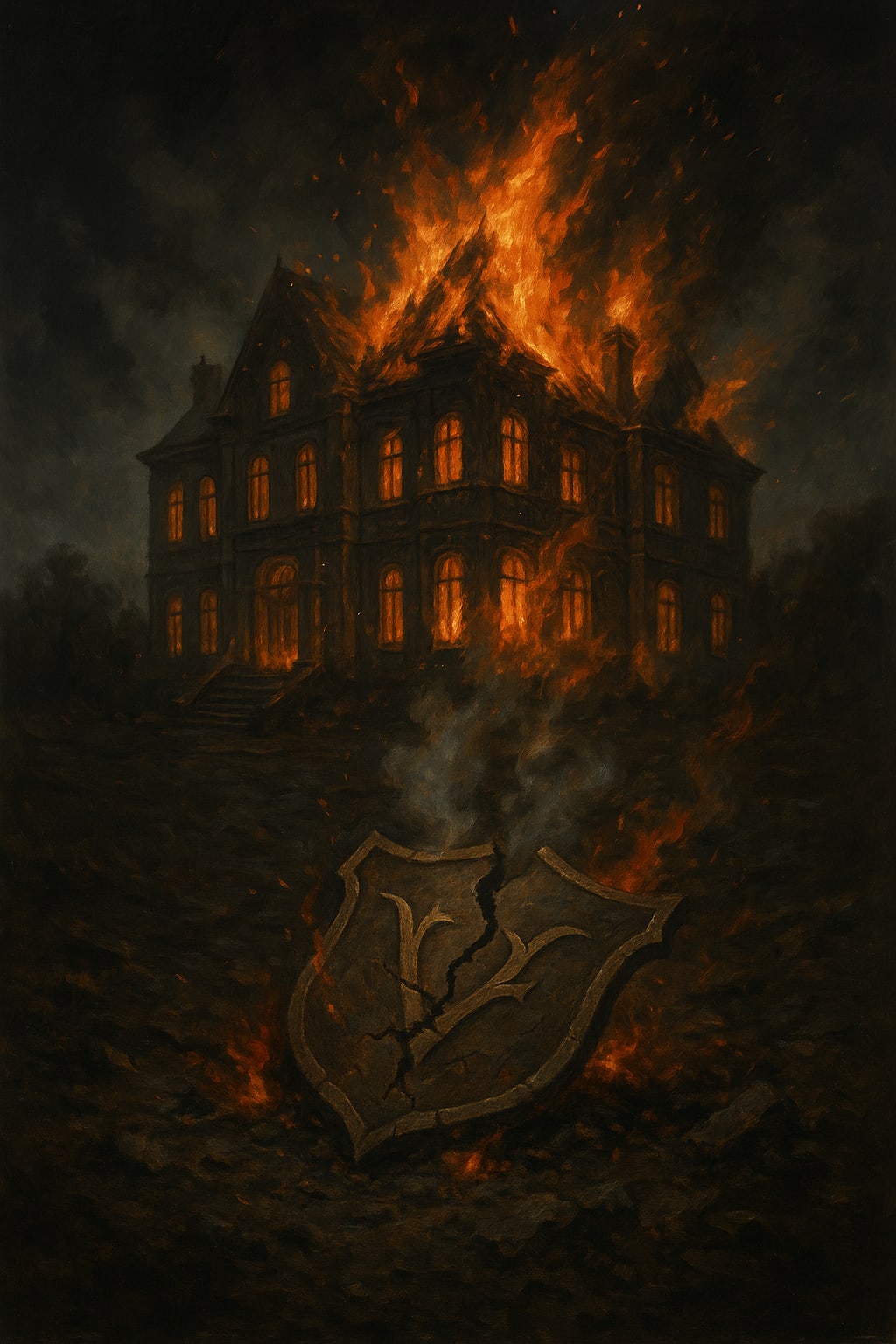
I. Baptized in Ledgers
They say babies recognize their mother’s voice in the womb.
I’m not sure I did.
What I remember — or maybe invented — is the sound of papers being shuffled, the metallic click of a fountain pen cap, the low baritone of my father dictating figures into a tape recorder.
The family business was my first lullaby.
Other children grew up with fairy tales. I grew up with market forecasts. At bedtime, instead of knights and dragons, I was told stories about acquisitions and hostile takeovers. Instead of “once upon a time,” it was always “quarterly results show growth.”
By five, I knew how to shake hands firmly and smile without showing weakness. By ten, I had already been taken to the boardroom — “just to observe,” my father said. But observation was participation. I learned early that silence is complicity.
At sixteen, when most kids worried about exams and crushes, I was being told by my uncles that I would one day inherit “the weight of the crest.” The family seal was stitched onto my blazer. It felt less like pride, more like a chain.
II. The Blood Pact
The empire was built not just on money, but on silence. We were taught never to speak of what happened inside. Never speak of how suppliers were squeezed until they broke. Never speak of how rivals mysteriously vanished, absorbed or bankrupted. Never speak of the way cousins were pitted against one another, gladiators in tailored suits.
The first time I broke that rule was at dinner. I asked my mother if she was happy. She looked down at her plate, cutting a piece of lamb so precisely it could have been a surgery. My father cleared his throat, and the silence pressed so heavy I nearly drowned in it.
That was the night I realized: in this family, questions were treason.
III. My Small Rebellion
It began so quietly. Not with fire, not with fury — just one refusal. A signature I did not place. A contract I let expire. My cousins laughed it off, called me careless. My father scolded me in private, voice cold as steel:
“You don’t get to choose. You are chosen.”
But I had tasted something strange: the possibility of choice.
From there, the undoing snowballed. I sold a warehouse “to streamline operations.” I cut off a subsidiary “to reduce risk.” They were little lies that bought me time, but each cut was a severed artery. Slowly, I was bleeding the empire dry, transaction by transaction.
IV. Fire in the Vaults
The turning point came when I sold the mines. They had been in the family for generations — our so-called crown jewel. Selling them was blasphemy. But I did it anyway. The numbers were ironclad, the deal watertight. My relatives raged, but couldn’t stop me.
That was the first time I saw fear in my father’s eyes. Not fear of loss, but fear of me.
From then on, it was open war.
Meetings turned into interrogations. My cousins whispered “traitor” behind their smiles. My uncles demanded audits. My mother avoided my gaze.
I walked into the boardroom each week with a calm mask, but inside, I was trembling. Because I knew what they didn’t: I wasn’t saving myself. I was burning everything.
V. The Collapse
The empire collapsed not with an explosion, but with a sigh. Investors pulled out. Factories shut down. Our name, once carved into skyscrapers, faded from glass and steel.
The family split into factions — some cursing me, others begging me to stop, others trying to scavenge what they could. My father grew smaller by the day, his voice reduced to a whisper. When he died, some said I had killed him. Others said he was already dead, and I merely signed the death certificate.
At the funeral, no one met my eyes. The family crest hung on the coffin like a verdict. I remember thinking: I have dissolved more than a business. I have dissolved us.
VI. The Ghost in the Ledger
I thought freedom would come after the collapse.
It didn’t.
Because empires don’t just die. They haunt.
I see it in the way I count favors, like debts waiting to be collected.
I hear it in my sleep — the scratch of pens on contracts, the clink of glasses in toasts that meant nothing.
I feel it when I try to love and fail, because I was raised to see affection as leverage.
People call me brave, but I know better. I didn’t dismantle the empire out of courage. I did it out of desperation. And desperation doesn’t cleanse. It only scars.
VII. Regret
Do I regret it? Yes. And no.
I regret what it cost. I regret the ghosts I carry. I regret that in killing the machine, I inherited its rusted gears inside me.
But would I undo it? No. Because the empire was a poison, and we were all drinking from the same chalice. If it had continued, it would have devoured us whole.
Sometimes I think of my father’s last words to me:
“You dissolved nothing. You only inherited the ashes.”
And he’s right.
I carry the ashes still.
VIII. The Unfinished Confession
People think endings are clean. That once you burn something down, you walk away lighter. But endings are never clean. They cling.
I ended the family business.
But the family business never ended me.
And perhaps that’s the final truth: empires don’t collapse. They continue living inside those who built them, and those who broke them.
I am free.
And I am not.
That is the price of betrayal. That is the inheritance of fire.
About the Creator
Alain SUPPINI
I’m Alain — a French critical care anesthesiologist who writes to keep memory alive. Between past and present, medicine and words, I search for what endures.
Keep reading
More stories from Alain SUPPINI and writers in Confessions and other communities.
Mastering French Without Losing Your Sanity: A Realistic Guide for Beginners
Learning French can feel like solving a Rubik’s Cube blindfolded. The tricky pronunciation, the never-ending grammar rules, and the surprising exceptions make it seem impossible. But don’t worry—equipping yourself with key expressions and effective strategies can turn frustration into fluency. Let’s simplify French and make learning enjoyable.
By Alain SUPPINIExclusive • 11 months ago
I Didn’t Realize I Was Ruining My Own Life Until It Was Almost Too Late
By: Tazamain Khan For a long time, I believed I was doing exactly what I was supposed to do. I stayed busy, pushed myself hard, and ignored anything that felt uncomfortable. I told myself that stress was normal, exhaustion was temporary, and success would eventually make it all worth it.
By Tazamain khan 5 days ago in Confessions


Comments
There are no comments for this story
Be the first to respond and start the conversation.