
Healing Out Loud: Why Telling My Story Set Me Free
How Vulnerability Became My Superpower
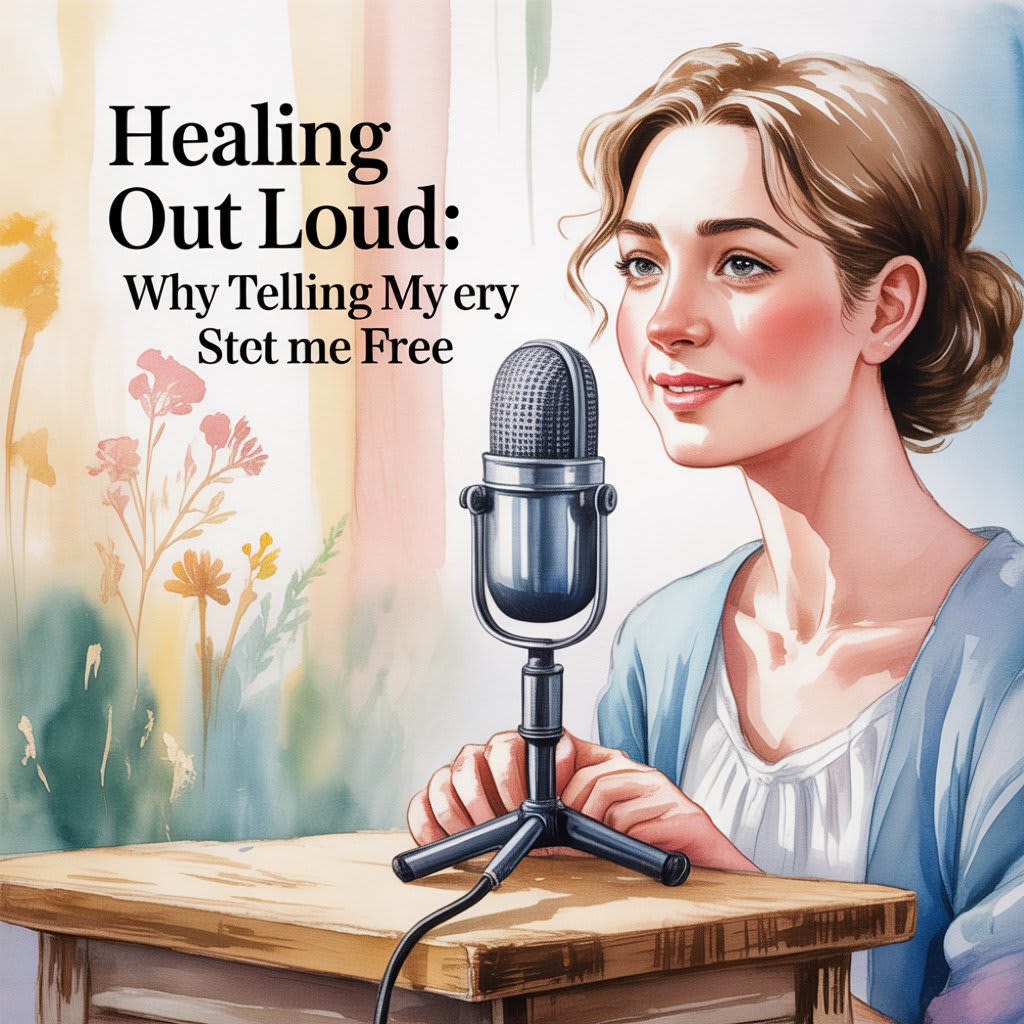
There was a time when silence felt safer than truth. When I carried pain like a secret folded in the pages of a journal no one would read. I believed that if I didn’t speak it, it wouldn’t define me. But the longer I kept my story hidden, the more it festered in the dark, shaping my self-worth, decisions, and relationships in ways I didn’t understand. It wasn’t until I began to heal out loud—to say the quiet parts out loud—that I truly began to feel free.
This is the story of how speaking my truth—however messy, uncomfortable, or imperfect—became the most powerful act of healing I’ve ever known.
The Weight of Silence
I grew up believing that strength meant silence. That being “okay” was the goal, even if I had to fake it. I became a master of pretending. Smiles in public, tears in private. I didn’t talk about the anxiety that woke me at 3 a.m., the trauma I minimized, or the loneliness that crept in even when I was surrounded by people.
People praised my resilience, not realizing it was built on emotional suppression. The world doesn’t often reward vulnerability—it rewards survival. And so I survived. Quietly. Internally. Alone.
But silence has a weight to it. One that presses on your chest and steals your breath. One that isolates you from connection and robs you of the validation you don’t even know you’re craving. I was surviving, yes—but I wasn’t living.
The First Crack in the Wall
I don’t remember the exact moment I chose to speak up, but I remember the feeling. I was exhausted. Exhausted from pretending, from hurting alone, from carrying stories that were screaming to be released. So I began writing.
At first, I wrote in a journal. I poured out truths I had never said aloud: about heartbreak, betrayal, abuse, anxiety, grief. I didn’t censor myself. I didn’t make it pretty. And something shifted. Seeing the pain on paper made it real—but also separate from me. It wasn’t who I was; it was something I had been through.
Then, I shared a piece publicly. My heart raced as I hit “publish,” certain I’d regret it. But the responses surprised me. People didn’t run from my vulnerability—they ran toward it. They said, “Me too.” They said, “I thought I was the only one.” They said, “Thank you for saying what I couldn’t.” That was when I realized something life-changing: my story wasn’t just mine—it was a bridge to others.
Why Speaking Heals
There’s something profound about telling your story out loud—whether to a therapist, a friend, or a stranger on the internet. It breaks the shame cycle. It transforms what once felt unbearable into something survivable. It gives your pain context, language, and shape.
Here’s what I’ve learned:
1. Shame shrinks in the light.
When I held my experiences in silence, they felt like proof that something was wrong with me. But speaking them aloud exposed them to compassion. I began to realize that I wasn’t broken—I was human.
2. Connection thrives on honesty.
Real connection doesn’t come from perfection; it comes from authenticity. When I started showing up as my whole self—including the messy, uncertain parts—I attracted people who truly saw me. Vulnerability became a filter for meaningful relationships.
3. My voice has power.
For years, I gave away my voice. To fear. To guilt. To the opinions of others. But using my voice to tell my story gave it back to me. I wasn’t just a character in someone else’s narrative—I became the author of my own.
The Fear of Being Seen
Healing out loud is not without fear. There’s risk in vulnerability. People might judge. Misunderstand. Weaponize your words. I’ve experienced all of that. But I’ve learned that the cost of hiding is far greater than the cost of being seen.
For every person who misunderstood me, ten others resonated deeply. For every moment of doubt, there was a deeper moment of growth. Healing publicly doesn’t mean sharing every detail—it means refusing to let shame silence you.
It’s about choosing truth over image. Depth over performance. Integrity over approval.
Not Every Story Needs to Be Told All at Once
There’s also wisdom in pacing your healing. You don’t owe anyone your story. You can share in layers. You can protect your heart while still honoring your truth. You can be honest without being exposed.
Healing out loud isn’t about trauma dumping or broadcasting every wound—it’s about intentional vulnerability. It’s about using your story to empower, not relive. It’s about knowing that your healing doesn’t have to happen in isolation.
The Ripple Effect of Courage
Something incredible happens when you tell your story: you create space for others to tell theirs.
I’ve seen it again and again. Someone reads my writing or hears me speak, and suddenly they find the courage to open up too. Vulnerability is contagious in the best way. It gives permission. It fosters empathy. It starts a chain reaction of healing.
We live in a world that teaches us to filter our lives into perfection, to present only the highlights, to gloss over the struggle. But what we really crave is realness. Rawness. Resonance. Healing out loud is a rebellion against the pressure to pretend. It’s a declaration that pain is not a weakness—it’s a part of the story.
Telling My Story Saved Me
If I had stayed silent, I would have stayed stuck. Speaking was the first step toward self-acceptance. Toward freedom. Toward peace.
I began to see my experiences not as things to hide, but as things that had shaped me into someone resilient, wise, and deeply empathetic. I no longer saw my story as something that disqualified me—but as something that qualified me to help others heal too.
There’s a quote I love:
“Be who you needed when you were younger.”
By sharing my story, I’ve become that person. For others. And for myself.
Final Thoughts: Your Voice is Medicine
To anyone holding their story in silence: I see you. I understand the fear. The risk. The uncertainty. But I also know the freedom that comes on the other side.
You don’t have to write a book or stand on a stage. Healing out loud can be as simple as saying, “This is what I went through,” or “I’m not okay right now,” or “Here’s my truth.”
It starts with honesty—with yourself, and then with someone you trust.
Your story is not too messy. Not too much. Not too broken.
It’s real, and real is what we need more of in this world.
Let your story breathe. Let it be heard. Let it set you free.
About the Creator
Keep reading
More stories from Aiman Shahid and writers in Confessions and other communities.
Chasing Peace, Not Perfection: My Journey to Letting Go
For as long as I can remember, I’ve been chasing perfection. Perfect grades. Perfect appearance. Perfect timing. Perfect everything. I lived by to-do lists, spreadsheets, color-coded calendars, and a voice in my head that said, “You’re not enough until it’s perfect.” I thought perfection was peace — that once I got it just right, I’d finally be allowed to rest. What I didn’t realize was that I was sprinting on a treadmill that never stopped, and I was the one controlling the speed.
By Aiman Shahid6 months ago in Confessions
Word of the Day: ホチキス
I don't know the word for Staples. I remember I used to think that Hochikisu was an Onomatopoeia for a stapler rather than a brand name. I am pretty sure I already have this title as a theme, which is making me feel many sort of ways as Vocal is harassing me about payments currently.
By Kayla McIntosh20 days ago in Confessions
“It’s Not You, It’s Me!”
There comes a time in life when I look at the things I used to do, especially when I was much younger and wanted to get along with others. There were times when I went along with the routines, the invitations, and habits of others that no longer fit me. Theref0re, I am breaking up with those habits.
By Margaret Minnicksa day ago in Confessions
Center Stage with Paul Stewart
*** I'm keen to republish the interviews I did for my series with Vocal creators. It's been a few years and I thought it might be nice to revisit these wonderful conversations. I'll be releasing them one at a time for a few weeks/months.
By Heather Hublera day ago in Interview



Comments
There are no comments for this story
Be the first to respond and start the conversation.