
Digital Ghost Towns: The Rise and Fall of Online Communities
From once-thriving forums to deserted comment sections — what happened to the soul of the internet?

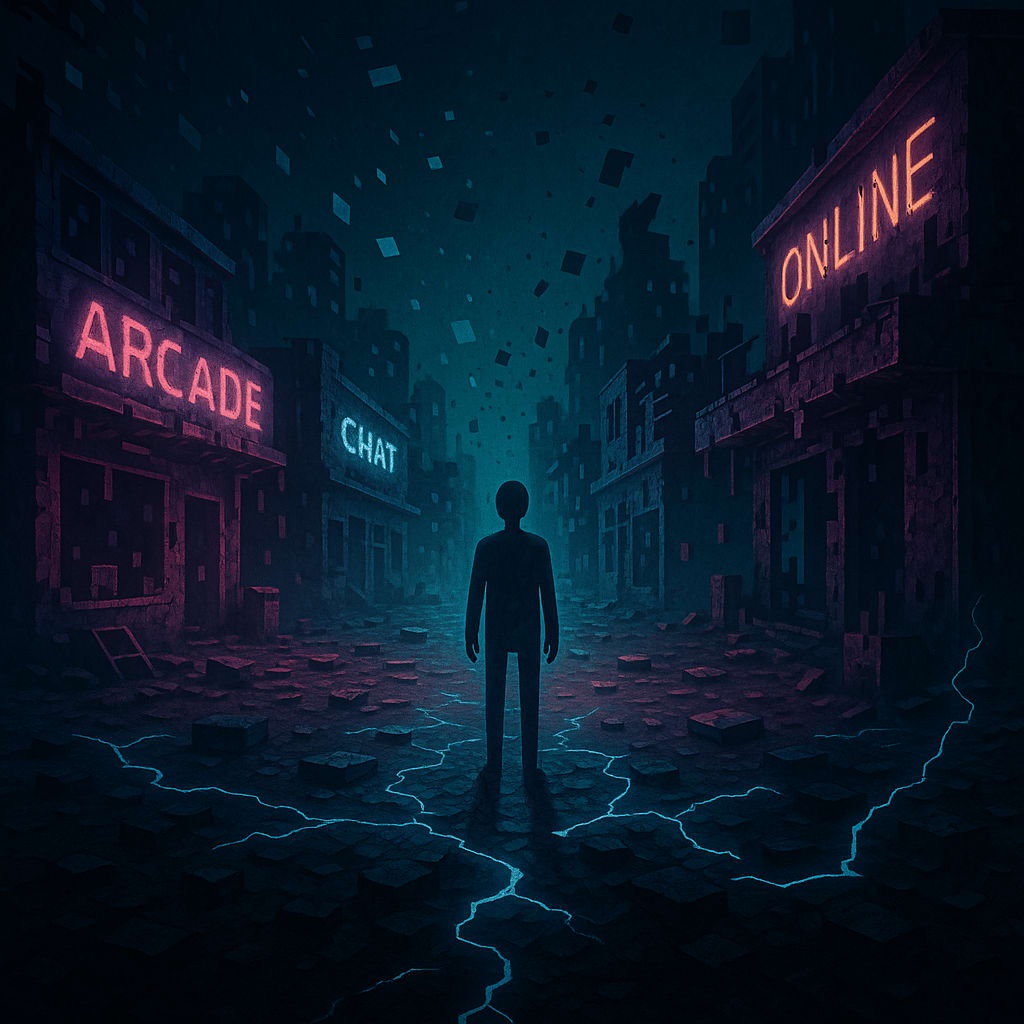
There was a time when the internet felt like a neighborhood.
You'd log in not just to consume, but to belong. You had a username, a signature, maybe even an ASCII avatar. Forums buzzed with late-night debates, LiveJournal updates felt like whispers between friends, and blog comment sections were where you checked in after class or work. Every space had its own rhythm, its own inside jokes, its own culture.
Today, many of those once-vibrant communities have become digital ghost towns. The forums are archived, the blogs abandoned, the threads frozen in time like fossils. Even social media platforms, which promised connection at scale, feel increasingly impersonal. What happened?
The Era of Belonging
Online communities flourished in the early 2000s not because they were perfect, but because they were ours. Spaces like phpBB forums, DeviantArt, Gaia Online, and even MySpace were often moderated by users themselves. You joined not because you wanted to "follow" someone famous, but because you cared about anime fan fiction, or early web development, or leftist political theory, or raising exotic plants.
The result? People showed up authentically. They stayed, contributed, fought, reconciled. They were invested. A thread could go on for weeks, with dozens of voices shaping the conversation. People weren’t afraid to write long replies. There was time.
The Attention Economy Shift
Then came the rise of the attention economy. Platforms like Facebook, Instagram, and later TikTok, reshaped how we engage with others online. Instead of participation, the focus shifted to visibility. The new metric wasn’t depth, it was reach.
Algorithms began rewarding speed and sensation. The more controversial your tweet, the further it traveled. The more exaggerated your TikTok hook, the more likely it went viral. Online life became a performance.
This turned users from community members into content creators. Everyone became their own brand. And in that transformation, something human got lost.
The Death of the Comment Section
When was the last time you saw a thoughtful, heartfelt discussion in a YouTube comment section? When did blog comments stop being about conversation and start being about spam, SEO, and self-promotion?
Even Reddit, one of the last bastions of niche digital community, has seen a cultural shift. The comment trees grow tall but rarely deep. Memes are recycled hourly. Genuine dialogue is often drowned out by performative sarcasm and karma-farming.
Comment sections have become more like graffiti walls than coffee shop bulletin boards.
Lurkers and the New Digital Silence
One overlooked factor in the decline of online communities is the rise of "lurkers" — users who read but rarely engage. While lurkers have always existed, the imbalance has grown. Many now consume content passively, scrolling endlessly without leaving a mark.
It’s a paradox: the internet is louder than ever, yet it’s harder to be heard.
Algorithmic Alienation
What truly transformed the landscape was the algorithm.
On old forums, discovery was chronological. If you wanted to join a thread, you scrolled through the latest posts. Now, what you see is filtered, ranked, and delivered based on a machine’s guess of what will hold your gaze.
This isolates users into content bubbles, optimizing for dopamine over dialogue. Instead of being part of a community, you're part of a feed — an endless scroll of semi-related posts, all demanding attention, none asking for commitment.
Nostalgia for Digital Warmth
It's no coincidence that Gen Z is increasingly nostalgic for early 2000s internet aesthetics. There’s a craving for slower, weirder, more human online spaces. People miss the clunky HTML of personal blogs, the awkward honesty of early Facebook statuses, the unfiltered mess of early YouTube.
This nostalgia isn’t just aesthetic. It’s spiritual. It’s about wanting a corner of the web where things aren’t optimized, monetized, or surveilled. Where people talk like people, not brands. Where you can say something without trying to go viral.
Hope in Smaller Spaces
Not all is lost. There’s a quiet resurgence happening in digital back alleys:
Discord servers built around shared passions.
Newsletters that feel like personal letters.
Tiny blogs on platforms like BearBlog or Write.as.
Group chats that feel more alive than any Facebook group ever did.
These aren’t massive. They aren’t trying to scale. And maybe that’s the point.
Reclaiming Community
To reclaim digital community, we must stop chasing mass appeal and start nurturing intimacy. We must resist the algorithmic pull toward virality and instead reward sincerity, vulnerability, and attention.
Join a Discord not because it has thousands of members, but because ten people there actually care. Comment on someone’s blog not to get traffic, but to say, "I see you." Create spaces where you don’t need to perform. Just be.
The internet doesn't have to be a ghost town. But if we want to feel at home again, we must stop being tourists and start being neighbors.
"We used to talk here — now it's just echoes."
About the Creator
Ahmet Kıvanç Demirkıran
As a technology and innovation enthusiast, I aim to bring fresh perspectives to my readers, drawing from my experience.
Keep reading
More stories from Ahmet Kıvanç Demirkıran and writers in Confessions and other communities.
Word of the Day: ホチキス
I don't know the word for Staples. I remember I used to think that Hochikisu was an Onomatopoeia for a stapler rather than a brand name. I am pretty sure I already have this title as a theme, which is making me feel many sort of ways as Vocal is harassing me about payments currently.
By Kayla McIntosh21 days ago in Confessions
I Was Almost Forgotten by Life, Until I Chose to Remember Myself
Story There was a time in my life when I felt invisible. Not the kind of invisible where people accidentally overlook you, but the kind where it feels like the world has already decided you don’t matter. I walked through my days quietly, carrying thoughts I never shared and dreams I didn’t dare to speak aloud.
By On that4 days ago in Confessions
A Dart at Dusk
Seconds ago, the sullen sun set on the two of us… my exuberant furry companion and me. A fresh breeze embraces us, delivering welcome relief from the day’s oppressive heat. His typical stumbling and staggering along — apace with a sloth — has turned into trip-trapping, high-stepping, almost skipping along.
By Angie the Archivist 📚🪶3 days ago in Petlife


Comments (3)
very nic creator
Very nice story ♦️🦋♦️
"Comment sections have become more like graffiti walls than coffee shop bulletin boards." Love this line, well done!