
Confessions of a Closed Door: Prince Harry’s Harsh Reality at Windsor
When Prince William met privately with Donald Trump, while Harry was stopped at the gate, the silence spoke louder than words about power, access, and fading influence.

I have a confession: sometimes the sharpest humiliation doesn’t come in words—it comes when doors close in your face.
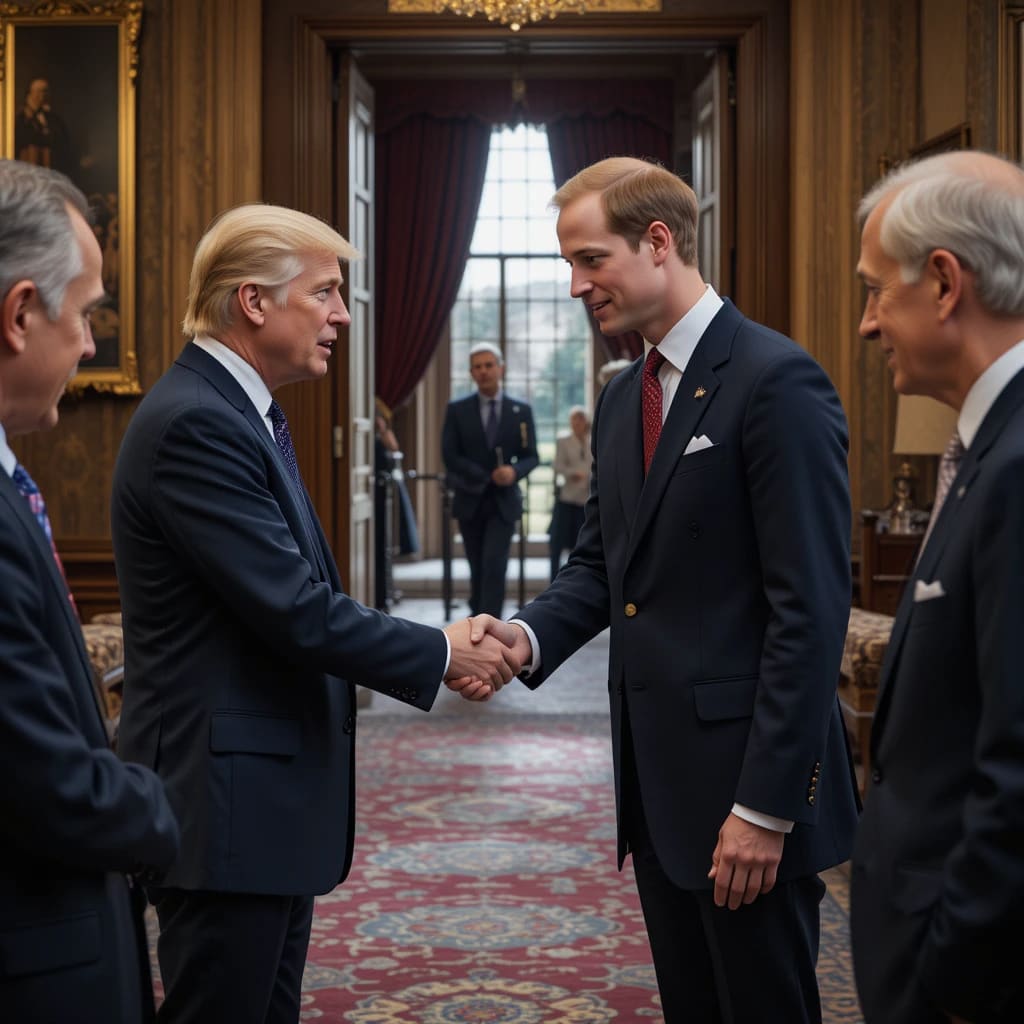
That is exactly what happened to Prince Harry during former U.S. President Donald Trump’s visit to the United Kingdom. As William, the Prince of Wales, was escorted into a private meeting, Harry was reportedly blocked at the entrance. Security didn’t hesitate. His name wasn’t on the list, and his presence wasn’t welcome.
For a man who once carried the glow of royal privilege, that moment was more than a snub—it was a statement.
Trump’s meeting with William wasn’t just a polite courtesy. It was a power play. By sitting down with William, Trump confirmed what the palace has been signaling all along: William is the future. He’s the steady figure world leaders can engage with. Harry, by contrast, has been cast as unpredictable, outspoken, and too deeply tied to American controversies. The difference between the brothers has never been more visible.
Harry’s absence wasn’t accidental. It was symbolic. And it cut deep.
Think of the optics. One brother shaking hands and discussing policy with a former U.S. president, cameras recording every moment. The other standing on the outside, stopped by security, left with nothing but the reminder that the world of influence he once belonged to is slipping further away.
The palace didn’t fight this perception. In fact, by allowing William to occupy that seat, they reinforced it. William is being prepared for statesmanship and diplomacy. Harry is being edged out. That choice tells the world exactly where the royal spotlight now shines.
Of course, Meghan Markle’s role in Harry’s story can’t be ignored. Ever since their marriage, critics argue that Harry has fought battles that only deepened the distance between him and the institution. The Oprah interview, the Netflix series, and the memoir Spare all made headlines, but they also left wounds that never healed. For Trump, who has publicly criticized Meghan more than once, this made Harry’s exclusion almost inevitable. If the host won’t welcome your spouse, you’re unlikely to be welcomed yourself.
That must sting. Imagine watching your brother step into a private discussion while you’re held back by security. For Harry, the experience was both personal and political. Once, his position as a senior royal granted him automatic access to world leaders. Now, those doors are closing.
Social media, of course, seized on the story. Some mocked Harry as irrelevant. Others pointed out how starkly his life has changed since stepping back from royal duties. Once admired for his courage and service, he is now portrayed as a man searching for influence in places where it no longer comes automatically.
This isn’t just about one meeting. It’s about trajectory. William’s presence beside Trump confirmed his role as the heir, the serious figure trusted by both palace and politicians. Harry’s absence showed the cost of choosing independence without the backing of the institution. He may still carry the title of prince, but the privileges tied to it are slipping away.
Even Harry’s media projects reflect this struggle. The Spotify deal ended abruptly, with executives branding him a poor fit. His Netflix projects have narrowed, with reports that Meghan’s work is prioritized over his own ideas. Charities and public initiatives, once central to his identity, face growing skepticism. Invictus, his proudest achievement, has whispers of leadership challenges. Each step reflects a pattern of shrinking influence.
And yet, Harry’s situation is not without irony. He once said he wanted to protect his family from the pressures of palace life. He left to carve out independence. But in doing so, he lost the access that made him powerful. Without the crown behind him, doors no longer open automatically.
The emotional toll of that must be immense. To be turned away while your brother is welcomed sends a message no official statement can soften. It is more than exclusion—it is a reminder of how far Harry has drifted from the center of power.
For William, the meeting was another brick in the wall of credibility he is building as future king. Every handshake, every photo opportunity cements his role. For Harry, the moment was another reminder that the gap between them isn’t just personal—it’s political, and it’s widening.
I confess, watching this unfold feels like a turning point. Harry’s story, once full of promise and reinvention, now looks like one of isolation and loss. He wanted to escape the shadow of the monarchy, but now finds himself outside, looking in.
The royal doors that once opened with ease have shut. And this time, no polite knock will make them open again.
About the Creator
Keep reading
More stories from Norul Rahman and writers in Confessions and other communities.
Confessions from Windsor: How Silence Spoke Louder Than Words for Prince Harry
I have a confession: sometimes silence tells the sharpest story. That’s exactly what happened when former U.S. President Donald Trump appeared at Windsor Castle and offered glowing praise for King Charles III and Prince William—while leaving Prince Harry completely out of the script. No slip of the tongue, no oversight. Just deliberate quiet.
By Norul Rahman6 months ago in Confessions
The Interview That Made Me Question Everything About Meghan Markle
I have followed royal stories for years, but I rarely admit how deeply they make me think. Recently, while watching an interview featuring Meghan Markle, I experienced something unexpected. It wasn’t anger, and it wasn’t admiration either. It was confusion.
By khanabout 13 hours ago in Confessions
Author’s Advice
If you would’ve asked me 20 years ago did I know I’d become a writer and an author, I would’ve said “nope, ain’t happening”. As fate would have it I did become an author and I can honestly say I’m loving it so far. It really does feel good to be a writer. I’ve learned a lot on this journey and I feel like with even me being as new to this world as I am, there’s some wisdom I need to share with every other aspiring author.
By Joe Patterson5 days ago in Journal



Comments
There are no comments for this story
Be the first to respond and start the conversation.