
Cognitive Biases and Brain Biology: Explaining Why Facts Don't Change Minds
Why Facts Don't Change Minds

Cognitive Biases and Brain Biology: Explaining Why Facts Don't Change Minds
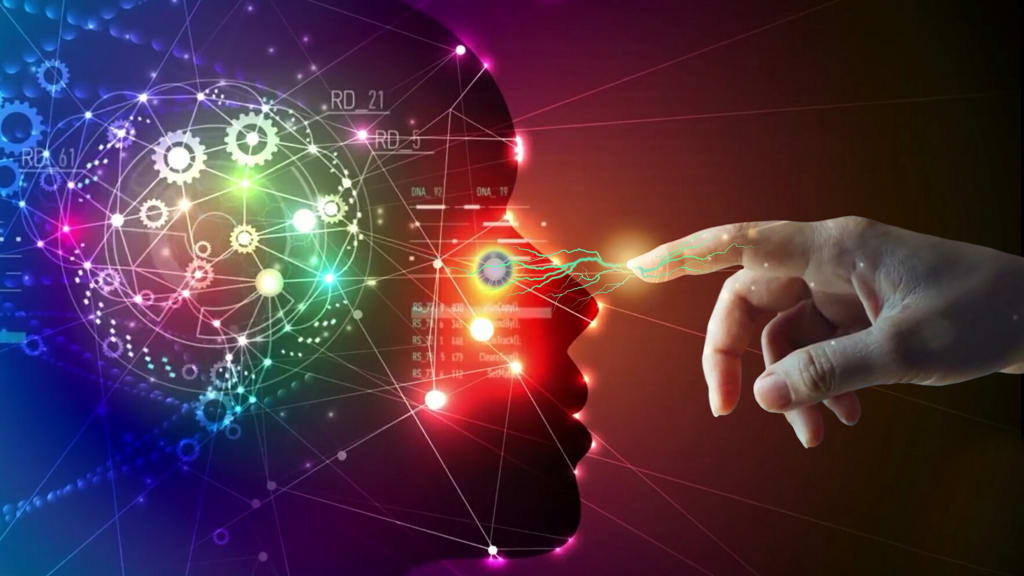
(1): In today's era of information overload, it is often assumed that presenting people with factual evidence will change their minds or alter their beliefs. However, experience tells us that this is not always the case. Despite compelling evidence, individuals often cling to their pre-existing beliefs and remain resistant to change. This phenomenon can be attributed to a combination of cognitive biases and the intricate workings of the human brain.
(2): Cognitive biases are inherent tendencies or patterns of thinking that can distort our perception of reality and influence our decision-making processes. They arise from various factors, including our social and cultural influences, emotional states, and cognitive limitations. When it comes to changing minds with facts, several cognitive biases come into play, impeding our ability to assimilate new information and revise our beliefs.
(3): One prominent cognitive bias is confirmation bias. This bias refers to our tendency to seek out and interpret information in a way that confirms our existing beliefs while disregarding or downplaying evidence that contradicts them. Confirmation bias creates an echo chamber effect, reinforcing our preconceived notions and preventing us from fully considering alternative perspectives or evidence.
(4): Another cognitive bias that plays a role is the backfire effect. The backfire effect occurs when presenting contradictory evidence actually strengthens a person's initial beliefs. This counterintuitive phenomenon happens because people's identities and self-worth are often tied to their beliefs. When these beliefs are challenged, they can trigger a defensive response, causing individuals to double down on their original stance rather than reconsider it.
(5): The availability heuristic is yet another cognitive bias that contributes to the resistance to changing minds with facts. This bias leads us to rely on readily available information and personal experiences when making judgments or decisions. It means that even if there is substantial evidence contradicting our beliefs, we may give more weight to anecdotal experiences or easily accessible information that aligns with our preconceived notions.
(6): Apart from cognitive biases, the workings of the human brain itself can also explain the resistance to change. Neurological research has shown that our brains have evolved to prioritize efficiency and coherence over accuracy. When faced with new information, our brains tend to rely on existing neural pathways and established patterns of thinking. This reliance on familiar mental frameworks can make it difficult for new facts to penetrate and reshape our beliefs.
Moreover, the brain's emotional centers, such as the amygdala, play a significant role in belief formation and change. Emotional responses are deeply intertwined with our cognitive processes, and when our beliefs are challenged, emotional reactions can be triggered. These emotional responses can hijack our rational thinking and reinforce our existing beliefs, making it harder to objectively evaluate new information.
(7): Understanding the cognitive biases and brain biology that underlie our resistance to changing minds with facts can help inform strategies for more effective communication and persuasion. It is important to approach conversations with empathy and respect, acknowledging the deep-rooted cognitive biases that influence belief systems. Simply bombarding individuals with facts and evidence may not be sufficient to overcome these biases. Instead, efforts should be focused on building trust, fostering open dialogue, and appealing to emotions and personal values that resonate with the individuals in question.
Another effective approach is to frame information in a way that aligns with people's existing beliefs and values. By presenting facts within a familiar narrative or by leveraging social influence from trusted sources, it becomes more likely that individuals will be receptive to new information. Additionally, encouraging critical thinking and providing opportunities for self-reflection can help individuals challenge their own beliefs and foster a more open-minded mindset.
Conclusion:
In conclusion, the resistance to changing minds with facts can be attributed to a combination of cognitive biases and brain biology. Confirmation bias, the backfire effect, and the availability heuristic all contribute to the preservation of existing beliefs, even when presented with compelling evidence. The brain's inclination for coherence and efficiency, as well as the strong emotional ties to our beliefs, further complicate the process of changing minds. By recognizing these inherent biases and tailoring communication strategies accordingly, we can navigate the complexities of belief change and foster a more receptive environment for embracing new information.
About the Creator
News Bucks
Global News Reporter
Keep reading
More stories from News Bucks and writers in Confessions and other communities.
Why Can't Americans Agree on, Well, Nearly Anything? Philosophy Has Some Answers
Why Can't Americans Agree on, Well, Nearly Anything? Philosophy Has Some Answers In today's polarized and divided political landscape, it seems that Americans struggle to find common ground on almost any issue. Whether it's healthcare, gun control, climate change, or immigration, discussions quickly devolve into heated arguments and entrenched positions. The question arises: why is it so difficult for Americans to agree on anything? Interestingly, philosophy, with its rich tradition of grappling with complex questions of human nature and society, offers some insights into this phenomenon.
By News Bucks3 years ago in Viva
Appaloosa
I couldn't stand this girl. For no reason at all. She had atomic orange curls springing in every direction, fully loaded chipmunk cheeks, and a different shirt with the same horse on it every stinkin' day. Her freckles looked so out of place on her sickly white skin. It was a month into 7th grade when I finally learned her name. Tracy. It was as bland as her personality. I didn’t understand her in the slightest; every time she spoke, her monotone voice would send my mind running for the hills. When the bell would ring, she would always be the last one to leave the classroom, but somehow scatter to be the first one to arrive at the next. I guess karma put her in just about every one of my classes and it drove me crazy that I could spend days studying for a test and never make the same grade as her in any of them. Why did she bother me so much?
By Kales7 days ago in Confessions
A More Human Vocal
When we launched Vocal nearly a decade ago, the world was a very different place. LLMs did not exist, and stories were created one at a time by people sitting down to write, revise, and share something personal. Many of our assumptions about publishing, trust, and participation were built for a world where effort and output were inseparable.
By Justin @ Vocal7 days ago in Resources



Comments
There are no comments for this story
Be the first to respond and start the conversation.