
China learns lessons from the Ukraine war
The eyes of those interested in international relations continue to focus on China
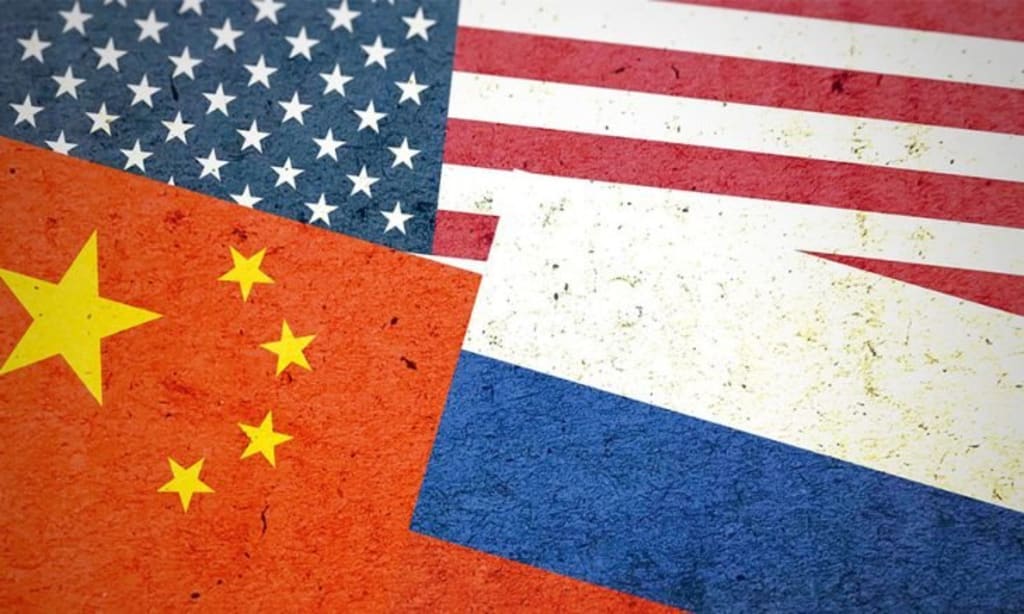
The eyes of those interested in international relations continue to focus on China, to monitor the development of its positions on the Russian-Ukrainian war. Will it be inclined to persuade Russia to bet on peace in Ukraine, or will it use this crisis to weaken the West, which makes it the next target, which must be controlled? China adopted a cautious attitude at the beginning of the conflict, but soon began to adopt a sharp tone toward the United States.
The West is exerting a kind of double pressure on China in the Russian-Ukrainian war, as the European Union adopts a cautious policy, while the United States is trying to apply some kind of pressure, ranging from dialogue to the threat of sanctions in the event of Russia's assistance.
Immediately after the start of Russia's invasion of Ukraine on February 24, 2022, media outlets close to the Western Echostallment put forward the hypothesis of Beijing exploiting the current tense situation to start the invasion of Taiwan to restore it to the homeland. This means presenting China as a country that destabilizes the world with Russia, and then later accusing Beijing of having prior knowledge of the Russian war, after the meeting held by Russian President Vladimir Putin with the Chinese Xi Jingping at the beginning of last February, on the sidelines of the Winter Olympics In China, the signing of strategic agreements, the most important of which is China's absorption of all Russia's energy exports and the support of the Russian currency, the ruble. And the third accusation of China of helping Russia in the war against Ukraine to ensure a quick victory and approaching the Polish border to put pressure on the North Atlantic Treaty Organization. The West threatened political and economic sanctions against China if it provided aid to Russia, and the media paid attention to these sanctions in the long phone call between US President Joe Biden and his Chinese counterpart Xi Jingping on March 18. He described China's support for Russia as an alliance of dictatorships. The West aims from this policy of pressure to achieve two main goals, the first is to obtain a decision from China to condemn the Russian war against Ukraine in the Security Council and other international forums, to isolate Russia on the one hand, and in order to strike any alliance between the two countries in the future, because any negative attitude from Beijing towards Moscow In this critical historical period, it means a historical enmity with Moscow. The second goal is to make China take a lesson from the current crisis, so as not to make what is happening in Ukraine a laboratory for any military adventure it might undertake in the future against Taiwan, the island that China considers part of its territory.
Meanwhile, China is proceeding with its policy toward the Russo-Ukrainian war independently, without yielding to any pressure. It refused to condemn Russia in the UN Security Council for the invasion of Ukraine, although it stressed the need to respect international law. On the other hand, the West's statements and accusations against Beijing were considered "ridiculous" and manipulated international public opinion. The Chinese media are waging a systematic campaign against the West, almost publicly suggesting Russia's support in this war.
In practice, it is deduced from the Chinese political position, at all levels, that Russia has the right to advance its national security, after the North Atlantic Treaty Organization began threatening Russian interests, as a result of the alliance's acceptance of Ukraine's membership in the future. The Chinese News Agency and newspapers such as "China Daily" published articles questioning the feasibility of continuing NATO, and the purpose of its expansion towards the Russian borders. After taking stock of China's various positions in this crisis, the Chinese discourse is based on: stern confrontation with what it considers Western allegations of Beijing's support for Russia with weapons, and asserts that Russia is strong enough to make it not ask for arms from any country. At the same time, this discourse emphasizes that the West's success in besieging Russia is a prelude to implementing the same strategy against China in the future, when any conflict with the West erupts, especially over Taiwan. This media focuses on the West's plans to make China the "future enemy", although Beijing has considered this strategy to be openly implemented since the era of former Republican President Donald Trump, after it was applied silently during the era of previous presidents. That is why, in his call with the American, the Chinese president demanded that what he described as a "disinformation campaign" against Beijing's policy should be stopped. At the same time, he criticized the existence of currents within the United States that encourage the secession of Taiwan, promote a cold war against China and the necessity of restricting its interests politically and militarily.
At the same time, Western sanctions against Russia are considered detrimental to the Chinese economy, and therefore they are not bound by these sanctions, especially since they are not issued by the UN Security Council. What remains remarkable is Beijing's adoption of the accusations leveled by Moscow against Washington of developing chemical and biological weapons for viruses in Ukrainian laboratories, and it joined Russia's demands that an international investigation be opened.
Perhaps what is interesting is that the majority of the responses were not issued only by the Chinese Foreign Ministry, but also by the Chinese Ministry of Defense, and this confirms the extent to which the Chinese army has dealt with the accusations against the country, as if it were a direct harm to Chinese national security and not just a diplomatic debate without influence. China sees the Russian-Ukrainian war as a real laboratory for international relations, because it is the first real crisis after World War II in which the West confronts directly with a major power, after it was engaged in an indirect confrontation with the Soviet Union during the Cold War, or wars with weak countries such as Iraq. The Chinese political and media discourse highlights that Beijing considers this war as its own, because Russia's victory in it will achieve two goals for China, namely:
In the first place, it should stop what it describes as the “arrogance” of the West in dealing with world issues, as it will realize and absorb the new balance in international relations, meaning the emergence of a new world order. In the second place, the Russian war against Ukraine is a lesson for China's neighboring countries so that they do not play the role of Ukraine with the support of the United States, and mainly for South Korea and the Philippines.
The current war is vital to Russia's position in the world, and is no less important for China, which considers it a theater full of lessons that must be learned to deal with the West in the future.
About the Creator
Keep reading
More stories from Zernouh.abdo and writers in Confessions and other communities.
Earth Day and messages that don't die with age
These days are the forty-sixth anniversary of the Glorious Land Day, and attention is directed to historic Palestine, after the recent confrontations in the Negev, Beersheba, Hadera, Bani Brak, Ramat Gan and Umm al-Fahm, which restored the glow of that glorious historical day.
By Zernouh.abdo4 years ago in Confessions
The Piggy Project
I’ve had so many names in this life I lose track of which ones were ever really mine and which ones I wore because someone needed me to. Some were handed to me before I had words to refuse them, before I knew what they meant, before I knew I could say no. Most weren’t meant to hurt. That doesn’t mean they didn’t leave marks. Marks that told me who I belong to, who I am by way of who claims me, recognizes me in the good and bad, who walks beside me.
By Fatal Serendipity3 days ago in Confessions
How Mindset Shifts Can Solve Frustration In Modern Dating
Contemporary dating can be frustrating as expectations do not meet each other, or there is tiredness of digital interaction or recurring disappointments. Psychologist Sherry Turkle reports that technology has the ability to increase a feeling of endless possibilities, but also emotional slobbering. Singles can experience the pressure to respond fast, portray a perfect version of themselves, or avoid ghosting. The first mindset shift is to appreciate the fact that frustration is usually related to the systemic problems, but not to individual ineffectiveness. Being conscious enables one to separate the value of selfhood and the results of dating and to engage in the process with increased emotional fortitude.
By Steve Waugh3 days ago in Confessions


Comments
There are no comments for this story
Be the first to respond and start the conversation.