

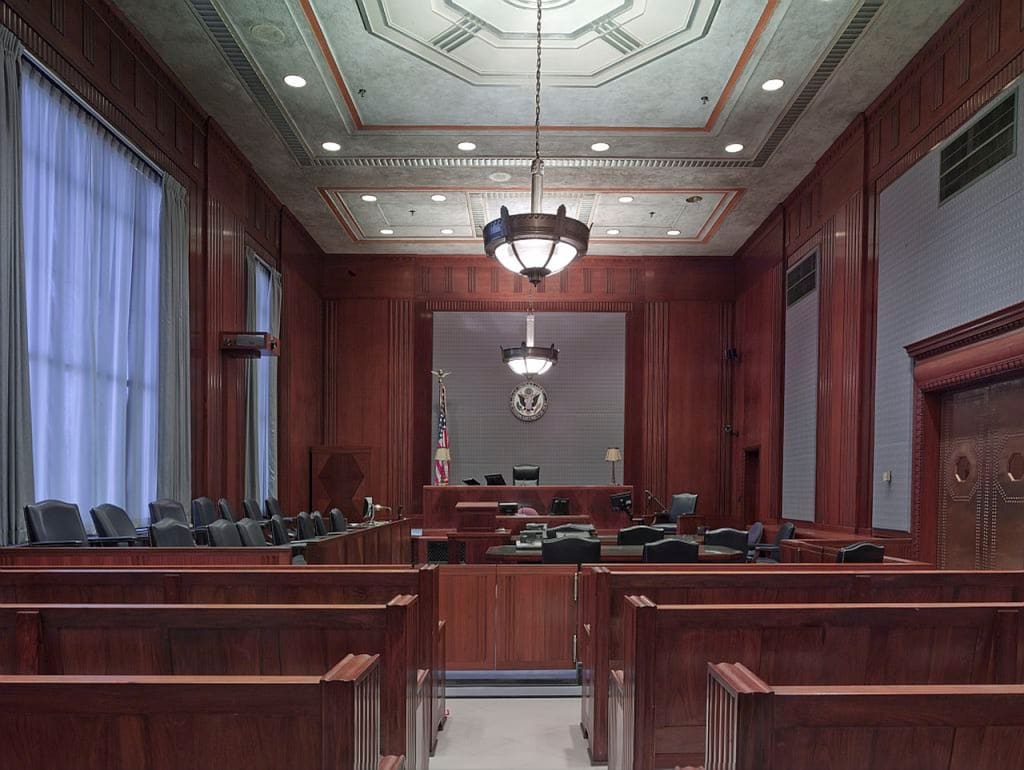
A deal was struck in the mind of a Chief Justice of Ahur High Court to demolish the existing beautiful building of the High Court and construct a new one. It was July 2007 and the judge was Justice Iftikhar Hussain, who belonged to the famous political family of Jhelum to which former Punjab Governor Altaf Hussain and current Information Minister Chaudhry Fawad Hussain belonged. He filed a petition with the Registrar High Court in his "High Court" seeking demolition of the existing High Court building and construction of a new one.
Instead of hearing the petition in an "open court", the Chief Justice wrote in his chamber, "Since the present High Court building was constructed to provide offices for judges, it is now inadequate." Therefore, it should be demolished and a new building should be constructed. " During Musharraf's tenure, I was forcibly removed from Balochistan and sent to Punjab, and was appointed Director General of the Archaeological Department, a standing line office, located in the endowment building adjacent to the High Court, with more than 80%. The rooms had lawyers' offices. The decision was made very quietly, but my neighbor Elias was immediately informed by my advocate.
Under the prevailing law, the Special Premises Act 1985, the High Court building was a national heritage site and the Director General of Archeology was responsible for its protection. Not a single nail could be driven into it without his permission. I immediately wrote a letter to the Registrar High Court, quoting the law, stating that "all this should be brought to the notice of the Chief Justice." To which I was told, "We take notice, who are you!" The next day, the Secretary, Department of Construction and Highways (C&W) was called to the chamber and immediately asked to carry out his order, and an auction of the wreckage was announced.
A wave of anxiety ran through the people of Lahore who loved his heritage. The contract for the wreckage was approved, and the Secretary of Construction, fearing contempt of court, delivered the demolition machinery overnight. I approached the great lawyers along with the dignitaries who love the heritage to become lawyers to appeal against this decision in the Supreme Court, but no one was agreeing.
I accompanied Fauzia Qureshi, the principal of the National College of the Arts, to the office of the late Asma Jahangir at Gulberg, Boulevard, with the same request. In such a situation, the present Advocate General of Punjab, Mr. Ahmed Owais, showed courage and knocked on the door of the Supreme Court against the Chief Justice of the Lahore High Court. Only one argument before the bench of Justice Bhagwan Das and Justice Khalil-ur-Rehman Ramday won the case.
Ahmed Owais said that "the constitution of Pakistan and its laws declare every court as an open court and this decision has been taken in a closed chamber, therefore it should be declared null and void". The Supreme Court ruled against him, but it was too late for the Lahore High Court building to be demolished. We rebuilt this collapsed building by taking bricks from the rubble under the supervision of poet and architect Ghafar Shehzad.

All the courts of Pakistan are open courts and every Pakistani has the right to hear their proceedings. No one can be legally barred from entering the courtroom without a reason. The reasons may be lack of space, attitude of the person or risk of an attack etc. Under this law, the whole of Pakistan and the whole world can be transformed into a huge courtroom through a single camera in which every Pakistani who has the right to watch the proceedings legally can easily watch the proceedings sitting at home. Is.
Many countries in the world are implementing it and because of this it is easy for the people to know immediately what arguments were given today, how the remarks were made and what was the impression on the face of the judge while giving them. The lawyer tried to get the dates using excuses. People can watch the court proceedings without the help of a court reporter or beyond their personal biased reporting and can also create a good or bad impression in their minds.
The camera in the courtroom was first taken to a court in the US state of Florida in 1979, where the case of the famous serial killer Ted Bundy, who sexually assaulted and murdered 30 women, was going on. His case has been shown on television throughout the United States. About 12 years later, in 1991, William Kennedy, a handsome young man from the Kennedy family, was accused by a woman of being sexually harassed, while Kennedy's position was that everything was done willingly.
The American people loved the beauty of the Kennedy family, so they wanted to see the case live. It was broadcast live on television at the request of the people. The incident took place off the coast of Florida, with numerous witnesses. He asserted that his confession had been obtained through torture, and that his confession had been obtained through torture. The most important case in American history was the case of the famous footballer "O.J.Simpson", which was shown live on television in 1995. I was in the United States in those days and it seemed that people were so eager to see this trial that
About the Creator
Keep reading
More stories from shakeel ahmad and writers in Confessions and other communities.
17 People Share The Brutally Honest Reason They Stayed With A Partner Who Cheated
When you hear about someone cheating, the societal expectation is almost always immediate: pack your bags, call a lawyer, and never look back. But behind closed doors, human relationships are rarely that black and white.
By Opiniona day ago in Confessions
Guard Your Battery
Why are some people so attractive just by standing there? It’s not because they are "likable," but because they don’t need everyone to like them. I realized later that truly charismatic people allow themselves to be criticized, but they never criticize themselves. They never try to please the world; instead, the world stops to watch them.
By Emily Chan - Life and love sharing6 days ago in Poets


Comments
There are no comments for this story
Be the first to respond and start the conversation.