
Behind the Curtain: The Real Story of the Pakistan–Saudi Deal”
How the Pakistan–Saudi defense pact risks dragging Islamabad into regional conflicts and undermining its sovereignty.”

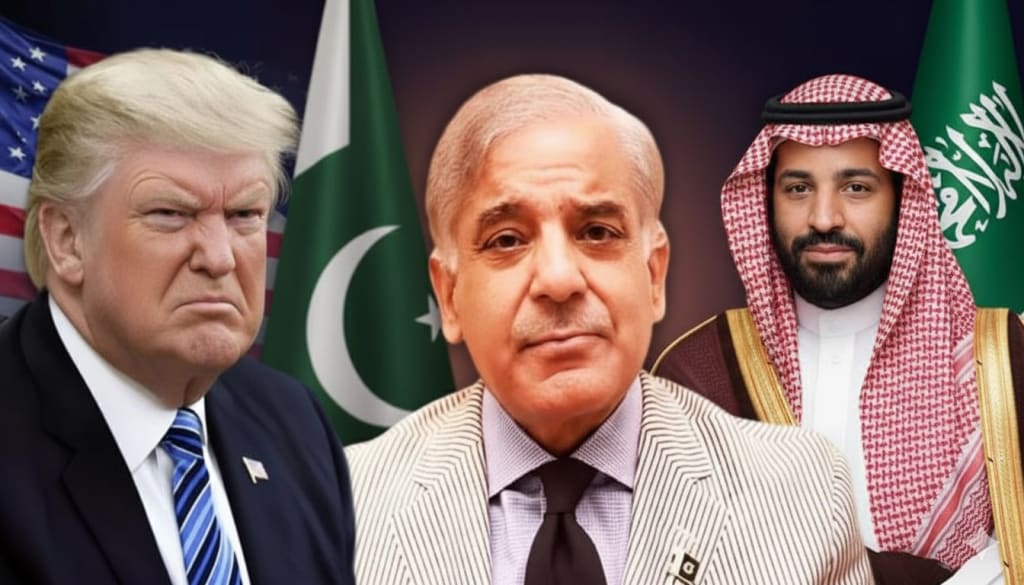
The recent Pakistan Saudi defense agreement has been hailed in official statements as a symbol of “brotherhood” and “mutual protection.” But a closer look reveals a different story one that raises troubling questions about Pakistan’s sovereignty, regional stability, and future
The Illusion of Defense
It is unrealistic to believe that if America or Israel attacked Saudi Arabia, Pakistan would march in with its army or nuclear weapons to defend them. Pakistan simply does not have the political, economic, or military capacity to stand against a superpower like the United States.
Likewise, it is equally absurd to imagine that Saudi Arabia would support Pakistan militarily if India launched an attack. Saudi Arabia has invested trillions of dollars in the U.S. and India. Pakistan, meanwhile, receives little more than symbolic gifts baskets of dates and prayer beads. Billions for them, trinkets for us.
Washington’s Invisible Hand
The real power behind this agreement is Washington. For years, the United States has been pressuring both Saudi Arabia and Pakistan to normalize relations with Israel. This deal looks like part of that plan — to bind Pakistan and Saudi Arabia together, and eventually push both toward recognizing Israel.
Those who ignore this are either blind or deliberately shutting their eyes.
Regional Fallout
History already shows where Saudi priorities lie. When Iran Israel tensions flared, Saudi Arabia stood closer to Washington and Tel Aviv, not Tehran. Now, pulling Pakistan deeper into the Saudi orbit risks inflaming ties with Iran, destabilizing Balochistan, and dragging Pakistan into conflicts such as the Yemen war.
Once Pakistan pledges to defend Saudi Arabia, does that mean fighting Yemeni rebels? Standing against Iran? The likely answer is yes and that path carries dangerous consequences.
Domestic Realities
At home, Pakistan is already bleeding. Terrorism claims lives daily, with over 3,000 soldiers martyred in just two years. When our own military cannot provide peace and security within Pakistan, how can it be expected to shed blood for Saudi Arabia’s defense?
The agreement will also tighten the grip of Pakistan’s military establishment. Backed by Saudi support, generals will strengthen their political dominance, suppress opposition, and further weaken democracy, free speech, and civil rights.
Saudi Influence in Pakistani Politics
Saudi Arabia’s political footprint in Pakistan is not new. From pressuring Islamabad to skip the Malaysia summit, to playing a shadowy role in regime change against Imran Khan, Riyadh has consistently used its influence to shape Pakistan’s internal affairs.
So, if America already defends Saudi Arabia with bases, advanced weapons, and billions in commitments, the question arises: what is the real need for Pakistan’s involvement? The answer is simple this is not a defense pact; it is a political trap.
Hard Truths
To believe Pakistan will stand against the U.S. and Israel while being tied to Saudi Arabia is like a man drinking a buffalo’s milk, eating its butter, smearing his house with its dung and then announcing to the neighborhood: “From today, I am the buffalo’s greatest enemy!”
Unanswered Questions
This agreement leaves behind a trail of questions:
1. Why was this pact signed with Saudi Arabia, not Palestine the real victim of oppression?
2. Why not with Iran, which openly challenges the U.S. and Israel?
3. Since Saudi Arabia is America’s closest ally, then who exactly is Pakistan aligning against?
4. If the goal is defending the Muslim Ummah, why not form alliances with Turkey, Qatar, or Malaysia?
5. Why should Pakistan defend Saudi Arabia, which has never taken a real step against Israel?
6. If Riyadh maintains secret ties with Israel, then by signing this deal, who is Pakistan truly serving?
Conclusion
The Pakistan Saudi agreement is not just a document of cooperation; it is a warning. For Pakistan, it threatens sovereignty, risks entanglement in regional conflicts, and strengthens military dominance at home. Most dangerously, it pushes Pakistan toward the path of normalizing ties with Israel under U.S. pressure.
Pakistan today stands at a crossroads. Whether it chooses sovereignty or subservience will define its future in the region and in the world.
Author’s Note
This article reflects my personal analysis and opinion on the Pakistan Saudi agreement. While the core arguments, research, and perspectives are my own, I used AI assistance to refine the language, structure, and flow for better readability. The thoughts, conclusions, and responsibility for the content remain entirely mine.
Izhar
About the Creator
Izhar Ullah
I’m Izhar Ullah, a digital creator and storyteller based in Dubai. I share stories on culture, lifestyle, and experiences, blending creativity with strategy to inspire, connect, and build positive online communities.
Keep reading
More stories from Izhar Ullah and writers in Confessions and other communities.
The Unseen Edges Navigating the Challenges of Village Life
When people imagine village life, the first images that often come to mind are breathtaking landscapes, green fields stretching to the horizon, and communities that move at a slower more peaceful pace. It’s easy to picture families gathering for harvest festivals, children playing in open spaces, and neighbors who know one another like family.
By Izhar Ullah4 months ago in Confessions
Word of the Day: 推し
I am not putting any more time on my timer right now. I am just trying to get by here. There is almost no point to school because, like 35% of the time is technical difficulties and the rest of the time is things that actually aren't really useful.
By Kayla McIntosh6 days ago in Confessions



Comments
There are no comments for this story
Be the first to respond and start the conversation.