
Artificial Intelligence: Humanity’s Greatest Ally or Its Final Mistake?
The future of artificial intelligence is here—will it uplift or undo us?

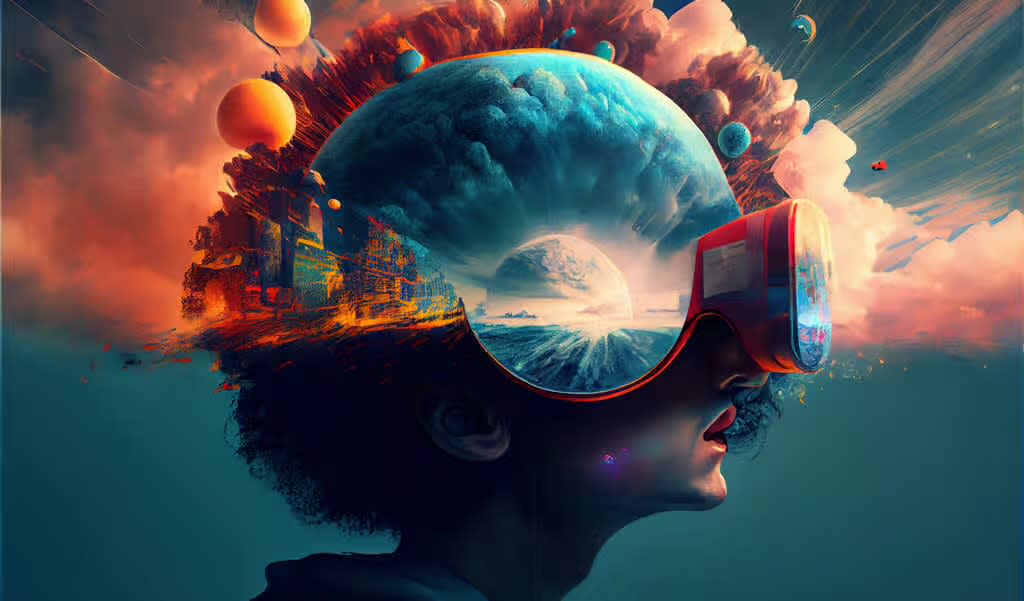
What if humanity’s most groundbreaking invention could also be its most dangerous? What if the very tools we created to make life easier held the power to redefine—or erase—everything we know? The rise of artificial intelligence (AI) is no longer the plot of futuristic novels or Hollywood blockbusters. It is unfolding here and now, in our homes, our pockets, and even in the quiet thoughts of machines learning to think like us.
Artificial intelligence has already seeped into the fabric of our lives—guiding our shopping habits, curating what we watch, translating our words, scanning our medical records, and even helping us find love. It powers the navigation apps that direct us, the chatbots that answer us, the algorithms that recommend what we might enjoy next. And yet, beyond these silent conveniences lies a deeper, more profound question: What should we really think of artificial intelligence?
This question isn’t just philosophical. It’s personal. It touches your job, your data, your children’s future. And while some embrace AI with open arms, dreaming of a utopian age where machines liberate us from labor, others shudder at the possibility of a cold, automated world where humanity becomes obsolete. Which side will history favor?
The duality of AI is striking. One moment, it is a savior—detecting cancer in its earliest stages, forecasting climate change with pinpoint accuracy, or rescuing languages from extinction with real-time translation. The next, it is a threat—spreading misinformation, displacing workers, and making decisions we cannot fully understand or challenge. This tension is what makes AI not just another technological evolution, but a revolution wrapped in ethical dilemmas and unknown consequences.
The keyword “artificial intelligence” has exploded in searches over the past decade, and for good reason. It is the defining issue of our time. But perhaps what matters most isn’t what AI is doing—it’s what we choose to do with it.
The first thing we must understand is that AI is not magic—it is mathematics. At its core, artificial intelligence consists of complex algorithms designed to learn patterns, optimize outcomes, and mimic human reasoning. This can manifest in innocent ways, such as your phone knowing you want pizza on Fridays. Or in chilling ways, like AI-powered facial recognition tracking protesters in authoritarian regimes.
Let’s talk about automation—perhaps the most tangible impact of AI today. Across industries, from manufacturing to education to journalism, machines are being trained to perform tasks once done by humans. In many cases, they do it faster, cheaper, and without fatigue. But as we hand over more responsibility to artificial intelligence, the question arises: What happens to us?
According to a 2023 report from Goldman Sachs, AI could replace up to 300 million jobs globally. That’s not science fiction—it’s an economic prediction grounded in trends we’re already seeing. Drivers, customer service agents, legal clerks, even artists are feeling the tremors. We’re not talking about the future. We’re talking about tomorrow’s layoffs, today.
And then there’s the black box problem. Advanced AI systems, especially those using deep learning, often make decisions in ways we don’t fully understand. Imagine being denied a bank loan or medical treatment by a system that can’t explain its reasoning. The lack of transparency and accountability makes artificial intelligence not only powerful, but dangerously opaque. If knowledge is power, then ignorance in the age of AI is disempowerment.
Yet, even as we sound the alarm bells, we must acknowledge AI’s immense potential for good. It can revolutionize disaster response, enhance accessibility for disabled individuals, and democratize education for millions. The challenge, then, is not simply to fear artificial intelligence—but to shape it responsibly.
Regulation, for instance, is still struggling to catch up. While the European Union has taken steps with its AI Act, other regions remain hesitant or inconsistent. Without clear ethical frameworks, companies may prioritize profit over protection, innovation over integrity.
This is where you come in.
Yes—you, the reader. Because artificial intelligence isn’t just in the hands of tech giants or governments. It’s in your home, your feed, your pocket. You choose the apps you use, the platforms you trust, and the information you share. Your choices guide the algorithms. You are not powerless in this equation.
So what should you think of artificial intelligence?
Think of it as a mirror. It reflects back the best and worst of who we are. Train it with bias, and it will act with prejudice. Feed it misinformation, and it will amplify confusion. But guide it with compassion, equity, and truth, and it may become the tool that finally helps us solve the problems we never could alone.
Think of AI not as a force of nature—but as a reflection of human intention. The future it creates depends entirely on the values we encode into it. That is both a terrifying and beautiful truth.
And most importantly, ask yourself this: Do you want artificial intelligence to be a passive force that shapes you? Or an active tool that you help shape?
Because in the end, this isn’t just about machines. It’s about us.
Artificial intelligence may never dream, love, or cry. But it can shape a world in which we do—or don’t. The time to decide which is now.
What do you think? Has AI already gone too far, or are we just scratching the surface of something extraordinary? Drop your thoughts below. Let’s start the conversation—before the algorithms do it for us.
About the Creator
Bubble Chill Media
Bubble Chill Media for all things digital, reading, board games, gaming, travel, art, and culture. Our articles share all our ideas, reflections, and creative experiences. Stay Chill in a connected world. We wish you all a good read.
Keep reading
More stories from Bubble Chill Media and writers in Confessions and other communities.
THE RACIAL BURDEN
Some people feel it every day, without knowing the name. Others learn about it through books or personal experience. The “racial burden” — or charge raciale, as French writer Douce Dibondo calls it — is the invisible weight carried by many people of color in societies where whiteness is the norm.
By Bubble Chill Media 6 months ago in Confessions
I was in a Toxic Relationship, with my Workplace
“You got that?” My ex yelled. His hands were balled into fists at his side. At six foot three, he towered over me. A normal person would have been afraid, but I looked up a video of George Lopez repeatedly saying, “I got this,” and showed it to him. I had grown used to this treatment, so much so that I didn’t blink when he ripped the phone from my hand and threw it across the room.
By Jade M.4 days ago in Confessions


Comments
There are no comments for this story
Be the first to respond and start the conversation.