
Why European Nations Dominate the FIFA World Cup: A Historical Perspective
Sports, FIFA, World Cup, Players, Ranking, Golden Boots, Silver Boots, Tournament, Legends, Teams, and Fans

Why European Nations Dominate the FIFA World Cup: A Historical Perspective
The FIFA World Cup, the pinnacle of international football, has seen European nations emerge as dominant forces throughout its storied history. From Italy’s first triumph in 1934 to France’s victory in 2018, Europe’s consistent success on the global stage raises the question: why do European nations dominate the FIFA World Cup? This article delves into the historical, structural, and cultural factors that have contributed to this phenomenon.
A Strong Footballing Heritage
Europe’s dominance in the World Cup can be traced back to its deep-rooted footballing heritage. The continent is home to some of the oldest football associations and leagues in the world, with England’s Football Association founded in 1863. These institutions have nurtured the sport’s growth and development for over a century, creating a strong foundation for future success.
The early establishment of professional leagues in countries like England, Italy, and Spain provided a platform for the game’s evolution. These leagues attracted talented players and coaches, fostering innovation and raising the overall standard of football. By the time the World Cup was introduced in 1930, European teams were already seasoned competitors, equipped with the tactical and technical skills needed to excel on the international stage.
Tactical Evolution and Innovation
European teams have consistently been at the forefront of tactical evolution in football. Coaches from the continent have introduced ground-breaking strategies that have shaped the modern game. For instance, Rinus Michels of the Netherlands revolutionised football with his "Total Football" philosophy, which emphasised fluidity and versatility among players. This tactical innovation influenced generations of teams and became a hallmark of European football.
The adaptability of European teams has also been crucial. Coaches like Italy’s Vittorio Pozzo, who led his country to consecutive World Cup victories in 1934 and 1938, showcased the importance of blending defensive solidity with attacking flair. This tactical versatility allowed European nations to adapt to different styles of play, giving them an edge over opponents from other regions.
Robust Football Infrastructure
Europe’s football infrastructure is unparalleled. The continent boasts some of the world’s best training facilities, academies, and youth development programmes. Countries like Germany, France, and Spain have invested heavily in nurturing young talent, creating a pipeline of skilled players who are ready to compete at the highest level.
Germany’s overhaul of its footballing system in the early 2000s is a prime example. After a disappointing performance at Euro 2000, the German Football Association (DFB) implemented a nationwide talent development programme. This initiative emphasised technical training, coaching education, and youth academies, culminating in Germany’s World Cup triumph in 2014.
Similarly, France’s Clairefontaine academy has been instrumental in producing world-class players like Thierry Henry, Kylian Mbappé, and N’Golo Kanté. These academies not only hone technical skills but also instil a strong footballing philosophy, ensuring that players are well-prepared for international competition.
Competitive Domestic Leagues
Europe’s domestic leagues are among the most competitive and prestigious in the world. The English Premier League, La Liga, Serie A, and Bundesliga attract top talent from across the globe, creating an environment where players are constantly tested against the best.
Competing in these leagues exposes players to high-pressure situations and diverse playing styles, which are invaluable when transitioning to the international stage. Moreover, European coaches gain experience managing top-tier talent and devising strategies to overcome formidable opponents, skills that translate directly to success in World Cup campaigns.
Economic Resources
The economic strength of European nations has also played a significant role in their World Cup dominance. Wealthier countries can invest more in football infrastructure, coaching, and player development. This financial advantage extends to the ability to organise competitive domestic leagues, fund youth academies, and support national teams with state-of-the-art facilities and expert staff.
Additionally, European nations often host major international tournaments, which provides a competitive advantage. Hosting a World Cup not only boosts a nation’s footballing profile but also allows the team to perform in familiar conditions with the support of passionate home crowds. Italy (1934), England (1966), Germany (1974), and France (1998) all won the World Cup as host nations.
Cultural Passion for Football
Football is deeply ingrained in the culture of many European nations. The sport is more than just a game; it is a source of national pride and identity. This cultural passion translates into strong grassroots participation, with millions of children playing football from a young age.
The cultural significance of football also motivates players to perform at their best on the international stage. Representing their country in the World Cup is seen as the ultimate honour, driving European players to push their limits and achieve greatness.
Historical and Geopolitical Factors
Europe’s historical dominance in the World Cup is also influenced by geopolitical factors. In the early decades of the tournament, travel and logistical challenges limited the participation of teams from other continents. For instance, only four European teams competed in the inaugural World Cup in Uruguay in 1930, but when the tournament was held in Europe, participation from the continent surged.
This higher representation increased the likelihood of European success. Moreover, the concentration of footballing talent and resources in Europe created a competitive environment that pushed teams to improve continually.
Adapting to Globalisation
In recent decades, globalisation has levelled the playing field to some extent, with teams from Africa, Asia, and the Americas becoming increasingly competitive. However, European nations have adapted by embracing diversity and incorporating global talent into their domestic leagues and coaching systems.
The multicultural makeup of teams like France and Germany highlights this trend. Players with diverse backgrounds bring unique perspectives and skills, enriching the team’s overall capability. This adaptability has ensured that European nations remain at the forefront of international football.
Conclusion
The dominance of European nations in the FIFA World Cup is the result of a combination of historical, structural, and cultural factors. From their rich footballing heritage and tactical innovation to robust infrastructure and economic resources, Europe’s footballing ecosystem provides a strong foundation for success.
While other regions have made significant strides and continue to challenge Europe’s supremacy, the continent’s ability to adapt and evolve ensures that its nations remain formidable contenders. As the World Cup continues to unite fans across the globe, the contributions of European teams and coaches will undoubtedly remain a central part of its enduring legacy.
About the Creator
Mutonga Kamau
Mutonga Kamau, founder of Mutonga Kamau & Associates, writes on relationships, sports, health, and society. Passionate about insights and engagement, he blends expertise with thoughtful storytelling to inspire meaningful conversations.
Keep reading
More stories from Mutonga Kamau and writers in Cleats and other communities.
What Makes a FIFA World Cup-Winning Coach? Breaking Down Strategies
What Makes a FIFA World Cup-Winning Coach? Breaking Down Strategies Winning the FIFA World Cup is the pinnacle of footballing achievement. For players, it is a lifelong dream; for coaches, it is the ultimate test of leadership, strategy, and adaptability. Behind every World Cup-winning team is a coach whose vision, tactical acumen, and ability to inspire are pivotal. But what exactly makes a World Cup-winning coach? What are the ingredients of their success?
By Mutonga Kamauabout a year ago in Cleats
The 1895 Mayo Cut Plug Cards: Sports History Uncovered
If you’ve spent any time poking around the older corners of the hobby, the 1895 Mayo Cut Plug set has probably come up in conversation. Maybe it was an uncle talking about a card he once saw in a shop, or a forum post showing a faded photograph of a rare example. Either way, these cards have a way of sticking in your mind because they’re familiar in reputation but almost impossible to see in person.
By Glen Campbell7 days ago in Cleats
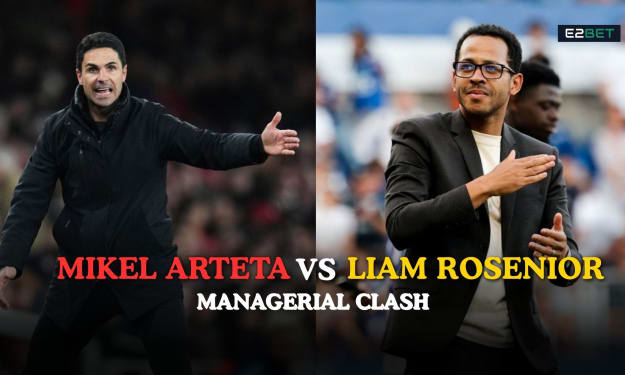
Mikel Arteta vs Liam Rosenior: A Managerial Clash Ahead of the Carabao Cup Semi-Final
Chelsea and Arsenal have a long history of competitive domestic encounters. This semi-final is particularly intriguing due to the managerial contrast. Chelsea recently appointed Liam Rosenior as their head coach, following the departure of Enzo Maresca just weeks earlier. Rosenior moved from Strasbourg to take charge of one of England's most high-profile jobs.
By Sports Record and Stats 5 days ago in Cleats
My New Book is Finally Here
My poetry collection Beautiful and Brutal Things is done. It's actually done and finally published over 270 pages. Over a year of my life went into this book. More than a year, really. Long days at my computer, sometimes seven days a week because I couldn't stop even when I probably should have. Then two months of editing that felt harder than the writing itself. But it's finished, and I'm still standing, and the book is real.
By Tim Carmichael2 days ago in BookClub



Comments
There are no comments for this story
Be the first to respond and start the conversation.