
The start of soccer
From Ancient Origins to Global Phenomenon: Unraveling the Tapestry of Soccer's Journey
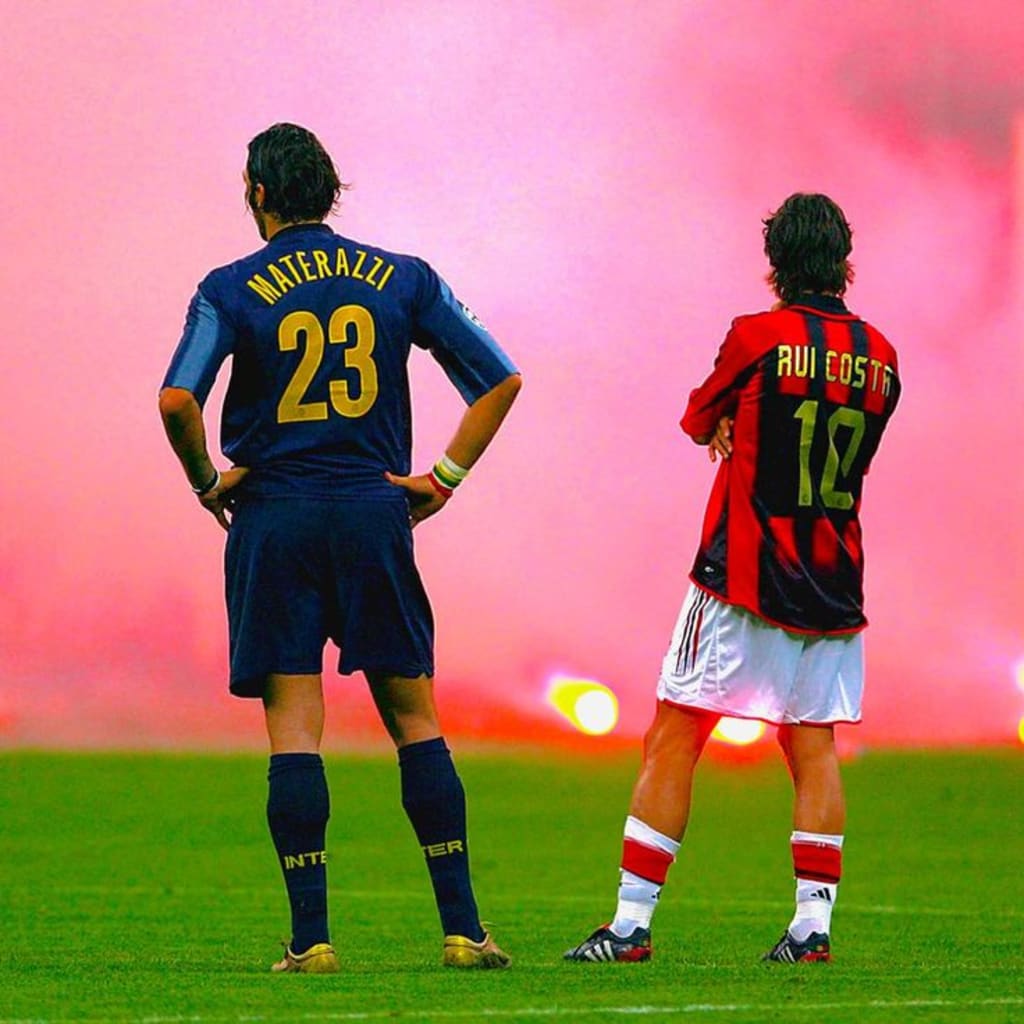
The beginning of soccer, also known as football in many parts of the world, can be traced back thousands of years to ancient civilizations. While the exact origins of the game are not entirely clear, evidence suggests that various forms of ball games were played in different cultures throughout history.
One of the earliest known forms of ball games resembling soccer was played in ancient China during the Han Dynasty (206 BC - 220 AD). The game, known as "Cuju," involved kicking a leather ball into a net. Cuju was not only a recreational activity but also a military training exercise.
In ancient Mesoamerican civilizations, such as the Mayans and Aztecs, a ball game called "Ullamaliztli" was played. Ullamaliztli was a ritualistic sport with religious significance, played on a rectangular court. The objective was to pass a rubber ball through stone hoops without using hands or feet.
In medieval Europe, a game called "mob football" became popular. Played in towns and villages, mob football was a chaotic and often violent game involving two teams trying to move an inflated pig's bladder from one point to another. The game had few rules and was played on open fields, with hundreds of players on each team.
The modern codification of soccer began in the 19th century in England. In 1863, the Football Association (FA) was founded, and it established a standardized set of rules known as the Laws of the Game. These rules provided a framework for the sport, including guidelines on field dimensions, player positions, and the use of hands.
The sport quickly spread beyond England, with the establishment of national football associations in other countries. The first international match took place in 1872 between England and Scotland, marking the beginning of international football competitions.
As the sport gained popularity, organized leagues and competitions were formed, leading to the development of professional soccer. The English Football League, founded in 1888, became the world's first professional league.
Soccer's global reach continued to expand, with the formation of international tournaments such as the FIFA World Cup, which started in 1930. Today, soccer is the most popular sport in the world, played and watched by millions of people across various continents.
The history of soccer is a rich and complex tapestry, woven together by diverse cultures, traditions, and innovations over centuries. It has evolved from ancient ball games to become a global phenomenon, capturing the hearts of people from different backgrounds and uniting them in their love for the beautiful game.
During the late 19th century, soccer underwent further standardization and development. The introduction of goal nets, crossbars, and penalty kicks helped refine the game and make it more structured. The use of referees and the implementation of offside rules also brought more order to matches.
In 1904, FIFA (Fédération Internationale de Football Association) was established as the international governing body for soccer, with the aim of regulating and promoting the sport worldwide. FIFA's efforts led to the organization of the first FIFA World Cup in 1930, which has since become the most prestigious tournament in soccer.
Over time, soccer continued to evolve, both in terms of gameplay and the organization of competitions. Tactics and strategies were refined, new playing formations emerged, and advancements in sports science and technology contributed to the development of training methods and equipment.
The popularity of soccer expanded globally throughout the 20th century, with clubs and national teams becoming symbols of national pride. Major leagues such as the English Premier League, La Liga in Spain, Serie A in Italy, and the Bundesliga in Germany emerged as powerhouses, attracting top talent and captivating fans worldwide.
The advent of television and later the internet further propelled the popularity of soccer, allowing matches to be broadcasted live to audiences across the globe. Soccer became a multi-billion dollar industry, with lucrative sponsorships, endorsement deals, and massive broadcasting rights.
In recent years, soccer has seen increased focus on issues such as diversity, inclusion, and fair play. Efforts are being made to eradicate racism and discrimination from the game, promote gender equality, and ensure the welfare of players at all levels.
Today, soccer stands as a truly global sport, embraced by people of all ages, genders, and backgrounds. The World Cup, continental competitions like the UEFA Champions League and Copa America, and domestic leagues attract millions of viewers and ignite intense rivalries and passionate support.
The history of soccer is a testament to its enduring appeal and its ability to transcend borders and bring people together. From humble beginnings to its current stature, soccer has left an indelible mark on the world of sports and continues to captivate fans with its excitement, skill, and the unifying power of the beautiful game.
About the Creator
Keep reading
More stories from writers in Cleats and other communities.
2026 T20 World Cup in India Under Threat Over Deadly Virus Outbreak
As the ICC Men’s T20 World Cup 2026 — scheduled to be co‑hosted by India and Sri Lanka from Feb. 7 to Mar. 8, 2026 — draws closer, the tournament’s smooth execution is facing an unexpected and serious threat: a deadly outbreak of the Nipah virus in India that has ignited public‑health concerns and raised questions about travel, participant safety and even the viability of the event itself.
By Salaar Jamaliabout 7 hours ago in Cleats
Top 5 Spinners with Most T20I Wickets in a Calendar Year
Spin bowling has become one of the most important weapons in T20 International cricket. In the early years of T20Is, fast bowlers dominated the format, but modern cricket has completely changed that balance. Today, spinners control the middle overs, slow down scoring rates, and take crucial wickets at key moments. Because of this shift, records related to spinners with most T20I wickets in a calendar year have gained huge importance.
By Sports Record and Stats 6 days ago in Cleats




Comments
There are no comments for this story
Be the first to respond and start the conversation.