
The Nuggets-Wizards Game Isn’t About Basketball Anymore—It’s About Team Design
As talent, strategy, and market forces collide, this matchup reveals deeper truths about the evolution of modern team-building in the NBA.

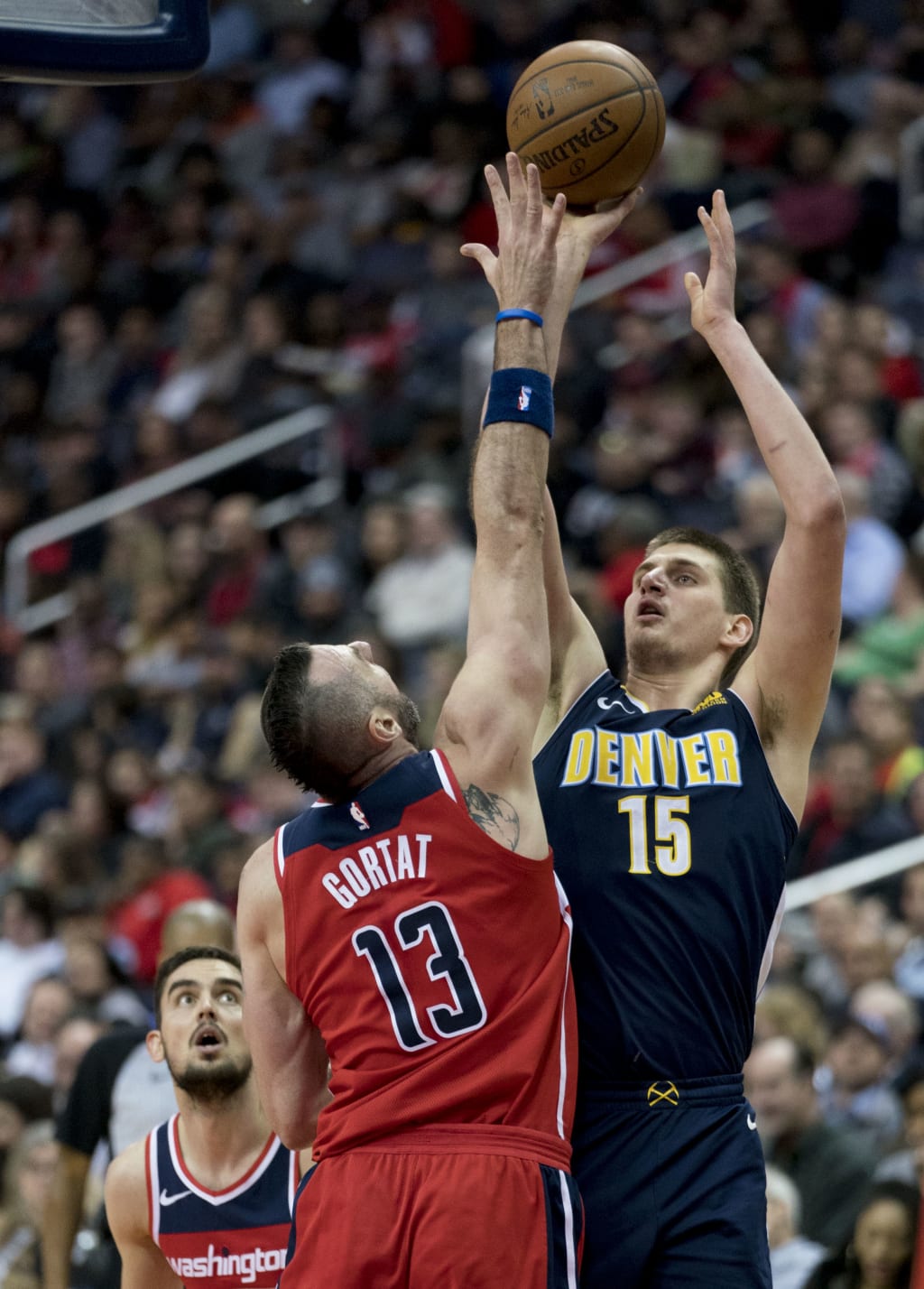
The Denver Nuggets facing the Washington Wizards might look like a midseason throwaway game on the NBA calendar, but if you squint, it’s a snapshot of the league’s broader economic and cultural evolution. The two franchises now represent diverging paths in how organizations think about value, data, and identity in an increasingly analytics-dominated era.
The Nuggets operate as a model of stability and intentionality. Built around Nikola Jokić—a generational talent who thrives on connection and understanding rather than sheer athletic spectacle—Denver has transformed “system basketball” into a form of organizational culture. Their core players have been developed internally. Their decision-making process feels sequenced and data-informed, not reactionary. What’s fascinating isn’t only that it works—it’s that it challenges the implicit logic many teams still follow: when things go wrong, rebuild fast and talk louder about the future.
Meanwhile, the Wizards embody the opposite pole of the modern NBA cycle: the endless churn of the rebuild-industrial complex. Every few seasons, a new front office or coach inherits a mandate to “reset.” Players become portfolio assets rather than human contributors. Losing becomes normalized as a form of speculative investing—an accepted cost of the long-term “process.” Washington is currently deep in this stage, armed with cap space, draft picks, and a vague conviction that patience is itself a strategy.
This isn’t just a contrast in basketball philosophy; it’s symbolic of a broader cultural divide playing out in business, media, and tech. The Nuggets represent what we might call “compound culture”—a belief in slow, sustainable growth, a trust in institutional memory, and a system that rewards cohesiveness. The Wizards exemplify “iteration culture”—rapid experimentation, high risk, and the constant pursuit of the next breakout variable. Both models produce success stories—until they don’t.
Across industries, we’re witnessing the same tension. Tech startups trade long-term community for fast growth metrics. Media houses pivot from depth to virality. The stock market rewards disruption more visibly than discipline. The result is a paradox: we’re trained to applaud transformation, even when the existing system still works. In this context, the Nuggets’ methodical development model looks almost subversive.
Yet, innovation now comes not just from data but from the psychology of continuity. The Nuggets’ ecosystem breeds trust—between the coaching staff, analytics department, and players. Their structure mimics the organizational design of a well-run enterprise: defined roles, decentralized decision-making, and alignment between mission and method. It’s similar to how successful technology firms integrate AI across workflows—gradually, contextually, and in service of a vision rather than as a publicity play.
Contrast this with the Wizards’ approach, which mirrors early-stage startups: heavy turnover, ambitious but unclear mission statements, and a belief that culture will emerge organically once the product—or in this case, the roster—gets good enough. This is not purely a failure of strategy. It’s an outcome of systemic incentives. The NBA’s draft and cap systems encourage volatility. The financial structure rewards short-term leaps in “potential” over steady compound performance.
That tension mirrors how venture-backed economies operate. The Wizards’ model thrives in an environment of speculation. The Nuggets’ model thrives in an environment of endurance. Each reflects a truth about its era. The bigger question is which type of system aligns with the next decade of competitive balance—both in sports and beyond.
If you look closely, the fan experience is shifting in parallel. Younger audiences—those raised on instant feedback loops—gravitate toward player-centric branding and trade rumor ecosystems more than the long-term narrative arcs of team-building. The “Nuggets way” feels almost analog in its patience; the “Wizards way” feels algorithmic—built for constant refresh. This dynamic hints at how fandom itself is evolving from a collective identity to a marketplace of personal affiliations.
So, when the Nuggets and Wizards meet on the court, it’s not simply elite execution versus chaos. It’s institutional trust versus speculative energy—the very binary shaping modern business strategy. Watching Denver’s intricate ball movement feels like observing a legacy tech company running optimized code. Watching Washington’s experimental lineups feels like beta testing a product patch. Both have potential. Only one has proof.
The real story isn’t who wins the game but what each team’s architecture reveals about the future of organized success. The Nuggets suggest that in an economy of constant reinvention, staying consistent is the most underrated form of innovation. The Wizards remind us that experimentation is valuable, but without direction, iteration becomes inertia.
In the next few years, as player autonomy expands and smaller markets leverage technology to close resource gaps, the future of the league—and perhaps organizational design writ large—will hinge on one question: can continuity and flexibility coexist? The Nuggets-Wizards contrast is less a rivalry and more a mirror. It reflects how every modern institution must choose between optimizing for what’s known and investing in what might be next.
About the Creator
Trend Vantage
Covering the latest trends across business, tech, and culture. From finance to futuristic innovations, delivering insights that keep you ahead of the curve. Stay tuned for what’s next!
Keep reading
More stories from Trend Vantage and writers in Cleats and other communities.
Jesse Minter and the Analytics Revolution Transforming Football Leadership
Jesse Minter’s rise from architecting Michigan’s suffocating defense to shaping broader football systems marks something more consequential than one coach’s ascent—it reflects the sport’s accelerating shift toward an analytics-informed era of leadership. In a game long defined by intuition, emotion, and hierarchy, Minter represents a new archetype: a strategist fluent in both human motivation and machine-derived insight.
By Trend Vantagea day ago in Cleats
From Boos to Brilliance: Vinícius and Mbappé Star in Real Madrid’s 6-1 Rout of Monaco
Real Madrid produced a commanding display in the UEFA Champions League with a 6-1 victory over Monaco at the Santiago Bernabeu, powered by Kylian Mbappe and Vinicius Junior. The emphatic win marked Alvaro Arbeloa’s first Champions League match in charge and strengthened Madrid’s position in the league phase as they closed in on qualification for the last 16.
By Sneaha Zynii3 days ago in Cleats
Bangladesh Defy ICC Ultimatum, Refuse to Tour India for T20 World Cup
In a dramatic turn of events that has sent shockwaves across the cricketing world, the Bangladesh Cricket Board (BCB) has officially refused to send its team to India for the upcoming ICC T20 World Cup, defying an ultimatum issued by the International Cricket Council (ICC). The decision marks an unprecedented standoff between a national cricket board and the sport’s governing body, raising questions about diplomacy, scheduling, and the governance of international cricket.
By Salaar Jamaliabout 19 hours ago in Cleats




Comments
There are no comments for this story
Be the first to respond and start the conversation.