
The Most Memorable FIFA World Cup Finals in History
Sports, FIFA, World Cup, Players, Ranking, Golden Boots, Silver Boots, Tournament, Legends, Teams, and Fans

The Most Memorable FIFA World Cup Finals in History
The FIFA World Cup, held every four years, is the pinnacle of international football, uniting nations and fans in their shared passion for the beautiful game. Beyond its role as a tournament, the World Cup has given rise to unforgettable moments of triumph, resilience, and heartbreak, with its finals serving as climactic chapters in the history of the sport. Each final has its own story, shaped by the players, circumstances, and stakes involved. This article reflects on some of the most memorable FIFA World Cup finals, highlighting their significance and the emotions they evoke.
1954: The Miracle of Bern
Few finals have captured the spirit of underdog triumph quite like the 1954 encounter between West Germany and Hungary. Entering the tournament, Hungary was the undisputed favourite. Led by the legendary Ferenc Puskás, they had not only dominated their opposition but also demolished West Germany 8-3 in the group stage. However, the final told a different story.
Played in heavy rain in Bern, Switzerland, Hungary stormed to a 2-0 lead within the first eight minutes. Yet, West Germany fought back with remarkable tenacity, equalising before halftime. The decisive moment came in the 84th minute, when Helmut Rahn scored the winning goal, sealing a 3-2 victory for West Germany. The "Miracle of Bern" remains one of the greatest upsets in football history, symbolising hope and resilience for a nation rebuilding after the devastation of World War II.
1970: Brazil’s Masterpiece
The 1970 final is often regarded as the pinnacle of football artistry. Brazil, led by the incomparable Pelé, faced Italy in the blazing heat of Mexico City’s Estadio Azteca. Both teams were vying for their third title, but it was Brazil’s fluid and attacking style that stole the show.
Pelé opened the scoring with a towering header, followed by goals from Gerson and Jairzinho. The crowning moment came when Captain Carlos Alberto finished a breath-taking team move with a thunderous strike, sealing a 4-1 victory. This goal is still celebrated as one of the greatest in World Cup history. Brazil’s third title allowed them to keep the Jules Rimet Trophy permanently, and their performance cemented their legacy as one of the greatest teams of all time.
1986: Maradona’s Destiny
The 1986 World Cup final saw Argentina, led by Diego Maradona, face West Germany in Mexico City. Maradona had already mesmerised the world with his performances, including the infamous "Hand of God" goal and the breath-taking solo effort against England. The final was a fitting climax to his tournament.
Argentina raced to a 2-0 lead, but West Germany’s resilience brought them level with two late goals. With the match hanging in the balance, Maradona delivered a moment of brilliance. His perfectly weighted through-ball to Jorge Burruchaga set up the decisive goal, giving Argentina a 3-2 victory. This triumph cemented Maradona’s place in football folklore and provided a poignant chapter in Argentina’s history.
1998: France’s Glory on Home Soil
For France, the 1998 final at the Stade de France was more than a football match; it was a celebration of national pride and unity. Facing defending champions Brazil, the French team delivered a masterclass in discipline and teamwork.
Zinédine Zidane emerged as the hero, scoring two first-half headers from corner kicks. Emmanuel Petit’s late goal sealed a 3-0 victory, securing France’s first World Cup title. The win united a diverse nation, with the team’s multicultural makeup symbolising modern France. Zidane’s performance elevated him to iconic status, and the victory remains a source of immense pride for French fans.
2006: Italy’s Redemption
The 2006 final in Berlin between Italy and France was a dramatic affair marked by moments of brilliance and controversy. Both teams scored in the first half; a Marco Materazzi header for Italy and a Zinédine Zidane penalty for France. However, the match’s defining moment came in extra time.
Zidane, playing in his final match, was sent off for head-butting Materazzi after an exchange of words. The game went to penalties, where Italy emerged victorious, winning 5-3. Fabio Grosso’s decisive spot-kick sealed Italy’s fourth World Cup title. For Italians, the victory was a moment of redemption, especially after the turmoil of the Calciopoli scandal. Zidane’s red card added an unforgettable twist to an already dramatic final.
2010: Spain’s Long-Awaited Triumph
The 2010 final in Johannesburg was a historic moment for Spain, who faced the Netherlands in a bid to win their first World Cup. The match was tense and physical, with both teams struggling to break the deadlock.
In the 116th minute of extra time, Andrés Iniesta scored the only goal of the match, a precise strike that etched his name in football history. The victory marked the culmination of Spain’s golden era, during which they also won back-to-back European Championships. Iniesta’s goal brought joy to a nation and established Spain as a footballing powerhouse.
2014: Germany’s Last-Minute Brilliance
The 2014 final at the Maracanã in Rio de Janeiro was a clash of giants, with Germany facing Argentina. The match was a tightly contested affair, with both teams creating and missing opportunities. As extra time loomed, it seemed penalties were inevitable.
In the 113th minute, Mario Götze produced a moment of magic. Controlling André Schürrle’s cross with his chest, he volleyed the ball past the Argentine goalkeeper, securing a 1-0 victory for Germany. The win marked Germany’s fourth World Cup title and their first as a unified nation. For Argentina, the defeat was heartbreaking, especially for Lionel Messi, who had carried his team throughout the tournament.
2018: France’s Resurgence
The 2018 final in Moscow saw France face Croatia in a thrilling encounter that delivered goals and drama. Croatia, appearing in their first final, had captured the hearts of fans with their spirited performances. However, France’s youthful and dynamic team proved too strong.
Goals from Antoine Griezmann, Paul Pogba, and Kylian Mbappé, along with an own goal from Croatia, secured a 4-2 victory for France. The win marked France’s second World Cup title, 20 years after their first. It was a moment of vindication for Didier Deschamps, who joined an elite group of individuals to win the World Cup as both player and manager. Mbappé’s standout performance signalled the arrival of a new global superstar.
Conclusion
The FIFA World Cup finals are more than just matches; they are moments that define generations, encapsulate emotions, and create lasting memories. From underdog triumphs to displays of individual brilliance, these games embody the spirit of football. The most memorable finals not only celebrate the victors but also reflect the resilience, drama, and unity that make the World Cup the world’s most beloved sporting event. As fans, we cherish these moments, knowing they are the essence of what makes football truly special.
About the Creator
Mutonga Kamau
Mutonga Kamau, founder of Mutonga Kamau & Associates, writes on relationships, sports, health, and society. Passionate about insights and engagement, he blends expertise with thoughtful storytelling to inspire meaningful conversations.
Keep reading
More stories from Mutonga Kamau and writers in Cleats and other communities.
The Most Heartbreaking Losses in FIFA World Cup History
The Most Heartbreaking Losses in FIFA World Cup History The FIFA World Cup, a tournament steeped in history and passion, is not merely a stage for victorious celebrations but also for profound heartbreaks. The drama that unfolds on the pitch; an intersection of skill, chance, and emotion, often leaves some teams and nations grappling with the pain of near misses and devastating losses. These moments of anguish remain etched in football lore, embodying the bitter-sweet allure of the beautiful game. Here, we delve into some of the most heartbreaking losses in FIFA World Cup history, exploring their significance and the emotions they evoked.
By Mutonga Kamauabout a year ago in Cleats
The 1895 Mayo Cut Plug Cards: Sports History Uncovered
If you’ve spent any time poking around the older corners of the hobby, the 1895 Mayo Cut Plug set has probably come up in conversation. Maybe it was an uncle talking about a card he once saw in a shop, or a forum post showing a faded photograph of a rare example. Either way, these cards have a way of sticking in your mind because they’re familiar in reputation but almost impossible to see in person.
By Glen Campbell7 days ago in Cleats
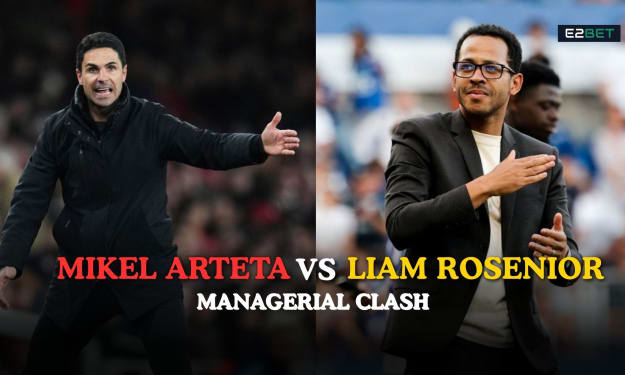
Mikel Arteta vs Liam Rosenior: A Managerial Clash Ahead of the Carabao Cup Semi-Final
Chelsea and Arsenal have a long history of competitive domestic encounters. This semi-final is particularly intriguing due to the managerial contrast. Chelsea recently appointed Liam Rosenior as their head coach, following the departure of Enzo Maresca just weeks earlier. Rosenior moved from Strasbourg to take charge of one of England's most high-profile jobs.
By Sports Record and Stats 5 days ago in Cleats



Comments
There are no comments for this story
Be the first to respond and start the conversation.