
The Battle for La Liga's Top Scorer: How Strikers Compete for the Pichichi
Sports, FIFA, World Cup, Players, Ranking, Premier League, Golden Boots, Silver Boots, Tournament, Legends, Teams, and Fans

The Battle for La Liga's Top Scorer: How Strikers Compete for the Pichichi
La Liga, Spain's premier football league, is known for its artistry, flair, and breathtaking moments on the pitch. Beyond the quest for the league title, one of the most coveted honours in Spanish football is the Pichichi Trophy. Awarded annually to the league’s top scorer, this accolade symbolises individual excellence and a striker's ability to consistently find the back of the net in a league renowned for its defensive sophistication and tactical battles.
For decades, the race for the Pichichi has captivated football fans, showcasing the brilliance of some of the game’s greatest forwards. This article delves into the significance of the Pichichi Trophy, the fierce competition among strikers, and how this battle for supremacy has evolved over the years.
The Origins of the Pichichi Trophy
The Pichichi Trophy is named after Rafael Moreno Aranzadi, nicknamed “Pichichi,” a legendary forward for Athletic Bilbao in the early 20th century. Known for his prolific scoring ability and distinctive bandana, Pichichi’s legacy lives on through this prestigious award.
First introduced by the Spanish sports newspaper Marca in 1953, the trophy is given to the top scorer in La Liga each season. Unlike some leagues where the Golden Boot is calculated based on official league statistics, the Pichichi winner is determined by Marca's tallies, which occasionally differ from official league data.
The significance of the Pichichi lies in its celebration of attacking prowess. It honours those who elevate the game through their goal scoring artistry and ability to thrive in the intensely competitive environment of La Liga.
La Liga: A Striker’s Dream and Challenge
La Liga has historically been a league of contrasts, renowned for its defensive discipline while simultaneously fostering some of the most creative and attack-minded football in the world. For strikers, this duality presents both a dream and a challenge.
Defenders in La Liga are known for their technical skill and tactical awareness, making it difficult for forwards to find space. However, the league’s emphasis on possession and fluid attacking play creates opportunities for strikers who can anticipate, position themselves effectively, and exploit defensive lapses.
The race for the Pichichi often comes down to a combination of skill, consistency, and the ability to perform under pressure. While the number of goals is the ultimate measure, the manner in which those goals are scored; whether through clinical finishes, long-range strikes, or moments of individual brilliance, further cements a striker’s legacy.
Legends of the Pichichi
Over the years, the Pichichi Trophy has been claimed by some of the greatest forwards in football history. These players have not only dominated the league with their scoring feats but have also left an indelible mark on the sport.
1. Telmo Zarra
For decades, Telmo Zarra of Athletic Bilbao was the undisputed king of the Pichichi. Winning the trophy a record six times during the 1940s and 1950s, Zarra’s incredible goal scoring record set a standard that few could match. His ability to dominate in an era of rugged defences made his achievements all the more remarkable.
2. Alfredo Di Stéfano
The Real Madrid icon redefined the role of a forward in the 1950s and 60s. Di Stéfano’s intelligence, versatility, and goal scoring ability helped Real Madrid establish their dominance, and his multiple Pichichi wins underscored his influence on the game.
3. Hugo Sánchez
The Mexican maestro was a goal scoring phenomenon during his time with Atlético Madrid and Real Madrid in the 1980s. Known for his acrobatic finishes and clinical precision, Sánchez claimed the Pichichi Trophy five times, including four consecutive seasons with Real Madrid.
4. Lionel Messi and Cristiano Ronaldo
In recent history, Lionel Messi and Cristiano Ronaldo have turned the race for the Pichichi into a personal duel, rewriting the record books in the process.
Messi’s combination of creativity, finesse, and unrivalled footballing intelligence earned him eight Pichichi titles, the most in history. His 50-goal season in 2011-12 remains a monumental feat.
Ronaldo, on the other hand, brought raw power, athleticism, and an insatiable hunger for goals. His three Pichichi wins during his time at Real Madrid showcased his ability to dominate in one of the world’s most competitive leagues.
The Modern-Day Pichichi Race
In today’s footballing landscape, the competition for the Pichichi Trophy is as intense as ever. While the dominance of Messi and Ronaldo defined the 2010s, the current era has opened the door for new challengers to stake their claim.
Karim Benzema
Benzema’s resurgence as Real Madrid’s talisman following Ronaldo’s departure highlights his evolution into one of the league’s most complete forwards. His ability to link play, create chances, and score crucial goals earned him the Pichichi in the 2021-22 season.
Luis Suárez
Suárez, one of the most clinical strikers of his generation, won the Pichichi in 2015-16, breaking the Messi-Ronaldo duopoly. His 40-goal season for Barcelona was a testament to his predatory instincts and relentless drive.
Emerging Stars
Younger talents like Vinícius Júnior, João Félix, and others are emerging as potential Pichichi contenders. Their development promises to keep the race for the trophy exciting in the years to come.
What It Takes to Win the Pichichi
Winning the Pichichi Trophy requires more than just technical skill. It demands consistency, mental toughness, and the ability to perform in high-pressure situations.
1. Team Dynamics
A striker’s success often depends on the team around them. Creative midfielders, wingers, and playmakers who can deliver precise passes and crosses are essential for providing opportunities.
2. Tactical Awareness
Understanding the opposition’s defensive structure and adapting accordingly is critical. Top strikers know how to exploit spaces, time their runs, and stay one step ahead of defenders.
3. Physical and Mental Resilience
The demands of a 38-game season require peak physical fitness and mental fortitude. Strikers must maintain their performance levels week in and week out, despite the pressures of expectation and the challenges of fatigue.
The Emotional Connection
The Pichichi Trophy is more than just an individual accolade. For fans, it represents the magic of football; the joy of witnessing unforgettable goals and celebrating the artistry of the game’s greatest strikers.
When a player competes for the Pichichi, they carry the hopes and dreams of their supporters. Each goal is a moment of shared euphoria, strengthening the bond between player and fanbase.
Conclusion
The battle for La Liga’s top scorer is a captivating subplot in the drama of Spanish football. The Pichichi Trophy celebrates the essence of the game: the thrill of goals, the artistry of attacking play, and the brilliance of those who make the impossible look easy.
As each season unfolds, new stars emerge, and the race for the Pichichi begins anew. Whether it’s a veteran striker chasing one last hurrah or a young prodigy announcing their arrival, the pursuit of this prestigious trophy continues to inspire and excite fans across the world.
In the end, the Pichichi is not just a measure of goals, it is a testament to the power of football to create heroes, write stories, and bring joy to millions.
About the Creator
Mutonga Kamau
Mutonga Kamau, founder of Mutonga Kamau & Associates, writes on relationships, sports, health, and society. Passionate about insights and engagement, he blends expertise with thoughtful storytelling to inspire meaningful conversations.
Keep reading
More stories from Mutonga Kamau and writers in Cleats and other communities.
From Underdog to Champion: La Liga’s Biggest Cinderella Stories
From Underdog to Champion: La Liga’s Biggest Cinderella Stories Football has always been about more than just the final score. The beautiful game is a stage where dreams are realised, and the impossible becomes reality. Nowhere is this more evident than in La Liga, Spain’s top-flight football league, where the tales of underdogs defying the odds and achieving greatness remain some of the most cherished stories.
By Mutonga Kamauabout a year ago in Cleats
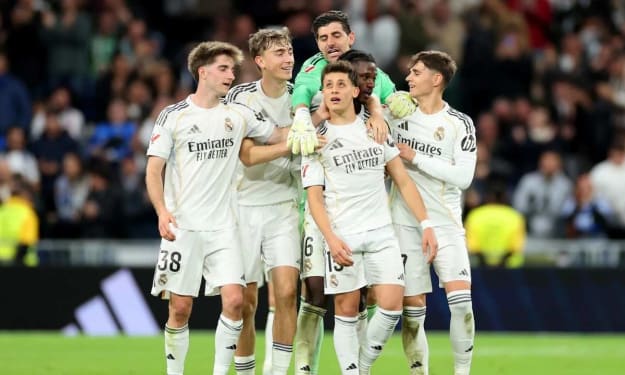
Real Madrid vs Elche Match Result 4–1 in La Liga
The title race at the top of La Liga remains intensely competitive, with Barcelona and Real Madrid both securing emphatic victories in Round 28 to maintain the status quo at the summit. As the season enters its crucial final stretch, the two Spanish giants are showing no signs of backing down, trading blows like heavyweight champions in a bid to seize control of the league.
By Football Scoreabout 6 hours ago in Cleats
A Transparent Look at Vocal Challenges and Top Stories
Almost three years ago, we shared a resource article that served as a place for people to suggest new challenge prompts. We thought it would be a good idea to refresh that thread, and take the opportunity to answer a few common questions about top stories, how challenges are judged and how submissions are reviewed.
By Vocal Curation Team4 days ago in Resources


Comments
There are no comments for this story
Be the first to respond and start the conversation.