
T20 Champions League will now return in a new format, decision taken in ICC meeting
T20 Champions League
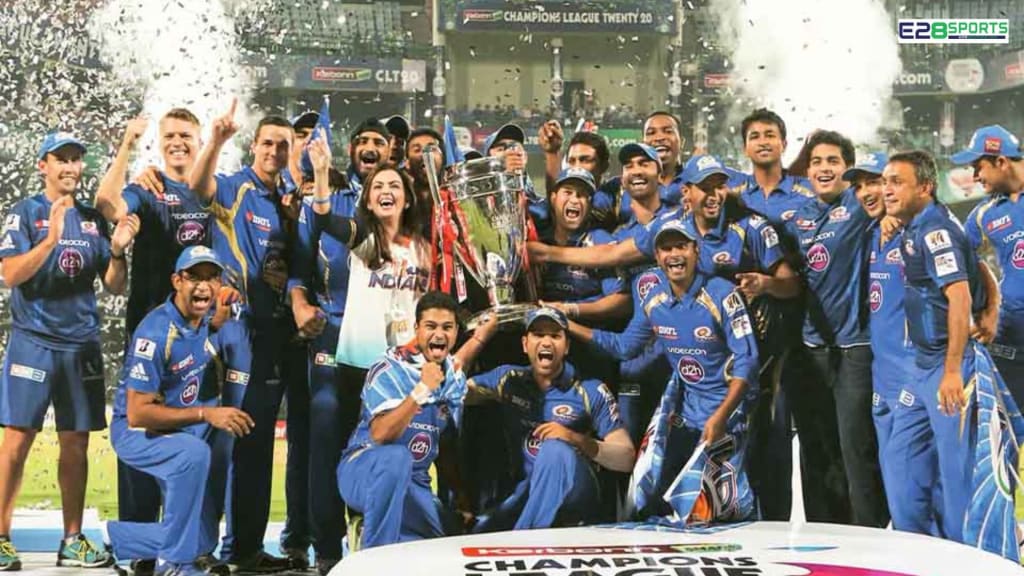
During the annual meeting of the International Cricket Council (ICC) held in Singapore, a significant development took place that is set to reshape the global T20 cricket landscape. Member countries came together to demand the revival of the Men's T20 Champions League — a tournament that had once captured the imagination of cricket fans around the world. The ICC accepted this proposal with a clear majority and officially confirmed that the tournament will return in a brand-new format starting from September next year.
According to insiders close to the matter, two reliable sources shared that the ICC has now formed a dedicated working group to restructure the global cricket calendar, aligning it with the newly revived T20 Champions League and other existing cricket commitments. This group has been tasked with presenting a new and sustainable format of the international calendar by 2027. The working group will consist of eight influential members from different cricket boards. Among them are Cricket Australia CEO Todd Greenberg, England and Wales Cricket Board CEO Richard Gould, and ICC's recently appointed Chief Executive Officer Sanjog Gupta. This panel of experts will analyze the current state of international and domestic T20 leagues and is expected to submit their interim recommendations to ICC Board Chairman Jay Shah before the end of 2025.

Speaking at the prestigious MCC World Cricket Connects Panel in 2023 at Lord’s, ICC CEO Sanjog Gupta emphasized the need for bold changes in global cricket planning. He pointed out that while cricket remains a beloved sport, it's essential to adapt and evolve based on audience interest and global viewing trends. “You have to take tough decisions,” Gupta remarked. “There are very clear signs of what cricket fans want. There is also enough data to tell in which direction the game is moving.”
He further warned about the consequences of continuing to promote formats or tournaments that are no longer appealing to modern fans. “If you continue to offer a product that no one wants, then on one hand that product will continue to suffer, and on the other hand, the ecosystem around that product will also be negatively affected.” These comments are being viewed as a call to modernize the sport while balancing tradition and innovation.
The original T20 Champions League, which began in 2008, ran for seven seasons before being discontinued in 2014. It was a joint initiative by Cricket Australia, the Board of Control for Cricket in India (BCCI), and Cricket South Africa. Although it brought together the top T20 franchise teams from different countries, the tournament struggled with viewership and logistical challenges. A significant blow came when ESPN, the then broadcaster, decided to pull the plug after making a massive investment of nearly one billion dollars in rights fees. This decision was influenced by ESPN's earlier loss of broadcasting rights for the Indian Premier League (IPL), which was growing rapidly in popularity and commercial success.
Interestingly, despite its premature end, the initial revenue from the ESPN-Star deal proved crucial for the development of the Big Bash League (BBL) in Australia. The funds helped Cricket Australia to stabilize and grow the BBL, which later emerged as one of the most successful T20 leagues globally by 2013.
With the T20 Champions League set to return in a new avatar, cricket fans and stakeholders are watching closely. The revived version is expected to address the shortcomings of the past and offer a more engaging, viewer-friendly product. It will be fascinating to see how the ICC balances the new league with the busy international schedule and existing domestic leagues like the IPL, BBL, and The Hundred. As the cricketing world moves toward a more connected and competitive future, the T20 Champions League could be the next big step in globalizing the sport at the franchise level.
About the Creator
Keep reading
More stories from laradecruz and writers in Cleats and other communities.
Messi breaks another Ronaldo record
Argentine legend Lionel Messi once again displayed his footballing brilliance as he guided Inter Miami to a resounding 5-1 victory over the New York Red Bulls on Sunday. The superstar not only scored two goals but also provided two assists, playing a direct role in four of the five goals. With this dominant performance, Messi etched his name into the history books by breaking yet another record previously held by his long-time rival Cristiano Ronaldo—most non-penalty goals in professional football.
By laradecruz6 months ago in Cleats
Top 10 Greatest Russian MMA Fighters
Russia has always been a powerhouse in combat sports. From Dagestan to Chechnya, the country has produced some of the toughest and most skilled fighters in the world. Simply being Russian in MMA can be intimidating for opponents. Over the years, legends like Fedor Emelianenko, Khabib Nurmagomedov, and modern stars such as Islam Makhachev and Khamzat Chimaev have shown the world why Russia dominates MMA. This list ranks the top 10 greatest Russian MMA fighters, highlighting their careers, achievements, and contributions to the sport.
By Sports Record and Stats 7 days ago in Cleats
Top 5 Highest Individual Scores for RCB in WPL
Royal Challengers Bangalore (RCB) has seen some incredible batting performances in the Women's Premier League (WPL). Over the seasons, several players have delivered match-winning innings, scoring big and giving RCB crucial advantages. The team's highest individual scores for RCB in WPL reflect both aggressive hitting and smart batting under pressure.
By Sports Record and Stats 3 days ago in Cleats



Comments
There are no comments for this story
Be the first to respond and start the conversation.