
NFL Will Restrict Tom Brady’s Access To Teams As Fox’s Broadcaster?!
Navigating the Potential Conflicts of Interest as Tom Brady Seeks to Balance NFL Ownership and Broadcasting Duties


Tom Brady’s transition from the football field to the broadcast booth and beyond into NFL team ownership is proving to be more complicated than anticipated. As the football legend attempts to balance his ambitions of becoming a part-owner of the Las Vegas Raiders with his lucrative broadcasting contract, it raises significant questions about potential conflicts of interest and the logistics of such a dual role.
The Core Issue: Conflicts of Interest
At the heart of the controversy is the inherent conflict of interest that arises when a person who has a financial stake in a team also serves as a broadcaster covering that very team. Brady’s situation is unique due to his potential to be involved in both roles simultaneously. If Brady becomes a partial owner of the Raiders, the implications for his broadcasting duties are significant.
Other NFL team owners have voiced their concerns, suggesting that Brady’s dual role could compromise the integrity of his broadcasting. Imagine Brady being assigned to cover a game where the Raiders are playing their rivals, the Kansas City Chiefs. It’s easy to see why this scenario would make the Chiefs and other teams uncomfortable. Brady would, theoretically, have access to sensitive information from production meetings and practices that could benefit the Raiders.
This has led to the NFL considering strict restrictions on Brady’s involvement in such scenarios. These include barring him from attending production meetings, practices, and other events where strategic and confidential information is discussed. The rationale is clear: if Brady has access to this information, even if he does not intend to use it unfairly, it could create a perception of bias or a competitive advantage for the Raiders.
The Balancing Act: Brady’s Career as a Broadcaster
Tom Brady’s broadcasting contract with Fox is one of the most lucrative in sports history, reportedly worth $350 million. This contract presumably comes with the expectation that Brady would be as prepared and insightful as possible, drawing on his years of experience on the field. However, if Brady is restricted from attending production meetings and practices, it could severely limit his ability to provide the in-depth analysis that viewers expect from a top-tier commentator.
In a typical production meeting, analysts gain valuable insights by interacting with coaches, players, and other key personnel, learning about the strategies and dynamics that will shape the upcoming game. Without this access, Brady would be at a significant disadvantage compared to other broadcasters who can fully participate in these meetings. This raises concerns not only for Brady but also for Fox, who are paying a premium for his services.
The Bigger Picture: NFL’s Concern for Fairness
The NFL is a league that thrives on the principle of competitive balance. Every rule and regulation is designed to ensure that no team has an undue advantage over another. Allowing Brady to occupy both roles could be seen as compromising this balance. Other teams might fear that, intentionally or not, Brady’s ownership stake could influence his commentary or his access to confidential information.
While Brady’s broadcasting career is a significant part of his post-playing life, ownership of an NFL team represents an entirely different level of involvement in the sport. It’s understandable why Brady would want to explore both avenues, but the NFL must prioritize the fairness and integrity of the league.
The Inevitable Compromise
The situation is a delicate one, requiring careful negotiation between all parties involved — the NFL, Fox, the Raiders, and Tom Brady himself. While it’s easy to argue that Brady should be allowed to enjoy the fruits of his success by both owning a team and continuing his broadcasting career, the reality is that this dual role is fraught with potential conflicts.
The NFL will likely impose restrictions to mitigate these conflicts, possibly forcing Brady to choose between ownership and broadcasting, or at the very least, significantly altering the way he prepares for games. The situation underscores the complexities that arise when a sports icon like Brady seeks to expand his influence within the sport in ways that blur traditional boundaries.
Ultimately, this is a scenario where there may be no perfect solution. However, the NFL’s focus will undoubtedly be on maintaining the integrity of the league and ensuring that all teams compete on a level playing field, even if it means placing limitations on one of the most famous figures in sports history.
About the Creator
Lawrence Lease
Alaska born and bred, Washington DC is my home. I'm also a freelance writer. Love politics and history.
Keep reading
More stories from Lawrence Lease and writers in Cleats and other communities.
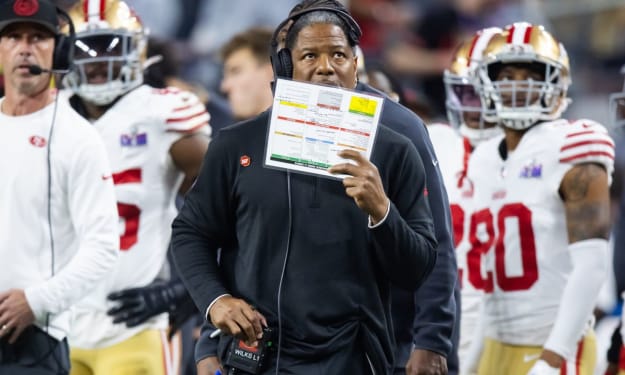
Steve Wilks Tossed Aside By San Francisco 49ers
In the realm of professional sports, particularly in the NFL, the relationship between a head coach and his coordinators is paramount. This dynamic extends beyond mere game planning and into the very fabric of the team's culture and identity. The case of Kyle Shanahan and the San Francisco 49ers underscores the nuanced nature of these relationships. It's not just about scheme compatibility but also about how these personalities coalesce to inspire, challenge, and elevate the team.
By Lawrence Lease2 years ago in Cleats
Shadow Fist: A Gritty Independent MMA Drama From Andreas Szakacs Productions
At first glance, Shadow Fist appears to be a gritty mixed martial arts drama set in the underground fight scene of Mexico City. But beneath the punches, bruises, and adrenaline of the ring lies a deeper story—one about resilience, identity, and the difficult journey toward redemption.
By Andreas Szakacs5 days ago in Cleats
Living on Just a Few Spoonfuls a Day: The Woman Who Still Traveled to 28 Countries
For most people, traveling the world requires energy, stamina, and the ability to keep up with the physical demands of long journeys. But for one remarkable woman, even eating a normal meal is impossible. She can consume only three to four spoonfuls of food in an entire day. Yet despite this severe limitation, she has managed to travel to 28 countries, inspiring thousands with her determination and courage.
By Irshad Abbasi 3 days ago in Cleats
Silken Chains
Silhouettes of the female form were given flesh and bone. Silken skin glistened under the spotlight. Dry ice rose around our Icons as they danced atop their podiums in the Square. Heralded for their beauty, their movements were slight, powerful, and sensual.
By Paul Stewart6 days ago in Fiction



Comments
There are no comments for this story
Be the first to respond and start the conversation.