
La Liga’s Influence on World Football: Spain’s Unique Style Explained
Sports, FIFA, World Cup, Players, Ranking, Premier League, Golden Boots, Silver Boots, Tournament, Legends, Teams, and Fans

La Liga’s Influence on World Football: Spain’s Unique Style Explained
La Liga has long been a cornerstone of global football, not only as a competitive league but also as a purveyor of a distinctive style of play that has profoundly influenced the sport worldwide. Renowned for its technical brilliance, tactical intelligence, and creative flair, the Spanish top flight has set benchmarks in the art of football that transcend borders. From its illustrious clubs and iconic players to the intricate strategies that have reshaped modern football, La Liga's influence is both profound and enduring.
This article explores how La Liga has shaped world football, delving into the elements of its unique style and the legacy it continues to build.
The Foundations of La Liga’s Style
At the heart of La Liga’s identity lies an emphasis on technical skill and artistry. Unlike leagues that prioritise physicality or direct play, Spanish football has always been rooted in a culture that values ball control, precision, and ingenuity. This philosophy is not only evident in the senior teams but is ingrained in the grassroots level, where aspiring players are encouraged to master the fundamentals of passing, movement, and decision-making.
The Spanish footballing philosophy, often referred to as tiki-taka, is characterised by short, intricate passing sequences, patient build-ups, and a relentless focus on maintaining possession. While tiki-taka became synonymous with Spain’s national team during their golden era, its origins can be traced back to La Liga, where clubs like Barcelona and Real Madrid pioneered the art of possession-based football.
Barcelona’s Role in Shaping Modern Football
Few clubs embody La Liga’s ethos as much as FC Barcelona. The club’s famed La Masia academy has produced some of the greatest players in football history, including Xavi Hernández, Andrés Iniesta, and Lionel Messi. Under managers like Johan Cruyff and Pep Guardiola, Barcelona developed a style of play that became the gold standard of football.
Cruyff, a visionary who instilled the principles of Total Football during his time at Barcelona, laid the foundation for the club’s identity. Guardiola, a disciple of Cruyff, refined these ideas, transforming Barcelona into a footballing juggernaut during his tenure. The intricate passing, positional play, and relentless pressing that defined Guardiola’s Barcelona not only dominated La Liga but also revolutionised the sport globally.
The Spanish National Team: A Testament to La Liga’s Influence
The success of Spain’s national team between 2008 and 2012 was a testament to the principles nurtured in La Liga. Winning back-to-back European Championships and the 2010 FIFA World Cup, Spain dazzled the world with their technical mastery and cohesive play.
The core of this team, featuring players like Xavi, Iniesta, Sergio Busquets, and Gerard Piqué, was drawn from Barcelona and Real Madrid. Their dominance on the international stage highlighted how La Liga’s philosophy could be seamlessly adapted to different competitions, solidifying Spain’s reputation as a footballing superpower.
Technical Mastery: A Hallmark of La Liga Players
One of the defining characteristics of La Liga is its ability to produce and attract technically gifted players. From legends like Zinedine Zidane and Ronaldinho to modern stars such as Luka Modrić and Karim Benzema, the league has consistently showcased footballers who combine skill with creativity.
La Liga’s emphasis on technique allows players to express themselves freely on the pitch, often leading to moments of breathtaking brilliance. The freedom to innovate, coupled with a high standard of tactical discipline, has made the league a fertile ground for talent development and a beacon of footballing artistry.
The Tactical Evolution in La Liga
Beyond individual skill, La Liga has been a hotbed of tactical experimentation. Managers like Diego Simeone, Unai Emery, and Ernesto Valverde have brought distinct tactical approaches that challenge the traditional notions of Spanish football.
Simeone’s Atlético Madrid, for instance, exemplifies defensive organisation and counter-attacking efficiency. Their ability to disrupt possession-heavy teams like Barcelona and Real Madrid has added a new dimension to La Liga’s tactical landscape. Meanwhile, clubs like Sevilla have showcased the effectiveness of blending traditional Spanish principles with modern innovations, achieving success in domestic and European competitions.
Exporting the La Liga Blueprint
La Liga’s influence is not confined to Spain; its principles have been exported to leagues and national teams around the world. Managers like Guardiola and Emery have introduced Spanish ideas to the Premier League, while players trained in La Liga academies continue to enrich global football with their unique skill sets.
The demand for Spanish-trained coaches and players reflects the respect La Liga commands internationally. Whether it’s young talents emerging from academies like Villarreal’s or seasoned professionals plying their trade abroad, the Spanish style remains a benchmark for excellence.
Cultural and Regional Influences
One of the reasons for La Liga’s rich diversity of styles is its cultural and regional influences. Clubs like Athletic Bilbao, which fields only Basque players, bring a unique flavour to the league. Meanwhile, teams like Real Betis and Valencia blend local traditions with the overarching principles of Spanish football.
These regional identities not only make La Liga a more vibrant and competitive league but also contribute to its global appeal. The coexistence of distinct playing philosophies within a shared framework of technical excellence exemplifies the league’s depth and versatility.
Challenges and Adaptations
While La Liga’s influence on world football remains strong, the league has faced challenges in recent years. Financial disparities, the departure of global superstars like Lionel Messi, and the growing competition from other leagues have tested La Liga’s resilience.
However, the league continues to adapt, focusing on nurturing young talent and promoting competitive balance. Initiatives to modernise coaching methods and embrace emerging technologies ensure that La Liga remains at the forefront of footballing innovation.
The Emotional Connection of La Liga
What truly sets La Liga apart is its ability to create an emotional connection with fans. Whether it’s the drama of El Clásico, the underdog stories of smaller clubs, or the moments of individual brilliance that leave spectators in awe, La Liga evokes passion like no other.
The league’s rich history, coupled with its commitment to excellence, ensures that it will continue to inspire generations of football fans. From the bustling streets of Madrid to the sun-soaked coasts of Valencia, La Liga is more than just a football league; it’s a celebration of creativity, resilience, and the universal love of the beautiful game.
Conclusion
La Liga’s impact on world football is undeniable. Its emphasis on technical skill, tactical innovation, and creative expression has reshaped the sport, inspiring players and coaches across the globe. While challenges persist, the league’s commitment to its core principles ensures that its legacy remains intact.
As La Liga continues to evolve, its influence will undoubtedly extend further, shaping the future of football while staying true to its unique identity. For fans and purists alike, La Liga represents the very essence of the sport; a beautiful symphony of artistry, passion, and strategy.
About the Creator
Mutonga Kamau
Mutonga Kamau, founder of Mutonga Kamau & Associates, writes on relationships, sports, health, and society. Passionate about insights and engagement, he blends expertise with thoughtful storytelling to inspire meaningful conversations.
Keep reading
More stories from Mutonga Kamau and writers in Cleats and other communities.
Top 10 Goalkeepers in La Liga History: Unbreakable Walls
Top 10 Goalkeepers in La Liga History: Unbreakable Walls La Liga, Spain’s premier football league, has long been the stage for some of the greatest talents in football history. While attackers and midfield maestros often steal the limelight, the contributions of goalkeepers cannot be overlooked. These "unbreakable walls" are often the last line of defence, the ones who can single-handedly determine the outcome of matches with a crucial save or their commanding presence in goal.
By Mutonga Kamauabout a year ago in Cleats
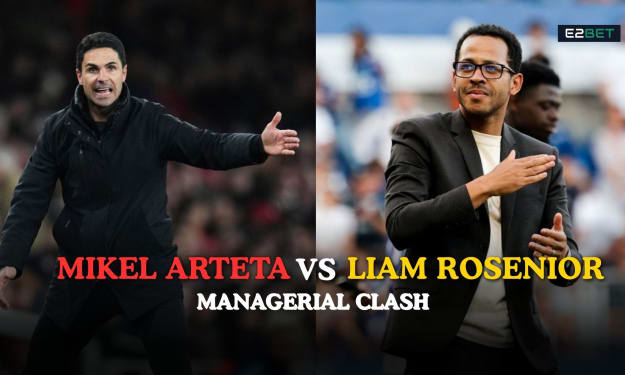
Mikel Arteta vs Liam Rosenior: A Managerial Clash Ahead of the Carabao Cup Semi-Final
Chelsea and Arsenal have a long history of competitive domestic encounters. This semi-final is particularly intriguing due to the managerial contrast. Chelsea recently appointed Liam Rosenior as their head coach, following the departure of Enzo Maresca just weeks earlier. Rosenior moved from Strasbourg to take charge of one of England's most high-profile jobs.
By Sports Record and Stats 5 days ago in Cleats
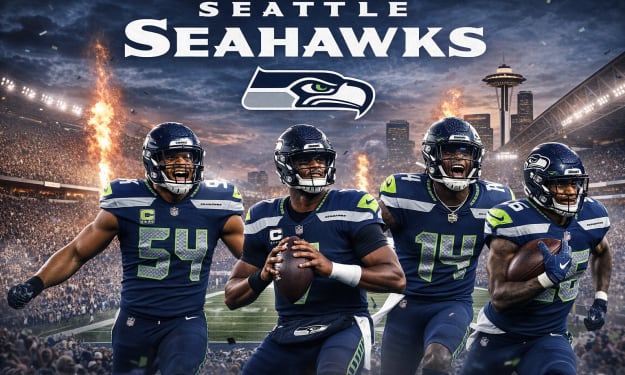
Seattle Seahawks – A Professional Overview of the American Football Team
**Seattle Seahawks – A Professional Overview of the American Football Team** The Seattle Seahawks are one of the most well-known teams in American football and a prominent member of the National Football League. Based in Seattle, Washington, the Seahawks compete in the NFC West division and have built a strong reputation through competitive performances, iconic players, and one of the most passionate fan bases in sports. Over the years, the team has developed a clear identity that combines toughness, athleticism, and a deep connection to its city.
By America today 2 days ago in Cleats
My New Book is Finally Here
My poetry collection Beautiful and Brutal Things is done. It's actually done and finally published over 270 pages. Over a year of my life went into this book. More than a year, really. Long days at my computer, sometimes seven days a week because I couldn't stop even when I probably should have. Then two months of editing that felt harder than the writing itself. But it's finished, and I'm still standing, and the book is real.
By Tim Carmichael3 days ago in BookClub

Comments
There are no comments for this story
Be the first to respond and start the conversation.