
La Liga's Coaching Legends: The Managers Who Shaped Spanish Soccer
Sports, FIFA, World Cup, Players, Ranking, Premier League, Golden Boots, Silver Boots, Tournament, Legends, Teams, and Fans

La Liga's Coaching Legends: The Managers Who Shaped Spanish Soccer
La Liga, Spain’s premier football league, has long been synonymous with technical excellence, tactical brilliance, and a distinct flair that sets it apart from other leagues. While players often steal the limelight, the influence of great managers in shaping the league’s history cannot be overlooked. These coaching legends have not only driven their teams to unprecedented success but also left an indelible mark on the game’s evolution. This article pays homage to the iconic managers who have shaped La Liga, exploring their achievements, philosophies, and enduring legacies.
Helenio Herrera: The Mastermind of Discipline and Defence
Helenio Herrera, widely regarded as one of the most influential coaches in football history, began his managerial journey in Spain with Atlético Madrid and later managed FC Barcelona. His tactical innovation and emphasis on physical fitness were revolutionary during his time. Herrera’s philosophy centred on discipline, organisation, and a methodical approach to the game.
While his crowning achievements came later with Inter Milan, Herrera’s stint in La Liga set the foundation for his managerial success. His meticulous preparation and focus on mental toughness inspired a generation of coaches. At Barcelona, he implemented a structured defensive system that balanced creativity with pragmatism, a precursor to the tactical ideologies that would later dominate the sport.
Miguel Muñoz: Real Madrid’s Visionary Leader
Miguel Muñoz was not just a coach but a visionary who transformed Real Madrid into a dominant force in European football. Having been a player for Los Blancos, Muñoz’s transition to management proved seamless. As head coach from 1960 to 1974, he guided Real Madrid to nine La Liga titles and two European Cups, solidifying their reputation as one of the greatest teams in history.
Muñoz’s tactical nous and man-management skills were unparalleled. He had an innate ability to harness the talents of world-class players while fostering a cohesive team spirit. His focus on attacking football, coupled with an emphasis on discipline, set a benchmark for future Real Madrid managers. Muñoz’s legacy endures as a symbol of consistency and excellence.
Johan Cruyff: The Architect of Modern Football
Johan Cruyff’s impact on La Liga, and indeed football as a whole, cannot be overstated. As the manager of FC Barcelona from 1988 to 1996, Cruyff revolutionised the club and laid the groundwork for its modern success. His implementation of the “Total Football” philosophy, inspired by his playing days with Ajax and the Netherlands, transformed Barcelona into a global powerhouse.
Cruyff’s tenure saw the birth of the legendary “Dream Team,” which won four consecutive La Liga titles and the club’s first European Cup in 1992. He championed a possession-based style of play, emphasising fluid movement, creativity, and tactical intelligence. Cruyff’s influence extended beyond his time at Barcelona, shaping the philosophies of future coaches like Pep Guardiola, who would carry his legacy forward.
Vicente del Bosque: The Gentleman of the Game
Vicente del Bosque’s calm demeanour and understated approach belied his incredible success as a manager. During his time at Real Madrid (1999-2003), Del Bosque won two La Liga titles and two Champions League trophies, guiding a star-studded team that included the likes of Zinedine Zidane, Luis Figo, and Ronaldo Nazário.
What set Del Bosque apart was his ability to manage egos and maintain harmony within a team brimming with superstars. His tactical flexibility and focus on team cohesion were instrumental in Real Madrid’s dominance during this period. Later, as the manager of Spain’s national team, he would achieve even greater success, but his contributions to La Liga remain a vital part of his legacy.
Pep Guardiola: The Perfectionist
A product of Johan Cruyff’s philosophy, Pep Guardiola took Barcelona to unprecedented heights during his tenure from 2008 to 2012. Under Guardiola, Barcelona achieved a level of dominance rarely seen in football, winning three La Liga titles, two Champions League trophies, and a historic sextuple in 2009.
Guardiola’s meticulous attention to detail and innovative tactics redefined modern football. His emphasis on high pressing, positional play, and quick ball circulation became the hallmarks of Barcelona’s success. Guardiola also nurtured players like Lionel Messi, Xavi Hernández, and Andrés Iniesta, who thrived under his guidance and contributed to the team’s legendary status.
Diego Simeone: The Resilient Strategist
Diego Simeone’s tenure at Atlético Madrid has been nothing short of remarkable. Since taking charge in 2011, Simeone has transformed Atlético into one of Europe’s most formidable teams. His pragmatic approach, built on defensive solidity and relentless work ethic, has made Atlético perennial contenders in La Liga and Europe.
Simeone’s crowning achievement came in the 2013-2014 season when he led Atlético to their first La Liga title in 18 years, breaking the duopoly of Real Madrid and Barcelona. His passion, tactical acumen, and ability to inspire his players have earned him widespread admiration. Simeone’s success is a testament to the power of resilience and determination.
Luis Aragones: The Philosopher of Passion
Luis Aragones, often referred to as “The Wise Man of Hortaleza,” was a pioneering figure in Spanish football. Over multiple stints with Atlético Madrid, Aragones guided the team to numerous successes, including a La Liga title in 1977. His innovative tactics and motivational skills made him a revered figure in Spanish football.
Aragones’ influence extended beyond club football. As the manager of Spain’s national team, he laid the foundation for their golden era, culminating in the 2008 European Championship victory. His emphasis on possession-based football and team unity resonated deeply in La Liga, shaping the league’s identity.
The Legacy of La Liga’s Coaching Legends
The managers who have graced La Liga have left a lasting legacy that goes beyond trophies. They have shaped the league’s identity, introducing innovative tactics, nurturing world-class talent, and inspiring future generations of coaches. From the tactical discipline of Helenio Herrera to the visionary brilliance of Johan Cruyff, each manager has contributed to La Liga’s rich history.
These coaching legends embody the spirit of La Liga: a league where passion meets innovation, and tradition blends seamlessly with modernity. Their stories remind us that football is not just about the players on the pitch but also about the minds on the touchline, orchestrating the game’s most memorable moments.
Conclusion
La Liga’s coaching legends have played an instrumental role in shaping Spanish soccer. Their contributions have not only elevated their respective teams but also enriched the league’s legacy. As new managers continue to emerge and leave their mark, the influence of these icons will remain a guiding light, reminding us of the enduring power of leadership, strategy, and vision in the beautiful game.
About the Creator
Mutonga Kamau
Mutonga Kamau, founder of Mutonga Kamau & Associates, writes on relationships, sports, health, and society. Passionate about insights and engagement, he blends expertise with thoughtful storytelling to inspire meaningful conversations.
Keep reading
More stories from Mutonga Kamau and writers in Cleats and other communities.
The Best Free-Kick Takers in La Liga: Artists of Set Pieces
The Best Free-Kick Takers in La Liga: Artists of Set Pieces Football has always been a game of fine margins, and set pieces often decide the outcome of crucial matches. In La Liga, where technical ability and flair are celebrated, free-kick takers have elevated their craft to an art form. Over the decades, the league has been graced by players whose mastery of the dead ball has left fans and opponents in awe. This article pays tribute to the best free-kick takers in La Liga’s history, exploring their unique techniques, memorable moments, and lasting legacy.
By Mutonga Kamauabout a year ago in Cleats
The 1895 Mayo Cut Plug Cards: Sports History Uncovered
If you’ve spent any time poking around the older corners of the hobby, the 1895 Mayo Cut Plug set has probably come up in conversation. Maybe it was an uncle talking about a card he once saw in a shop, or a forum post showing a faded photograph of a rare example. Either way, these cards have a way of sticking in your mind because they’re familiar in reputation but almost impossible to see in person.
By Glen Campbell5 days ago in Cleats
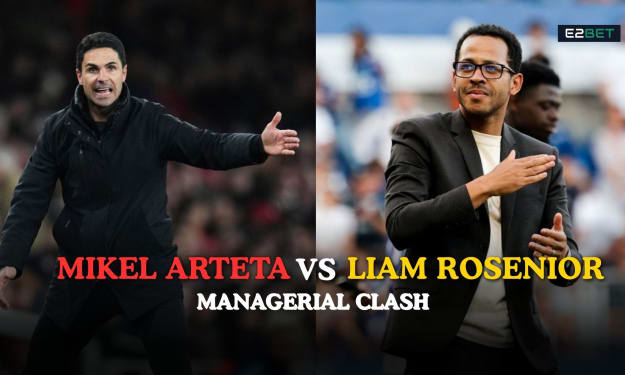
Mikel Arteta vs Liam Rosenior: A Managerial Clash Ahead of the Carabao Cup Semi-Final
Chelsea and Arsenal have a long history of competitive domestic encounters. This semi-final is particularly intriguing due to the managerial contrast. Chelsea recently appointed Liam Rosenior as their head coach, following the departure of Enzo Maresca just weeks earlier. Rosenior moved from Strasbourg to take charge of one of England's most high-profile jobs.
By Sports Record and Stats 3 days ago in Cleats
The Devil's Cut
“Comrade, finally you’re awake.” The voice was smooth, sensual. A flickering incandescent bar was all that lit the white, sterile room. All Vladimir remembered was everything going black. He tried to move his arms and found them strapped to the gurney.
By Matthew J. Fromm4 days ago in Fiction


Comments
There are no comments for this story
Be the first to respond and start the conversation.