
It Can’t Be A Coincidence
Highlighting bias in Scottish football refereeing

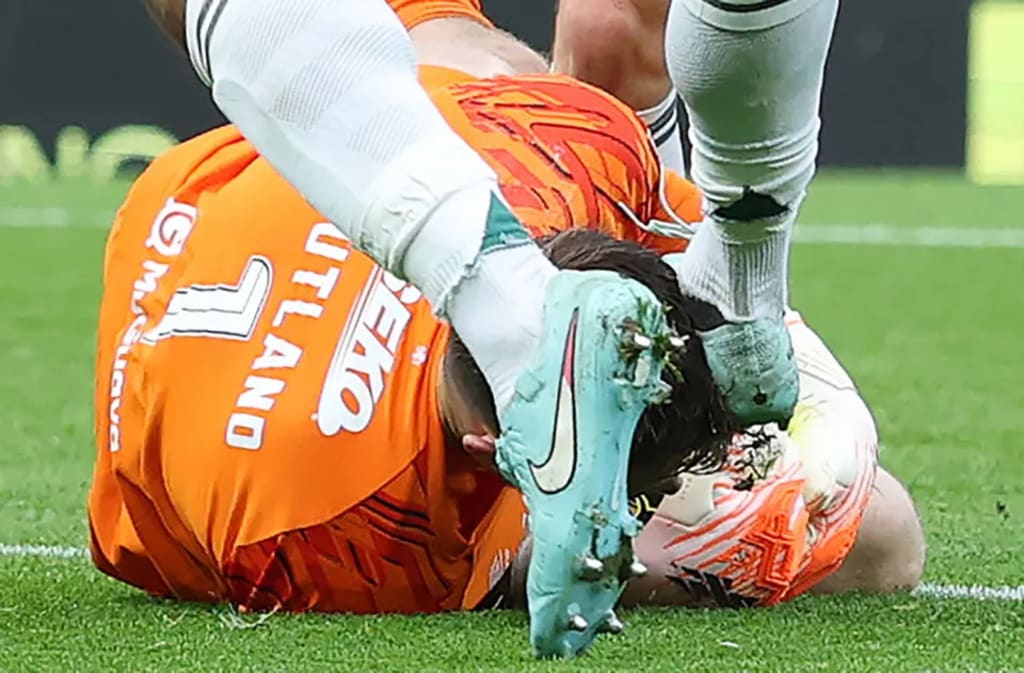
Once again the main talking point after an Old Firm is the refereeing team. Not just the man in the middle but the VAR team too. It hasn’t been a one-off marginal error that has Rangers fans going crazy both in-stadium and on social media, there’s a consistency. In fact, it feels like the only thing these referees are consistent at is finding away to cheat Rangers out of a result against their rival.
Let‘s take a look at some of these decisions
Celtic 3–1 Rangers — League Cup semi (2 Nov 2025)
Key incidents:
Auston Trusty challenge on Jack Butland — only a yellow despite it struck Butland’s head/face; VAR did not upgrade to a red. Rangers indicated they would seek an SFA explanation.
How the referee/VAR applied the laws and where critics say they went wrong:
Red vs yellow on the Trusty incident: IFAB/LAW 12 distinguishes serious foul play and violent conduct (sending-off offences) from reckless challenges. If a player “uses or attempts to use excessive force or brutality” or deliberately strikes an opponent (especially to the head/face) that is violent conduct and should be a red. The mainstream critique was: Trusty’s boot contacted Butland’s head/face in a way that looked deliberate or at least reckless with serious danger — the kind of contact the Laws treat as violent conduct/serious foul play. If VAR judges there’s a clear case for red, the on-field referee should be invited to the monitor or VAR should recommend a review. Here VAR backed the on-field yellow decision.
Consistency problem: The match officials gave a red for Aasgaard (a high boot) but a lesser sanction for Trusty’s boot to a keeper’s head. If one incident is judged as endangering safety (red), the other should face the same standard unless the intent/force is materially different. That matters because VAR’s job is to correct clear and obvious errors — here many argued VAR failed to act on an obvious violent-conduct.
The referee/VAR followed their judgment (yellow) on Trusty, but under IFAB guidance an impact to the head with no attempt to play the ball often meets the threshold for red; the lack of upgrade and the contrasting red for Aasgaard fuelled the criticism.
Ralston second yellow. While the IFAB ruling on this has changed to suggest a yellow isn’t awarded, Ralston denies a goalscoring opportunity with the movement of his arm. Again there was no VAR intervention.
2) Rangers 0–0 Celtic — Premiership (31 Aug 2025)
Key incidents:
Rangers penalty claim (Miovski vs Liam Scales) was rejected by the referee (and VAR did not overturn).
How the referees/VAR applied the laws and where issues arise:
Penalty claim: The Miovski–Scales clash was judged not to be a clear penalty. Under Law 12 a penalty requires a direct foul (trip/push) with sufficient contact/impact. The controversy is again consistency and VAR threshold.
3) Celtic 5–4 (aet) Rangers — League Cup Final (15 Dec 2024; 3–3 AET)
Key incident:
Extra-time incident where Rangers were denied a penalty / VAR handling and later SFA admission — Willie Collum later said the officials missed a spot-kick that should have been awarded (SFA admitted the penalty error). The decision dominated post-match discussion. In fact, the audio from the referees was that it was “more out than in”. If a shirt pull continues inside the box it is a penalty.
Why it mattered - The match was decided on penalties after a 3–3 draw; Rangers were later publicly told by the Scottish FA review that they should have been awarded a penalty at a crucial moment — an admission that the match had a clear officiating error.
VAR mandate is to correct clear and obvious errors in match-changing situations. If the VAR review process failed to identify a clear penalty (or if the VAR frame selection/perspective incorrectly presented the contact), that is a procedural failure. The SFA review singled out the VAR team’s role as poor/unacceptable in that specific decision — i.e., the process rather than just the on-field interpretation failed. That is a higher level criticism than “jugdement call” — it’s an admission the corrective system did not operate correctly. On the laws: a penalty should be given when a player is fouled in the box by a direct free-kick offence (push/trip/strike). The later SFA acknowledgement implies the footage, read against Law 12 and VAR protocol, indicated the on-field decision should have been changed. In practice this undermined confidence in VAR in high-stakes Old Firm fixtures.
This is one of the clearest examples of the system (VAR + match officials) having an acknowledged failure: the governing body later confirmed the error — which is as close as you get to an “official mistake” admission.
4) Celtic 1–0 Rangers — Scottish Cup Final (25 May 2024)
Key incident:
Abdallah Sima’s goal was disallowed after VAR for a push on goalkeeper Joe Hart — Nick Walsh originally awarded the goal; VAR told him to review and he chalked it off. Rangers argued it was a marginal/‘grey area’ push. The disallowed goal was decisive — Celtic won late and fans/club officials felt VAR overturned an on-field award where the contact was minor or incidental.
Correct application vs. controversy. Fans also pointed to other in-game physicality that went unpunished, making the overturned goal feel inconsistent.
5) Rangers 3–3 Celtic — Premiership (7 Apr 2024)
Key incidents:
Several VAR decisions throughout the match: e.g., a Rangers goal was disallowed after VAR (involving a foul/handball/attacking phase question), penalty decisions for both sides had VAR involvement. The match produced multiple contentious rulings that divided former referees and fans.
A high-profile derby with goals and late drama; VAR disallowed/awarded decisions swung the result and produced a sustained debate about VAR’s timing and whether the “attacking phase” or earlier foul should be punished. Considering that a substantial amount of time had passed between the foul and goal.
Attacking-phase / re-refereeing debate: IFAB guidance and VAR protocol try to avoid “re-refereeing” long sequences of play. If an earlier infringement started a positive attacking phase but the ball moved for >10–15 seconds and several players touched the ball, some referees argue the earlier foul becomes part of the “attacking phase” and intervening is acceptable; others argue that if the game has moved on, VAR shouldn’t overturn. That debate was central to the Dessers/goal incident — was the initial contact close enough in time/impact to justify virtual intervention? Former refs disagreed.
Marginal calls and frame selection: Several decisions hinged on which VAR frame/angle was used and whether the contact was sufficient. That again is a procedural/interpretation tension: VAR must correct clear and obvious errors, but marginals will always invite dispute and the Old Firm context amplifies reactions.
Bottom line: This game highlighted the repeated problem with VAR in the Old Firm — marginal, interpretative calls (attacking phase, minor fouls that affect goals) are treated inconsistently and produce heated debate even among ex-referees.
What the Laws of the Game (IFAB) say — and how that applies to these incidents
Serious foul play / violent conduct (red): A challenge that uses excessive force or endangers an opponent is a sending-off offence. Head/face contact from a boot usually meets this standard. If VAR sees force to the head with no attempt to play the ball, it should recommend a red. (IFAB Law 12).
VAR remit: VAR exists to correct clear and obvious errors or “serious missed incidents” in match-changing situations. Where governing bodies later admit mistakes (as happened after the League Cup final), that signals the intervention process failed.
Things need to change urgently. Foreign refs with no bias are needed. It is only a month and a half until the next Old Firm and the title race is on. Rangers fans await with caution and little optimism for a response from Scotlando’s governing body.
About the Creator
The Fans' View
A multi-sport content creator bringing an honest and passionate view on topics. Written by fans for the love of the game.
Keep reading
More stories from The Fans' View and writers in Cleats and other communities.
The Kids Are Alright
It feels like only a short time ago Northern Ireland fans had an incredible worry over the future. Who would replace the aging Davis, McCauley, Evans et al.? Then Stuart Dallas' career came to an unfortunate end due to a knee injury in 2022. NI were an aging team and despite promoting U21s boss Ian Baraclough to the senior role, the same names seemed to be called up. The lack of fresh, younger face became a defining factor in poor results and more tournaments were missed out on. It all seemed doom and gloom at Windsor Park. Eventually Baraclough was dismissed and a return for Michael O'Neil was on the cards.
By The Fans' View3 months ago in Cleats
Chelsea Appoint Liam Rosenior: Why the Blues Chose the ‘Innovator’ to Succeed Maresca
Less than two years after his dismissal from Hull City, Liam Rosenior has completed one of the most remarkable managerial rises in European football by being appointed Chelsea head coach. The 41-year-old arrives at Stamford Bridge after an impressive 18-month spell at Strasbourg, Chelsea’s sister club under the BlueCo ownership model.
By Sneaha Zynii6 days ago in Cleats
Ole Gunnar Solskjaer Emerges as Leading Contender for Man Utd Interim Manager Role
Manchester United are reportedly lining up Ole Gunnar Solskjaer to return as interim manager for the second time following the recent sacking of Ruben Amorim. Solskjaer, who first served as caretaker manager for 17 games in the 2018-19 season before being made permanent, is now considered the frontrunner to take charge until the end of the season.
By Sneaha Zynii6 days ago in Cleats



Comments
There are no comments for this story
Be the first to respond and start the conversation.