
Indian football wants to follow the path of Bangladesh
Indian football
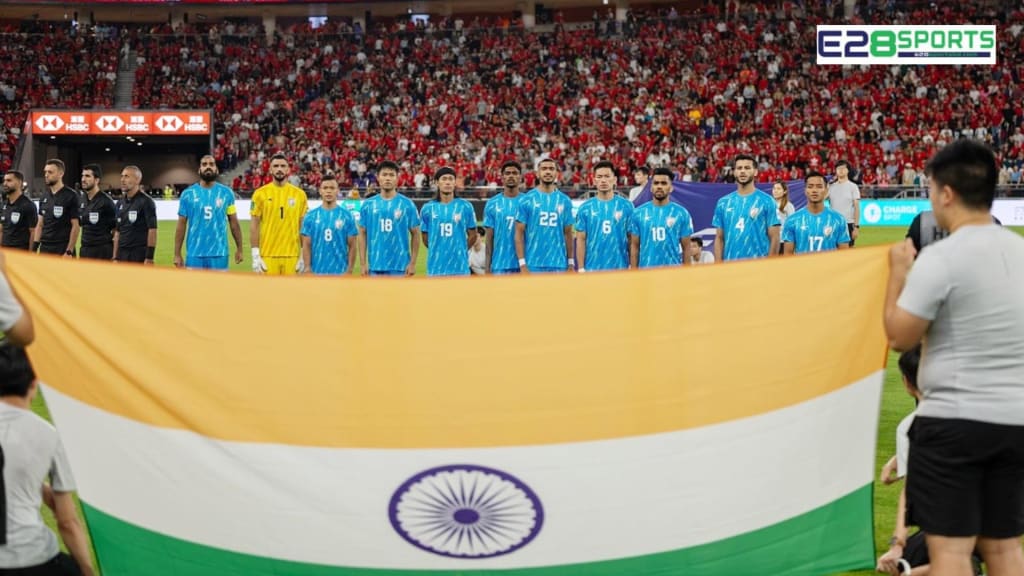
A new era seems to be dawning in Bangladeshi football, as more and more expatriate players are joining the national team. Footballers like Hamza Chowdhury, Fahamidul, and Samit Som—who have experience playing in various foreign leagues—have already started wearing the red and green jersey. This fresh influx of talent has given fans new hope. Supporters believe that this wave of expatriate footballers could bring a major change in the country’s footballing fortunes. Interestingly, it now seems that India is also considering taking a similar approach to revamp its national football team.
According to sources from within the Indian football community, the All India Football Federation (AIFF) is actively working on a proposal to allow overseas Indians—those of Indian origin but living or playing abroad—to represent the Indian national team. Although the official details have not yet been publicly confirmed, an AIFF official, who chose to remain anonymous, spoke to a media outlet and revealed that the federation has already requested government approval to make this move. The central government is said to be reviewing the matter seriously and positively.
The official stated during the interview, “Our president has been in contact with several departments of the central government. So far, the signs have been encouraging. While we don’t have an official green light yet, we are optimistic that the government will approve our request eventually.”
This initiative by the AIFF is driven by the desire to broaden the national team’s talent pool. The federation believes that many players of Indian origin playing in competitive leagues across Europe, North America, and Asia could offer valuable experience, tactical awareness, and skill sets that are currently lacking in Indian football. However, the federation also understands that the inclusion of expatriate players will not magically transform the team overnight. Success, they say, will still require time, patience, and consistent development.
The official emphasized that merely adding expatriate players will not guarantee instant wins or domination in international football. But with a broader selection of players for the starting eleven—especially those who are exposed to higher levels of club football in stronger leagues—India can certainly benefit in the long run. Their international training and match experience can help elevate the overall quality of the team and potentially influence local players as well.
Currently, Indian football is experiencing a difficult phase. Even the legendary Sunil Chhetri, who had previously announced his retirement and later returned, is struggling to make a significant impact. The national team’s recent loss to Hong Kong in the Asian Cup qualifiers has further highlighted the urgent need for change. The results reflect a deeper issue in the team’s structure and overall competitiveness.
In light of these struggles, the AIFF believes now is the right time to act. The official revealed that the federation has formally communicated its position to the central government—that allowing players of Indian origin to represent the national team would be a positive step forward. They see this as a chance to rebuild the team with a stronger foundation by tapping into global Indian talent.
In addition to pushing for expatriate player inclusion, the federation is also focusing on motivating the current squad. There is reportedly a plan in place to announce cash rewards if the team performs well in future matches, such as a victory over Hong Kong. This move is aimed at boosting morale and instilling a winning mindset.
In conclusion, just like Bangladesh, India is now exploring the idea of blending local passion with global experience. If implemented wisely, the inclusion of overseas Indian players could mark the beginning of a transformative journey for Indian football, both in spirit and in performance.
About the Creator
Keep reading
More stories from laradecruz and writers in Cleats and other communities.
Shai Gilgeous-Alexander Says Fatigue Not an Excuse After Game 3 Loss
Oklahoma City Thunder’s star player, Shai Gilgeous-Alexander, made it clear on Thursday that there’s no room for excuses or fatigue with the NBA Finals on the line. Speaking after the team’s disappointing Game 3 loss to the Indiana Pacers, the 2024-25 NBA Most Valuable Player emphasized that it’s time to stay locked in, not worn out. The Thunder are now trailing 2-1 in the series after Indiana pulled off a strong fourth-quarter comeback at Gainbridge Fieldhouse in Indianapolis to secure a critical win. Gilgeous-Alexander, the heart of Oklahoma City’s offense, addressed the pressure and physical toll of the Finals, but remained focused. “You just have to push through it,” he said. “There are only up to four games left in the season. This is what we’ve been working for all year and all summer. So, in my view, you just need to fight through it, focus, and try to win.”
By laradecruz7 months ago in Cleats
Top 5 Players with Most Days as No. 1 ODI Batter
One Day International (ODI) cricket has been one of the most popular formats of the game since its beginning in 1971. With only 50 overs available, batters must combine skill, patience, and smart shot selection to succeed. In such a competitive format, individual consistency becomes extremely important, especially when players are judged through ICC rankings. Holding the top position is a sign of dominance, but staying there for years is even more difficult. The record for most days as №1 ODI batter highlights the rare cricketers who performed at the highest level for long periods. These players scored runs in different conditions, against the best bowlers, and under constant pressure. This article focuses on the legends who achieved the most days as №1 ODI batter, showing why they stand above the rest in ODI history.
By Sports Record and Stats 3 days ago in Cleats
What Marc Guehi Brings to Manchester City After £20m Move from Crystal Palace
Manchester City have strengthened their defence by completing the signing of England international Marc Guehi from Crystal Palace for an initial £20 million. The 25-year-old centre-back has signed a five-and-a-half-year contract at the Etihad Stadium, keeping him at Manchester City until 2031.
By Sneaha Zyniiabout 12 hours ago in Cleats




Comments
There are no comments for this story
Be the first to respond and start the conversation.