
Brendan Rodgers: Career Journey, Management Style, and Celtic Achievements Explained
Discover Brendan Rodgers’ inspiring journey his coaching career, management style, and remarkable achievements with Celtic Football Club.

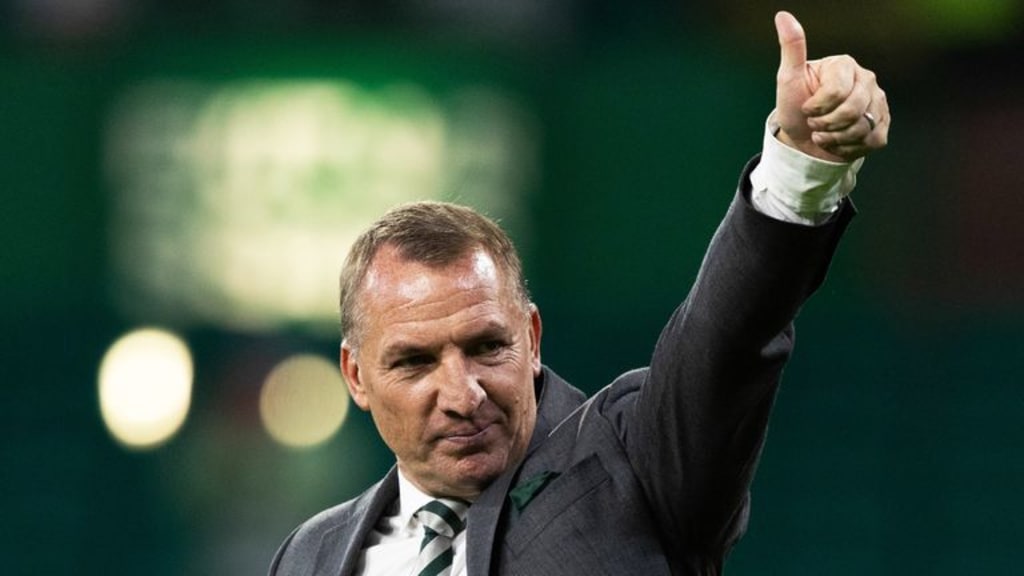
Some football managers build teams. Others build belief. Brendan Rodgers has spent his career doing both. From humble beginnings in Northern Ireland to standing on the sidelines at Anfield and Celtic Park, his story is one of quiet determination, learning, and courage.
Rodgers is not the loudest man in football, yet his methods and results speak volumes. Fans see him as a thinker, a teacher, and above all, a man who understands players on a human level.
His journey has not been without setbacks, but it’s those challenges that shaped his rise. This is the story of Brendan Rodgers the coach who learned from every club, built his own football identity, and led Celtic to historic achievements.
The Early Years: From Ballymena to the Big Stage
Brendan Rodgers was born in Carnlough, a small coastal village in Northern Ireland, in 1973. Football was his childhood dream, but like many players, his path was not straightforward. A promising defender in his youth, he joined Reading as a teenager. Yet his playing career ended early due to a knee condition that forced him to retire before he turned twenty.
While this could have ended his story, it instead became the turning point. Rodgers decided that if he couldn’t play the game, he would study it. He spent years observing coaching sessions, taking notes, and learning from experienced managers. His curiosity about football’s mental and tactical side grew stronger than ever.
During his time at Reading, Rodgers met people who encouraged his coaching ambitions. He began working with youth players and quickly gained a reputation for his attention to detail. It wasn’t long before his passion and intelligence caught the eye of one of the greatest managers of all time José Mourinho.
Learning from the Masters:
When Mourinho took charge of Chelsea in 2004, he saw something special in the young Northern Irishman. Rodgers was appointed to the club’s youth setup, where he learned the inner workings of a top-level football organization. Those years at Chelsea were like an apprenticeship. Rodgers studied how the best managers prepared their teams, built discipline, and inspired confidence.
He spent long hours watching training sessions, analyzing tactics, and understanding player psychology. Mourinho’s influence can be seen in Rodgers’ later emphasis on structure, communication, and adaptability. But while he learned from strong personalities, Rodgers remained true to his calm and reflective nature.
When the time came to move on, he carried those lessons with him ready to apply them in his own way.
The First Managerial Tests: Watford and Reading
In 2008, Brendan Rodgers got his first chance to manage a senior team when he took over at Watford. The club was struggling in the Championship, but Rodgers brought new energy and belief. He encouraged his players to keep the ball, to trust their technique, and to play with confidence even when results were uncertain. Though he faced challenges, his philosophy began to take shape.
After less than a year, reading his former club came calling. The job was emotional, but the return did not go as planned. Results were poor, and Rodgers was dismissed after only a few months. It was a painful moment. Yet rather than seeing it as failure, he saw it as education. Every manager, he would later say, needs setbacks to grow. For Rodgers, it was another lesson in resilience.
Swansea City: The Beginning of a Football Identity
In 2010, Rodgers accepted the challenge of managing Swansea City. It was here that his ideas came alive. Swansea played with style, patience, and courage qualities that came to define Rodgers’ approach. He built a team that valued possession but also worked tirelessly to win the ball back. Players such as Leon Britton, Nathan Dyer, and Scott Sinclair became symbols of that system.
Rodgers’ Swansea earned promotion to the Premier League, becoming the first Welsh club ever to reach the top flight. The football world noticed. Swansea didn’t just survive in the Premier League; they impressed with their fluid passing and organization. Fans and pundits began to associate Brendan Rodgers with a thoughtful, attacking philosophy.
His success at Swansea was not about big spending or star players. It was about trust, clarity, and belief qualities that would later define his time at bigger clubs.
Liverpool: Pressure, Promise, and Pain
In 2012, Brendan Rodgers took one of the most demanding jobs in football manager of Liverpool. The club was hungry for success and desperate to return to the top of English football. Rodgers brought vision and courage to a team searching for identity.
His first season was about rebuilding, but by his second, Liverpool became one of the most exciting teams in Europe. The 2013–14 campaign remains unforgettable. Led by Luis Suárez, Daniel Sturridge, and Raheem Sterling, Liverpool played breathtaking attacking football. They scored over a hundred goals and came within touching distance of winning the Premier League title.
Although the title slipped away in heartbreaking fashion, that season reminded fans what Liverpool football could look like again bold, creative, and fearless. For Rodgers, it was both his greatest triumph and his hardest lesson. The following seasons were more difficult, and by 2015, his time at Anfield came to an end.
Yet the impact of those years remained. Rodgers left behind a foundation of attacking football and belief in youth development. He had proven that his ideas could inspire even at the highest level.
A New Chapter in Scotland: Celtic Beckons
When Brendan Rodgers joined Celtic in 2016, he arrived with something to prove. Some questioned whether he could rebuild his reputation after Liverpool. But Rodgers saw Celtic as more than just a job it was a chance to return to his roots, to focus on development, and to reconnect with the joy of coaching.
From his very first season, Celtic looked unstoppable. The team went unbeaten in all domestic competitions, completing a historic “treble” winning the league, Scottish Cup, and League Cup. Under Rodgers, Celtic played with confidence, structure, and an attacking rhythm that excited fans across Scotland.
Rodgers’ influence went beyond trophies. He nurtured players like Kieran Tierney, Callum McGregor, and Moussa Dembélé, helping them grow into key figures. His training sessions emphasized intelligence and decision-making. Players often said that Rodgers made them feel seen that he understood their strengths and pushed them to improve every day.
Building a Winning Culture at Celtic:
What set Rodgers apart at Celtic was not just his tactics but his culture. He created an environment where every player, regardless of age or experience, had a voice. The team played with purpose and discipline, and every match carried the same intensity, whether against Rangers or a smaller club.
Rodgers’ Celtic dominated Scottish football. He guided the team to back-to-back trebles an extraordinary achievement that had never been done before. The “Invincible” season, where Celtic went unbeaten domestically, became legendary. His attention to detail, calm presence, and focus on consistency turned Celtic into a machine that expected to win.
Fans connected with his passion and professionalism. Celtic Park felt alive under his management, filled with belief and excitement. Rodgers often said that success was not about shouting or demanding it was about building habits, routines, and standards that players could live by.
Tactical Philosophy: How Brendan Rodgers Sees the Game
Brendan Rodgers’ management style blends discipline with freedom. His teams focus on controlling possession but not just for its own sake. The aim is to dominate through structure and intelligent movement. Players are encouraged to think, to find space, and to trust their instincts.
Rodgers often uses a 4-3-3 or 3-4-3 formation, depending on the players available. He values technical midfielders who can dictate tempo, full-backs who can attack, and forwards who can press high. His football is about balance knowing when to attack and when to rest with the ball.
But perhaps the most defining feature of his management is his connection with players. Rodgers spends time understanding personalities. He believes that motivation comes from trust, not fear. Many of his former players describe him as a teacher who listens as much as he instructs.
This emotional intelligence allows him to bring out the best in individuals, even those struggling with form or confidence. For Rodgers, football is as much about human behavior as tactics.
The Leicester City Years: Reinvention and Resilience
In 2019, Rodgers returned to the Premier League with Leicester City. Many doubted whether he could replicate his Celtic success in England. Once again, he proved his critics wrong.
Leicester flourished under his guidance. The team played with energy and intelligence, challenging for European spots and even lifting the FA Cup in 2021 the first in the club’s history. Players like James Maddison, Youri Tielemans, and Jamie Vardy thrived in Rodgers’ system. Leicester’s football combined fast transitions with patient buildup, a reflection of his adaptability.
Although the club later faced difficulties and Rodgers eventually departed, his tenure was marked by respect and progress. He had once again built a competitive side capable of challenging larger clubs through strategy and spirit.
Return to Celtic: A Story of Renewal
In 2023, Brendan Rodgers returned to Celtic, a move that surprised many but made perfect sense. The club was entering a new era, and Rodgers brought experience, stability, and a deep understanding of Celtic’s culture. His second spell has been about continuity and renewal blending new ideas with the identity he helped create years before.
This return showed something vital about Rodgers’ character: he does not run from challenges. Instead, he faces them with quiet conviction. Celtic fans, after initial hesitation, began to appreciate the familiar sense of calm and control that Rodgers brings to the sidelines.
His leadership continues to shape not just matches but the mindset of an entire squad reminding everyone that success is not an event, but a process.
Lessons from Brendan Rodgers’ Journey
Brendan Rodgers’ career offers more than statistics and silverware. It’s a story of self-belief, adaptability, and emotional understanding. From his early days as a youth coach to leading historic clubs, Rodgers built a career on learning rather than ego.
His story reminds us that setbacks are not signs of weakness. The dismissal at Reading, the heartbreak at Liverpoo these were steps on the path to wisdom. At Celtic, he found balance between ambition and authenticity. At Leicester, he rediscovered his confidence in competition. Across every chapter, Rodgers evolved without losing his values.
His career shows that football, at its best, is not just about tactics or trophies it’s about people, relationships, and growth.
Brendan Rodgers’ Legacy at Celtic and Beyond:
Rodgers’ legacy at Celtic is already secure. He restored pride, set records, and built a standard of football that inspired a generation of supporters. More importantly, he created a blueprin a reminder that success comes from clarity, patience, and connection.
Across his career, Brendan Rodgers has shown that leadership in football isn’t about volume, but vision. It’s about helping players understand who they are and what they can achieve together. Whether in Scotland, England, or beyond, his influence continues to ripple through the game.
Rodgers may not always grab headlines, but his impact is undeniable. His career stands as proof that calm minds and thoughtful hearts can still succeed in a world that often rewards noise.
For Brendan Rodgers, football has always been more than a job it’s a lifelong journey of learning, teaching, and inspiring others to believe in what’s possible when you care deeply about the game.
About the Creator
Zeenat Chauhan
I’m Zeenat Chauhan, a passionate writer who believes in the power of words to inform, inspire, and connect. I love sharing daily informational stories that open doors to new ideas, perspectives, and knowledge.
Keep reading
More stories from Zeenat Chauhan and writers in Cleats and other communities.
Senuran Muthusamy: The Steady All-Rounder Shaping South Africa’s Cricket Future
Every generation in cricket brings a player who doesn’t chase headlines but quietly becomes the backbone of the team. For South Africa, that player might just be Senuran Muthusamy a name slowly but surely carving its place in the country’s cricketing story.
By Zeenat Chauhan3 months ago in Cleats
Top 10 Most Played Sports in the World
Finding out which games are the most played sports in the world is not simple because millions of people play sports casually in parks, streets, homes, and schools without registration. Many players are not officially counted, so exact numbers are difficult to measure. That is why this list focuses mainly on organised participation, such as players registered in clubs, leagues, teams, and official competitions. These numbers come from international sports bodies and research studies that track participation across countries.
By Sports Record and Stats 5 days ago in Cleats
The Captain’s Currency: A Guide to Derek Jeter and His Rookie Cards
Before he was "The Captain," five-time World Series champion, and a first-ballot Hall of Famer, Derek Jeter was just a skinny kid from Kalamazoo with a high-ceiling and a dream of wearing pinstripes. Drafted 6th overall in 1992, Jeter didn't just meet the massive expectations of New York; he transcended them. His 1996 season remains the gold standard for debuts, where he hit .314 and won the AL Rookie of the Year award while leading the Yankees to their first title in 18 years. This combination of "clutch" DNA and a flawless off-field persona turned Jeter into a global icon, making his rookie cards the "blue-chip" stocks of the sports collecting world.
By Rookie Card Prices3 days ago in Cleats


Comments
There are no comments for this story
Be the first to respond and start the conversation.