
2026 Winter Olympics — Italy’s Alpine Promise on the World Stage
From historic alpine slopes to modern urban arenas, Milano Cortina 2026 reimagines the Winter Olympics through sustainability, shared hosting, and Italian heritage

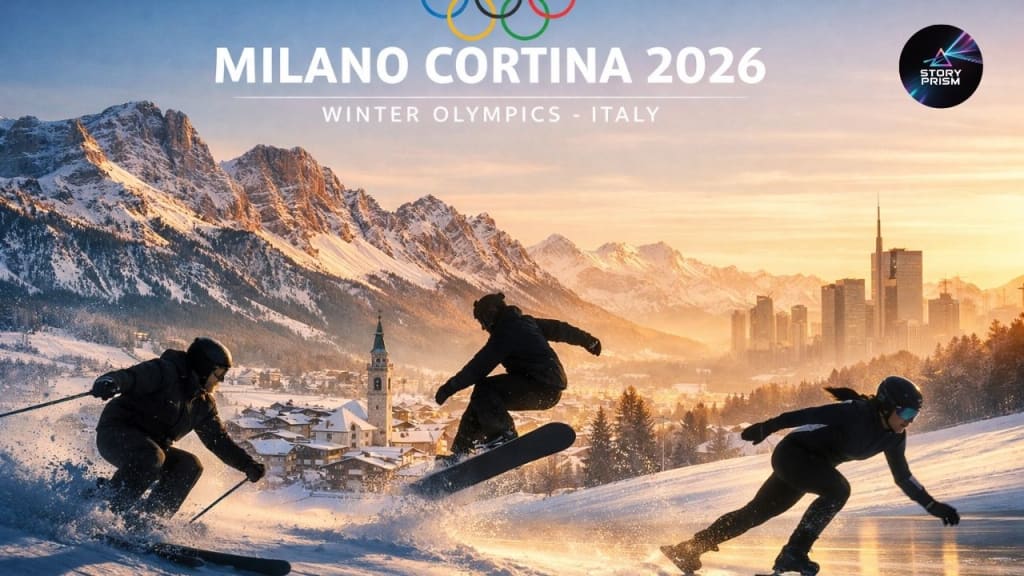
In February 2026, the world’s winter sports spotlight will settle on northern Italy as Milan and Cortina d’Ampezzo jointly host the XXV Olympic Winter Games. Branded as Milano Cortina 2026, the Games represent a modern vision of the Olympics—one that blends heritage venues with sustainability, regional cooperation, and a return to iconic alpine settings. For Italy, it is both a homecoming and a reinvention, marking the country’s first Winter Olympics since Turin 2006 and Cortina’s second appearance after its historic role in 1956.
More than a sporting event, the 2026 Winter Olympics aim to redefine how large-scale global competitions are planned, built, and experienced in the 21st century.
Bidding process
The bidding process for the 2026 Winter Olympics reflected a changing Olympic landscape. Rising costs and public resistance had led several cities to withdraw early, leaving Milan–Cortina competing primarily against Stockholm–Åre. In June 2019, the International Olympic Committee awarded the Games to Italy, citing strong public support, existing infrastructure, and a clear sustainability plan.
A key strength of the bid was its decentralized model. Instead of constructing an entirely new Olympic city, events would be spread across multiple regions, reducing financial risk and environmental impact. This approach aligned closely with the IOC’s Olympic Agenda 2020 reforms.
Development and preparations
Preparation for the Games has focused on upgrading existing venues rather than building from scratch. Historic sites like Cortina’s alpine slopes are being modernized, while Milan is developing new urban infrastructure tied to long-term community use. The Olympic Village in Milan is planned to transition into student housing after the Games, reinforcing the legacy-first philosophy.
Transportation upgrades across Lombardy and the Veneto are also central to preparations, ensuring smooth connectivity between dispersed venues. While timelines have been tight, Italian organizers have emphasized transparency and steady progress.
The Games
The 2026 Winter Olympics will feature 16 disciplines across 8 sports, including alpine skiing, figure skating, ice hockey, snowboarding, and Nordic combined. Events will take place in Milan, Cortina d’Ampezzo, Bormio, Livigno, Predazzo, and Anterselva, showcasing Italy’s diverse geography—from fashion capital to high-altitude mountain towns.
Opening ceremonies are scheduled for Milan’s iconic San Siro Stadium, while the closing ceremony will take place in Verona’s ancient Roman Arena, creating a symbolic bridge between modern sport and classical history.
Participating National Olympic Committees
More than 90 National Olympic Committees (NOCs) are expected to participate, with approximately 3,000 athletes competing. Traditional winter sports powerhouses such as Norway, Germany, the United States, Canada, and Japan will be joined by emerging nations investing heavily in winter athletics.
The Games continue the Olympic trend of broader inclusion, with increased gender balance and expanded opportunities for smaller delegations to compete on the global stage.
Calendar
The Games are scheduled to run from 6 to 22 February 2026, followed by the Paralympic Winter Games in March. Competition calendars are designed to account for weather conditions across multiple regions, particularly for outdoor alpine and Nordic events.
Test events leading up to 2026 have been crucial in refining scheduling, logistics, and athlete experience, especially given the geographic spread of venues.
Marketing
Marketing for Milano Cortina 2026 emphasizes elegance, innovation, and Italian identity. Official branding blends minimalist design with alpine symbolism, while promotional campaigns highlight sustainability, craftsmanship, and regional pride.
Sponsors range from global Olympic partners to Italian luxury, automotive, and energy brands. The Games are also leveraging digital storytelling and social platforms to reach younger audiences and expand engagement beyond traditional broadcasts.
Broadcasting rights
Broadcasting rights for the 2026 Winter Olympics follow long-standing IOC agreements. Major networks in Europe, North America, and Asia will provide extensive coverage across television and digital platforms. Streaming services are expected to play a larger role than ever, offering personalized viewing experiences, multi-angle replays, and behind-the-scenes access.
The Games are projected to reach billions of viewers worldwide, reinforcing the Winter Olympics’ global cultural footprint.
Concerns and controversies
Despite widespread enthusiasm, the Games have not been free from criticism. Environmental groups have raised concerns about construction in fragile alpine ecosystems, while budget oversight remains under scrutiny. Organizers have repeatedly emphasized sustainability commitments, though public debate continues.
Belarusian athletes
The participation of Belarusian athletes has been a sensitive topic due to ongoing geopolitical tensions. As with previous Games, eligibility decisions rest with the IOC and international federations, balancing principles of neutrality, athlete rights, and international policy considerations.
See also
• Winter Olympic Games
• 1956 Cortina d’Ampezzo Winter Olympics
• 2006 Turin Winter Olympics
• Olympic Agenda 2020
Notes
Milano Cortina 2026 marks the first time the Winter Olympics will be officially co-hosted by two cities under a shared identity, setting a potential blueprint for future Games.
References
Information compiled from official Olympic communications, International Olympic Committee announcements, and public organizing committee releases.
About the Creator
Keep reading
More stories from Story Prism and writers in Cleats and other communities.
Tommaso Cioni: The Quiet Rise of a Modern Italian Footballer
Italian football has always been loud in its legends. Names like Maldini, Pirlo, and Del Piero echo through history with thunder. Yet between those roars, Italy has often produced a different kind of player—one who rises quietly, patiently, and with discipline rather than spectacle. Tommaso Cioni belongs to that quieter tradition.
By Story Prism8 days ago in Cleats
The Last Match of Summer
Aariz had been waiting for this summer for months. Every day after school, he would practice in his small backyard, dribbling the ball over rocks and patches of grass, imagining he was playing in a real stadium. His dream was simple: to be part of the school football team and prove that all the hard work he put in would pay off. He knew he wasn’t the most talented player, but he had determination, and that made him feel unstoppable.
By Sudais Zakwan4 days ago in Cleats
Bartender
On the heels of grief, pain bears down hard. On the heels of death, pain awakens the quiet place between the end of our own life and now. Feeling anything is like seeing a film and in black and white, slow motion, all sound turned off. Just watching. Gritting teeth, awkward smiles and bloody red eyes move around, scanning the others who are feeling something I don't want to feel, but I do. Escapism is all I have ever known. ~
By ROCK aka Andrea Polla (Simmons)a day ago in Poets


Comments
There are no comments for this story
Be the first to respond and start the conversation.