
Why People Eat Sea Arthropods but Not Land Arthropods
From Lobsters to Crickets — Why One Ends Up on Our Plate and the Other Makes Us Squirm

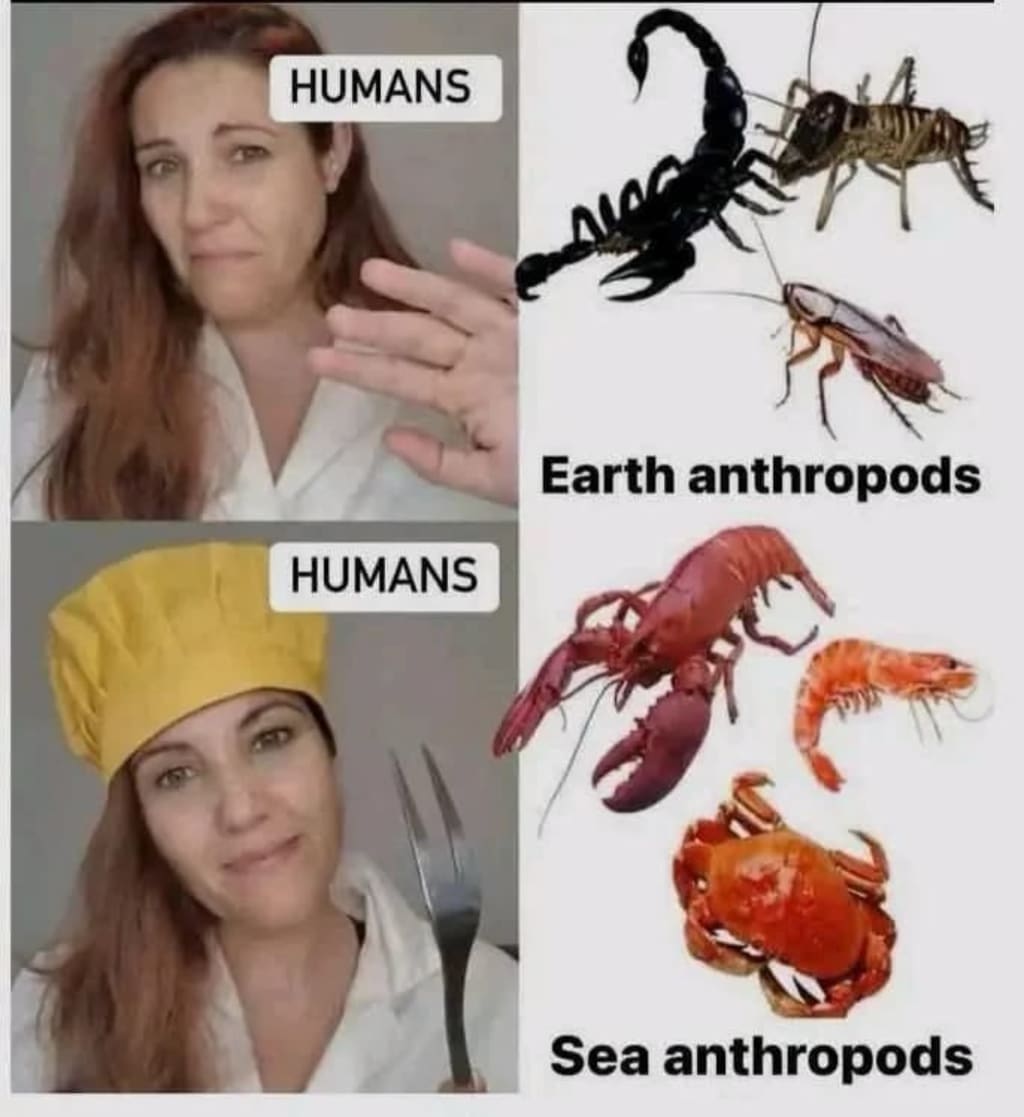
If you’ve ever cracked open a lobster claw or dipped a shrimp into cocktail sauce, you’ve eaten a sea arthropod. If someone handed you a plate of fried cockroaches, though, you'd probably scream, run, or politely throw up in your mouth.
But why is that?
Sea arthropods — like shrimp, lobsters, and crabs — are considered delicacies across much of the world. Land arthropods — like beetles, spiders, and centipedes — are usually seen as pests, nightmares, or creatures to be stomped and avoided.
Here’s the strange truth: biologically, they’re not that different.
So why do we gladly pay $40 for lobster tail but gag at the thought of eating a grasshopper?
Let’s explore.
First, What Are Arthropods?
Arthropods are a group of invertebrates with jointed legs and exoskeletons. This group includes:
Crabs, lobsters, shrimp (marine arthropods)
Insects, spiders, centipedes (terrestrial arthropods)
All of them share similar structures. In fact, if you look closely, a lobster is basically a giant sea bug. It has antennae, a hard shell, multiple legs, and even segmented body parts like an insect. Biologists have long pointed out how closely related insects and crustaceans really are.
So, scientifically speaking, eating shrimp isn’t very different from eating a beetle.
But in our minds? Totally different.
The Power of Perception
A huge part of why we eat sea arthropods and not land ones comes down to cultural perception.
In Western cultures, insects are often seen as dirty, scary, or disease-carrying. Think about it: cockroaches live in sewers, flies buzz around garbage, and centipedes scurry in the damp corners of your basement. They’re associated with filth, danger, and fear.
On the other hand, crabs and lobsters are caught from the clean, cold ocean. They’re served in restaurants with lemon butter and white wine. They come with a whole aesthetic: seafood boils, beachside dinners, and elegant plates in luxury restaurants.
The same brain that says “yum” to a crab leg says “yuck” to a cricket — even if they’re not so different on a biological level.
History Plays a Role
For much of history, land insects weren’t part of the Western diet, mostly because there was no need.
Humans tend to eat what is available, safe, and abundant. In Europe, the climate didn’t require people to rely on bugs for protein. They had domesticated animals, fertile farmland, and access to fish and grains.
In contrast, many cultures in Africa, Asia, and Latin America have included insects in their diets for centuries. In Thailand, fried grasshoppers are a crunchy snack. In Mexico, chapulines (roasted grasshoppers) are eaten with lime and chili. In parts of Africa, termites are a valuable source of protein.
But in places where bugs weren’t necessary for survival, they became symbolic of dirt, decay, or danger — not dinner.
Lobsters and shrimp, on the other hand, were part of coastal diets in places like North America and Europe. And while lobsters were once considered food for prisoners and the poor, they slowly gained popularity as seafood cooking evolved. Today, they’re gourmet.
So ironically, the land “bugs” we see as gross today may just be a victim of geography and old habits.
The Texture and Taste Factor
Let’s be honest: most people are picky about textures.
Shrimp and crab have soft, chewy, buttery flesh. They absorb flavors well, and they’re easy to dip, grill, or stew. Their taste is relatively mild and often sweet.
Insects can be crunchy, mushy, or dry depending on how they’re cooked. Some have bitter flavors or earthy notes. Their legs can get stuck in your teeth. And the fact that they still look like bugs after cooking can make the experience uncomfortable for those not used to it.
With sea arthropods, we’ve developed thousands of ways to cook and serve them — boiling, butter-poaching, grilling, stuffing, frying. With insects, most people have never even seen them cooked properly, so there's little familiarity.
Could This Change?
Yes — and it’s already starting.
With the world facing food insecurity, climate change, and population growth, scientists are promoting insects as a sustainable protein source. Farming crickets, for example, uses far less water and land than beef or chicken. They’re rich in protein, minerals, and healthy fats.
Insect-based protein powders, energy bars, and chips are slowly entering Western markets. And as people grow more environmentally conscious, there’s a growing push to "rebrand" bugs as clean, nutritious, and future-friendly.
Maybe in 20 years, we’ll be eating cricket tacos and mealworm stir-fry without blinking.
Final Thoughts
In the end, the difference between eating a lobster and eating a locust isn’t in the biology — it’s in the brain.
One was born in the ocean, marketed as luxury, and introduced to us in a fancy restaurant. The other was born on land, associated with trash or fear, and rarely presented as food.
But maybe it’s time we asked ourselves: are our taste buds leading the way… or is it just tradition?
Because if you’ve ever enjoyed a juicy prawn, you’re already halfway to eating a bug.
And who knows? Someday soon, crickets might just be the new caviar.
About the Creator
lony banza
"Storyteller at heart, explorer by mind. I write to stir thoughts, spark emotion, and start conversations. From raw truths to creative escapes—join me where words meet meaning."
Keep reading
More stories from lony banza and writers in Chapters and other communities.
Nvidia is Now Worth More Than… Well, Basically Everyone Else
In the world of finance and technology, there are rare moments that make jaws drop. Apple hitting a $1 trillion valuation in 2018 was one. Microsoft overtaking Apple in 2021 was another. But nothing — and I mean nothing — quite compares to what Nvidia has pulled off in 2025.
By lony banza8 months ago in Fiction
Kia Ford: The Hammer Girl's English Premiere Production
With Igor, managing Lily White through the treacherous tricky trees issue, Kia Ford pondered the buzz factor surrounding her professional standing stating, ‘only goal difference separates the hammer girl from the safe zone’.
By Marc OBrienabout 9 hours ago in Chapters
A Transparent Look at Vocal Challenges and Top Stories
Almost three years ago, we shared a resource article that served as a place for people to suggest new challenge prompts. We thought it would be a good idea to refresh that thread, and take the opportunity to answer a few common questions about top stories, how challenges are judged and how submissions are reviewed.
By Vocal Curation Team4 days ago in Resources


Comments (1)
With insight and great detail, this story weaves a set of facts about lobster tails and cockroach legs. It shows the perception humans have across cultures for land arthropods and sea arthropods. Juicy and plentiful with examples, this tasty take on these creatures gives light to the reader. --S.S.